
Lead
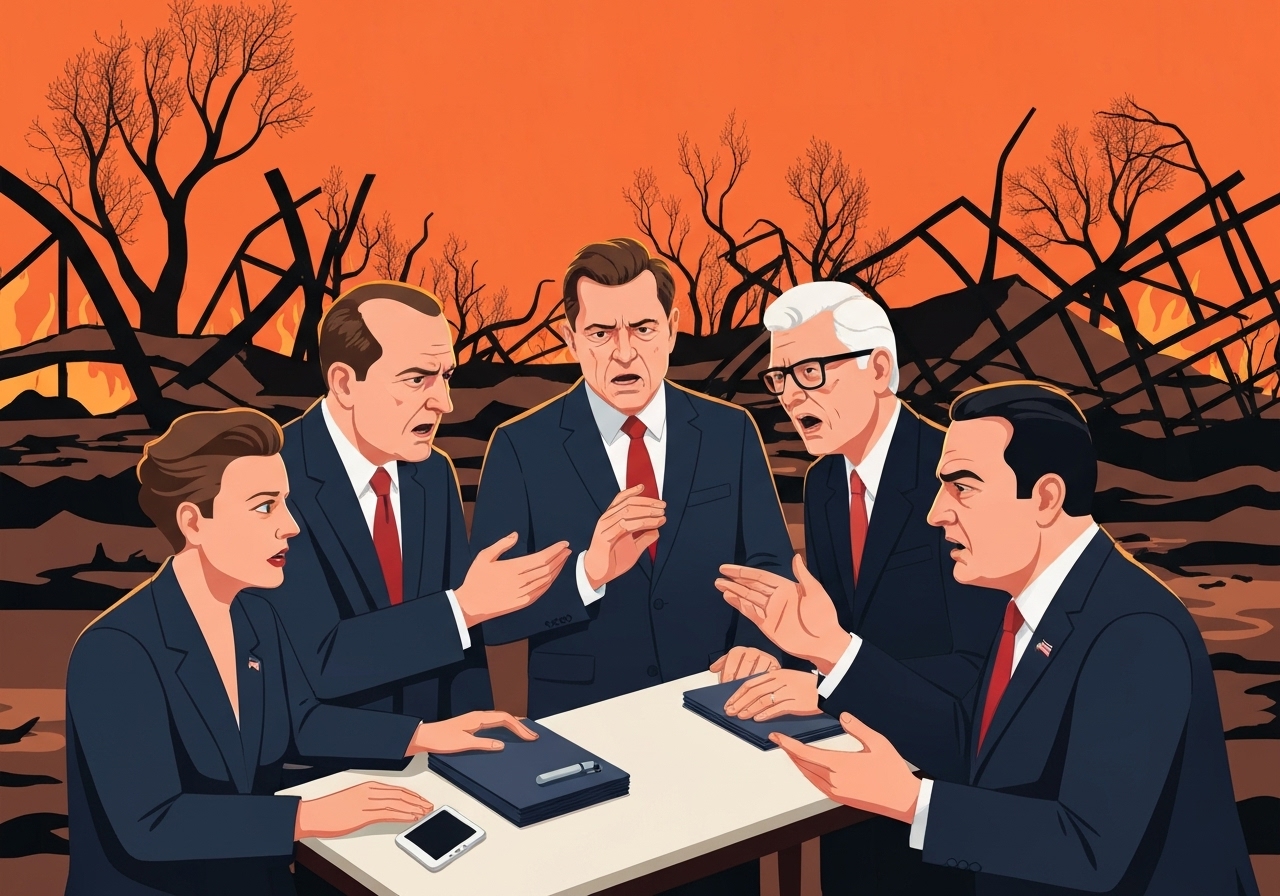
On Sept. 8, 2025, Senators Rick Scott (R-Fla.) and Ron Johnson (R-Wis.) announced a congressional inquiry into the response to the early January 2025 Palisades fire in Los Angeles, questioning whether state and local officials could have acted differently. The probe will examine claims that the Santa Ynez reservoir was offline and that hydrants and water pressure were compromised during the blaze. The January wind-driven fires killed 31 people across Southern California — 12 in Pacific Palisades and 19 in Altadena — and destroyed thousands of structures. The new Senate review joins several ongoing federal, state and independent examinations of the same events.
Key Takeaways
- Two Republican senators, Rick Scott and Ron Johnson, announced a focused investigation into the Palisades fire response on Sept. 8, 2025.
- The January wildfires killed 31 people in Southern California: 12 in Pacific Palisades (Los Angeles) and 19 in Altadena (Los Angeles County).
- The Santa Ynez reservoir serving parts of Pacific Palisades was reportedly offline and empty for seven months before the fire; plaintiffs allege that contributed to low water pressure.
- A separate U.S. Department of Justice lawsuit accuses Southern California Edison of sparking the Eaton fire in Altadena via poorly maintained power lines.
- Federal investigators, including ATF specialists, continue to probe the Palisades fire’s origin, with local officials saying embers from New Year’s Day fireworks are a working theory.
- State and local reviews are under way: the Fire Safety Research Institute was asked by Governor Gavin Newsom to perform an independent review; after-action reports are pending from Cal OES and Cal Fire.
Background
Southern California experienced a cascade of extreme fire conditions in early January 2025: unusually dry vegetation, months without substantial rain and a rare alignment of high-latitude atmospheric forces that produced hurricane-force winds. Those winds pushed fast-moving flames through built neighborhoods, creating rapid evacuation needs and straining firefighting capabilities across multiple jurisdictions. Pacific Palisades sits within the City of Los Angeles and includes dense residential areas that were directly in the path of the Palisades fire; Altadena lies east in the San Gabriel foothills where the Eaton fire spread hours later.
Emergency management and political leaders faced immediate scrutiny as homeowners and local officials sought to understand preparedness measures and infrastructure vulnerabilities. Questions centered on water system availability, the timing and accuracy of wind warnings, and whether interagency coordination met the moment. The political context amplified scrutiny: Governor Gavin Newsom and Los Angeles Mayor Karen Bass are prominent Democrats whose decisions during the event have drawn national attention. Meanwhile, the powerful utilities and federal authorities are separately under review for potential equipment failures or negligence.
Main Event
The Palisades and Eaton fires ignited in early January 2025 during a narrow window of severe winds. Local fire authorities and federal investigators say the Palisades blaze advanced with exceptional speed, hampering suppression efforts and evacuations. In Pacific Palisades, residents reported hydrants with low pressure or dry conditions in neighborhoods close to the Santa Ynez reservoir, which had been taken out of service for repairs months earlier. That outage has been central to lawsuits filed by homeowners who lost property, alleging the Los Angeles Department of Water and Power failed to maintain water supplies for firefighting.
On Jan. 1, local officials have said investigators are examining smoldering embers from New Year’s Day fireworks as a potential origin for the Palisades fire, though no final conclusion has been reported. Hours later the Eaton fire erupted in Altadena; federal prosecutors later filed suit accusing Southern California Edison of causing that blaze through allegedly faulty equipment. The quick succession and geographic separation of the two fires complicated mutual-aid deployments and stretched resources across multiple response agencies.
Political figures publicly traded blame in the weeks that followed. President Trump and other Republican leaders faulted Democratic officials for preparedness failures, while city and state leaders pointed to the extraordinary wind conditions as the primary reason the fires overwhelmed standard defenses. Multiple independent and official reviews — including a federal criminal inquiry, state after-action reviews, and an independent technical study — are now attempting to reconstruct the operational timeline and causal factors.
Analysis & Implications
The senators’ investigation is likely to focus narrowly on operational decisions and infrastructure maintenance in Pacific Palisades, but its political resonance extends beyond local water systems. By highlighting the Santa Ynez reservoir and hydrant functionality, the inquiry raises broader questions about aging or out-of-service infrastructure in high-risk wildfire zones and the governance of municipal utilities. If investigators find systemic maintenance lapses, municipalities nationwide could face intensified scrutiny over capital spending and emergency readiness for water delivery during fires.
The probe also intersects with utility accountability. The DOJ lawsuit against Southern California Edison for the Eaton fire makes clear that civil and criminal remedies remain part of the broader accountability landscape. A congressional focus on the Palisades fire that stops short of examining utility conduct in Altadena risks a fragmented narrative, where different legal venues reach different conclusions about proximate causes and responsibility.
For residents and insurers, the practical implications include recalibrated risk models and potential pressure on insurers to reassess premiums and coverage in wildfire-prone urban-adjacent communities. Politically, the investigation can shape local campaigns — Mayor Bass faces re-election next year — and contribute to national debates about emergency funding, climate adaptation, and infrastructure resilience ahead of the 2028 presidential cycle.
Comparison & Data
| Fire | Date | Location | Fatalities | Suspected origin | Notable infrastructure issue |
|---|---|---|---|---|---|
| Palisades fire | Early January 2025 | Pacific Palisades, Los Angeles | 12 | Investigated — possible New Year’s Day fireworks embers | Santa Ynez reservoir offline ~7 months |
| Eaton fire | Early January 2025 | Altadena, Los Angeles County | 19 | Accused by DOJ as caused by utility equipment | Utility equipment under scrutiny |
| Total (SoCal events) | January 2025 | Multiple counties | 31 | Multiple origins under investigation | Widespread resource strain |
The table summarizes deaths, locations and the principal investigatory threads as reported: infrastructure availability in Pacific Palisades and utility equipment in Altadena. These data points do not substitute for final investigative findings but clarify the distinct issues facing each incident. Pending reports from Cal OES, Cal Fire, the Fire Safety Research Institute and federal investigators will offer more granular timelines, which are essential to determine causation and operational failures. For policymakers, the immediate takeaway is the need to inventory critical firefighting infrastructure and to test contingency plans under extreme-wind scenarios.
Reactions & Quotes
Governor Gavin Newsom responded to the senators’ announcement by defending the state response and inviting scrutiny through formal reviews. He framed the state’s actions as comprehensive and welcomed additional oversight to complement existing inquiries.
“The state mounted an aggressive wildfire response and we welcome transparent review,”
Governor Gavin Newsom (paraphrased)
Republican sponsors of the Senate inquiry emphasized senior citizens and other vulnerable residents who died or lost homes, citing homeowner lawsuits and local tours of the damage as prompting factors. Senator Rick Scott has publicly toured Palisades debris and argued officials must explain infrastructure outages on the day of the fire.
“Reservoirs were empty and hydrants went dry while people perished,”
Senator Rick Scott (paraphrased)
Federal investigative agencies and the U.S. attorney’s office have said they are working but have not announced conclusions; the ATF noted technical specialists remain engaged in cause determination. Local officials said the U.S. attorney asked that a Los Angeles Fire Department report be withheld to avoid interfering with the federal probe.
“Investigators are working diligently and no final conclusions have been reached,”
ATF spokeswoman (paraphrased)
Unconfirmed
- The precise ignition source of the Palisades fire remains unconfirmed; investigators have said fireworks embers are a working theory but have not reached a final determination.
- The direct causal link between the Santa Ynez reservoir outage and specific inoperable hydrants on the day of the fire is alleged by plaintiffs but has not been independently verified.
- Any claim that a particular elected official’s absence or decision alone changed the outcome of firefighting operations lacks conclusive evidence at this stage.
Bottom Line
The Senate inquiry announced Sept. 8, 2025, narrows attention onto infrastructure and operational decisions around the Palisades fire, particularly the role of the Santa Ynez reservoir and local water pressure. That focus complements but does not replace parallel federal and state probes into both the Palisades and Eaton fires, which investigate different potential causes and responsible parties. Residents, insurers and local governments should expect further findings that could prompt infrastructure investments, regulatory changes and litigation.
Ultimately, establishing causation — whether from fireworks embers, utility equipment, or a combination of extraordinary weather and system vulnerabilities — will require the technical analyses still in progress. Policymakers should treat preliminary assertions with caution until after-action and forensic reports are published and cross-referenced across the ongoing legal and administrative reviews.
Sources
- The New York Times — news report on the senators’ announcement and related developments (journalism)
- U.S. Department of Justice — federal law enforcement and civil litigation authority (official source)
- Bureau of Alcohol, Tobacco, Firearms and Explosives (ATF) — federal investigative agency involved in fire origin work (federal agency)
- Office of the Governor of California — state statements and requests for independent review (official)
- Los Angeles Department of Water and Power (LADWP) — municipal utility implicated in homeowner lawsuits (official)