
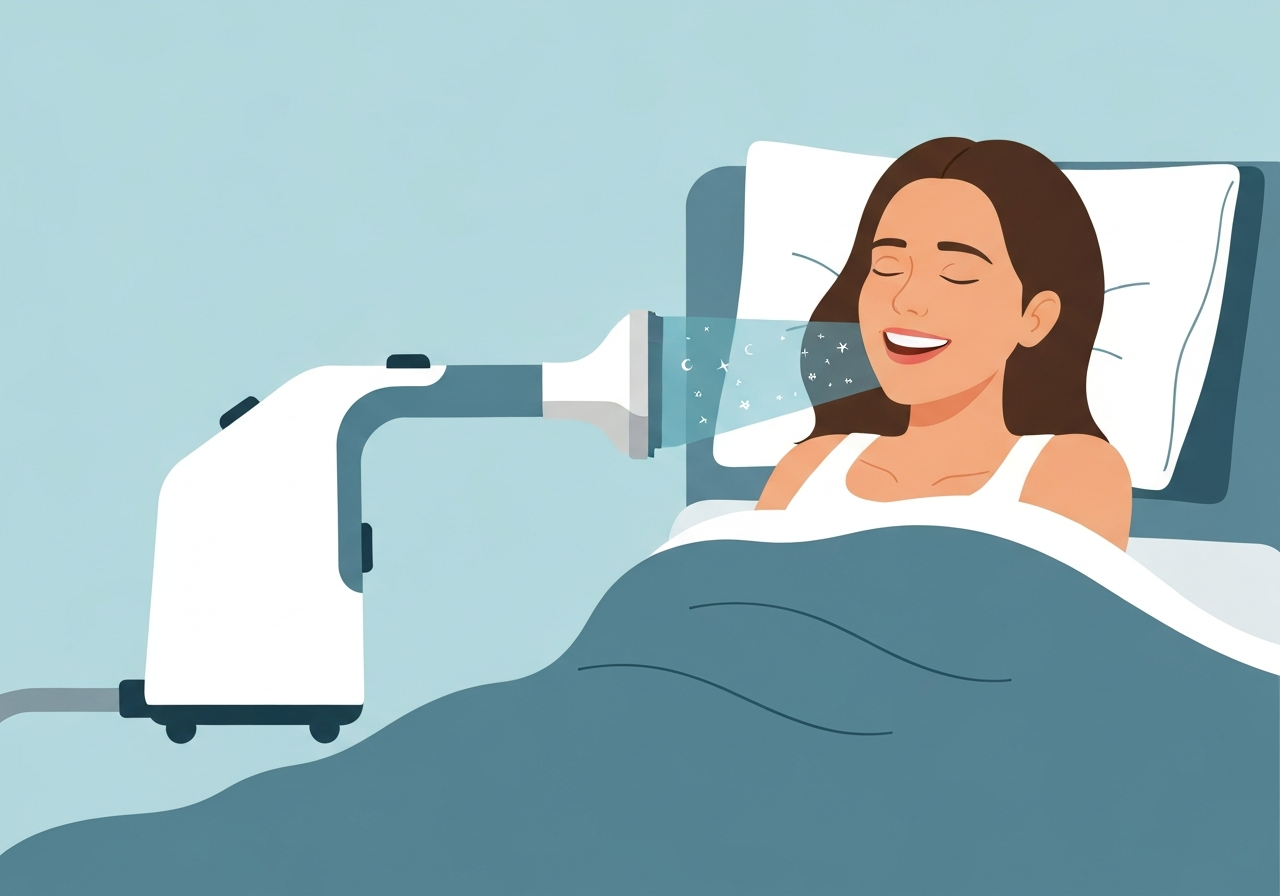
Lead: In 2019, 37-year-old Nick discovered that the chronic snoring that had isolated him socially was not merely an annoyance but a health problem after a high blood-pressure reading prompted a sleep assessment. The overnight study revealed severe obstructive sleep apnoea and introduced him to continuous positive airway pressure (CPAP), a device he compares to a “reverse vacuum.” His first four hours of uninterrupted sleep produced dramatic improvements in daytime alertness and wellbeing. The case underlines how a once-rare surgical era has shifted to widely used devices and growing clinical attention.
Key takeaways
- Nick, aged 37, was diagnosed with severe obstructive sleep apnoea in 2019 after an alarming blood-pressure reading prompted a sleep study.
- CPAP (continuous positive airway pressure) keeps upper airways open during sleep; Nick reported four hours of uninterrupted sleep on his first night with the device.
- CPAP technology was pioneered by Prof Colin Sullivan and commercialised by the Australian company now known as ResMed; ResMed’s market value has more than quadrupled over the past decade.
- Historically, remedies for snoring date back to circa 1550 BCE; modern medical interest in sleep-disordered breathing has grown substantially over the last 30 years, with a rapid spike since the rise of wearable sleep trackers.
- Clinicians report broader diagnostic awareness: milder and younger cases are now recognised across genders, and related conditions such as upper-airways resistance syndrome are increasingly diagnosed.
- CPAP is effective for many but can be uncomfortable; reported downsides include aerophagia (swallowing air), pressure-related sleep disruption, claustrophobia and cost (often over $1,000 if not covered).
- Alternative treatments for mild to moderate cases include oral appliances, external nasal dilators and weight-management approaches; clinicians advise personalised assessment before long-term therapy.
Background
Snoring exists on a continuum with obstructive sleep apnoea: simple vibration and partial obstruction can progress to repeated airway collapse during sleep. Historically, remedies for noisy sleepers ranged from herbal prescriptions in ancient Egyptian papyri (circa 1550 BCE) to anecdotal wartime measures such as stitching weights into uniforms to discourage sleeping on the back. For much of the 20th century clinically significant sleep apnoea was treated surgically, most drastically by tracheostomy, reflecting limited therapeutic options at the time.
Awareness and diagnostic capability have changed markedly in recent decades. Advances in non-invasive monitoring, growing public interest driven by consumer wearable devices, and dedicated sleep clinics have all expanded detection. Peter Cistulli, a professor of sleep medicine at the University of Sydney and president-elect of the World Sleep Society, notes that the specialty has transitioned from rarity to common practice over roughly three decades, with a sharper rise in demand more recently. That shift has also exposed gaps in access, gendered diagnostic patterns and debates about when to treat snoring versus full apnoea.
Main event
Nick’s journey illustrates a typical modern pathway: social awkwardness led to delayed help-seeking until a routine health check in 2019 produced an alarming blood-pressure reading. Referred for an overnight sleep study, he encountered a CPAP machine — a mask connected to a device that delivers steady air pressure — positioned beside the bed. The sleep technician described the study as observational but the machine was available should safety concerns arise, and Nick later experienced the device’s effect firsthand.
The diagnostic report confirmed severe obstructive sleep apnoea, characterised by repetitive collapse of the throat muscles during sleep and resulting in breathing pauses or shallower breathing episodes. Nick said his initial four hours of uninterrupted sleep felt transformative, improving his concentration and energy immediately upon waking. That personal testimony parallels larger clinical findings that effective airway support can substantially reduce daytime sleepiness and associated functional impairments.
CPAP adoption has broadened. Where the therapy once targeted only the most severe cases, clinicians now sometimes prescribe it for milder disease when symptoms are significant or when related conditions such as upper-airways resistance syndrome are present. However, physicians warn of improper retail marketing of CPAP as a simple consumer gadget; correct setup and pressure titration by professionals remain crucial to safety and efficacy.
Analysis & implications
The widening use of CPAP devices signals both clinical progress and new challenges. On the positive side, better recognition of sleep-disordered breathing can prevent cardiovascular and functional harms linked to untreated apnoea. Early diagnosis and treatment can reverse daytime fatigue, improve workplace safety and reduce risks associated with uncontrolled blood pressure. Nick’s case demonstrates the potential individual benefit when a previously hidden disorder is treated.
At the same time, broader uptake raises questions about appropriate indications and resource allocation. CPAP is most clearly indicated for moderate-to-severe obstructive sleep apnoea; its extension into milder cases depends on symptom burden and comorbidities. Cost barriers — devices often exceed $1,000 without insurance — and variability in patient tolerance mean that alternative therapies and shared decision-making are essential to avoid overtreatment and to maintain adherence.
Technology and public interest have amplified detection but also introduced new behavioural phenomena such as orthosomnia, where an excessive focus on perfecting sleep may produce anxiety rather than benefit. Wearable trackers can flag poor sleep patterns, prompting medical evaluation, but they can also create pressure to seek invasive or unnecessary interventions. Clinicians must therefore balance the objective data from home monitoring with clinical assessment and validated testing.
Comparison & data
| Era | Common remedy | Clinical approach |
|---|---|---|
| Circa 1550 BCE | Herbal prescriptions (e.g., thyme) | Folk remedies |
| 18th century (US independence) | Weights in uniforms (anecdotal) | No medical framework |
| Mid-20th century | Tracheostomy (surgical) | Invasive surgical solution |
| Late 20th–21st century | CPAP, oral appliances, nasal devices | Non-invasive, personalised treatments |
The table places modern CPAP use in historical perspective. The clinical shift from invasive surgery to device-based and behavioural therapies reflects improved understanding of airway mechanics and the benefits of non-surgical management. Contemporary data also show rising diagnoses over the past 30 years and a particularly steep increase since the arrival of consumer sleep monitors.
Reactions & quotes
“Snoring to sleep apnoea is a bit of a continuum. Snoring is the partial upper-airway obstruction, and as the obstruction gets worse, you start developing sleep apnoea.”
Dr Linda Schachter, sleep and respiratory physician; Sleep Health Foundation board member
Schachter emphasises that early snoring should not be dismissed because it may progress. She also notes that women have historically been under-diagnosed and may present with fewer classic breathing events but more daytime tiredness.
“We now have a term called orthosomnia: a new condition where people are overly preoccupied about trying to get a perfect night’s sleep.”
Prof Peter Cistulli, University of Sydney; president-elect, World Sleep Society
Cistulli warns that greater monitoring can both help and harm — exposing treatable disorders but also creating anxieties that drive overtesting. He also highlights the role of his mentor, Prof Colin Sullivan, in developing CPAP technology.
“Some retailers try to market CPAP as consumer technology. When set incorrectly the pressure can be problematic — people may swallow air or feel claustrophobic.”
Dr Donald Lee, director, Woolcock Institute of Medical Research
Lee stresses the importance of proper clinical oversight for device setup and follow-up to ensure benefits outweigh harms.
Unconfirmed
- Some small trials have suggested links between snoring alone and increased stroke risk; larger datasets are needed before firm causal claims are made.
- Online reports claiming CPAP “saves marriages” reflect anecdotal experiences; controlled data on relationship outcomes are limited.
Bottom line
CPAP, the device Nick first encountered in 2019, has moved from niche to mainstream as diagnostic tools and awareness of sleep-disordered breathing have expanded. For many patients with moderate to severe obstructive sleep apnoea, CPAP can deliver rapid and measurable improvements in daytime function and cardiovascular risk profiles. Yet it is not a one-size-fits-all solution: tolerance, cost and appropriate clinical indication must guide use.
Clinicians recommend evaluating snoring and daytime sleepiness rather than dismissing noise alone, and exploring less invasive options where appropriate. As consumer monitoring grows, clinicians will face rising demand for assessment; careful triage, shared decision-making and robust data remain essential to ensure that more people benefit without unnecessary or poorly tolerated treatment.