
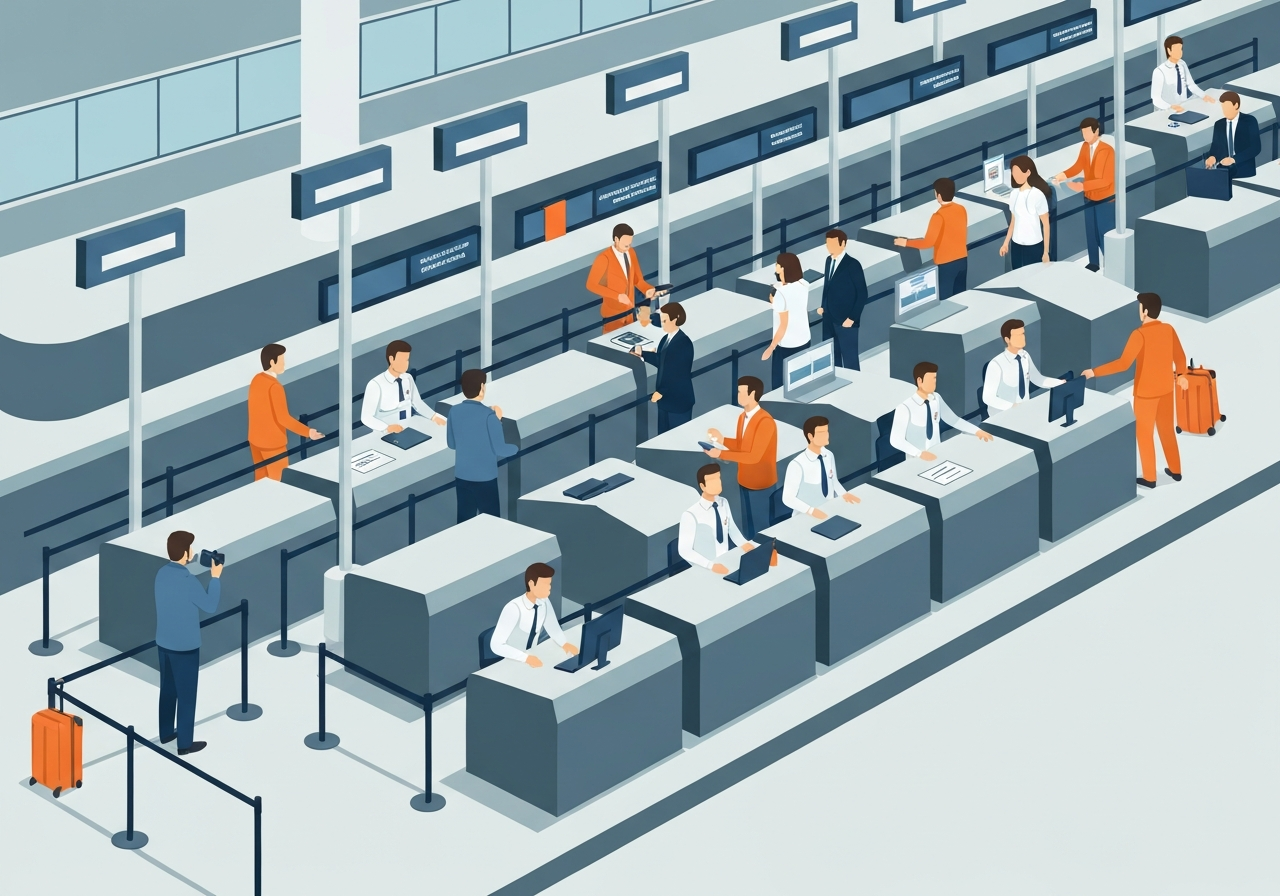
Lead: As of March 15, 2026, the Department of Homeland Security funding lapse has entered its second month, and travelers at Pittsburgh-area airports report noticeably longer TSA screening lines. Federal transportation security officers and other frontline staff say morale and staffing flexibility have eroded as the shutdown continues, contributing to delays during busy travel windows. Airport operators and local officials are seeking short-term fixes while bracing for further strain if the funding impasse persists.
Key takeaways
- The DHS funding lapse reached its second month on March 15, 2026, coinciding with increased passenger queues at regional checkpoints.
- Local airport staff and travelers reported extended screening periods during peak periods, with supervision and schedule adjustments cited as contributing factors.
- TSA employees expressed rising frustration over work conditions tied to the lapse, including pay uncertainty and increased overtime demands.
- Airport management said they have implemented contingency measures—such as redeploying staff and opening additional lanes—to alleviate congestion.
- Officials warn that continued federal funding disruption could further degrade screening throughput and passenger experience ahead of spring travel peaks.
Background
The current impasse in DHS funding began roughly a month before mid-March, leading to agency-level contingency operations that affect multiple components, including transportation security. In a lapse, some federal employees are designated as “excepted” and continue to work, while others may be furloughed or face pay delays; those distinctions shape on-the-ground staffing dynamics at airports. Historically, even short funding disruptions have strained TSA operations because screeners are essential personnel who must be present to keep flights moving. Local airports, already balancing staffing and seasonal surges, typically rely on predictable federal payroll and coordination to maintain normal checkpoint capacity.
Stakeholders affected include TSA screeners, airport operators, airline partners, and travelers. Airport leadership must coordinate with TSA field offices and airline operations centers when screening capacity changes, and unions or employee associations often raise concerns when pay or scheduling becomes unpredictable. Pittsburgh-area terminals have adjusted lane operations and signage to manage passenger flow, but such operational tweaks have limits when they depend on federal staffing decisions outside local control. The broader political context—negotiations in Washington over DHS appropriations—remains the proximate cause driving operational uncertainty at checkpoints.
Main event
Throughout the second month of the funding lapse, checkpoint experiences shifted in measurable ways: some mornings and evening peaks saw longer lines and more frequent requests for passengers to arrive earlier than usual. Airport operations staff described ad hoc scheduling changes, including reassignment of personnel and periodic opening of supplemental lanes when screeners were available. Travelers quoted by local reporters said waits felt longer than typical baseline expectations for the facility.
TSA personnel described mounting pressure to cover shifts and work extra hours; supervisors reported managing gaps through temporary reassignments rather than hiring, since hiring requires funded authorizations. Airport officials noted that while flight operations continued, passenger processing became more volatile—small staffing shortfalls had outsized effects during high-volume periods. Airlines adjusted boarding and turnaround practices in some cases, coordinating closely with checkpoint supervisors to avoid larger delays on the ramp and at gates.
Local management emphasized that safety screening remained in place and that no widespread security compromises were reported. Instead, the primary operational impacts were passenger-facing: longer queueing times, occasional lane consolidations, and greater reliance on overtime from essential staff. These visible effects increased public frustration and prompted inquiries from municipal and regional leaders seeking clarity from federal counterparts about restoration of normal funding and staffing routines.
Analysis & implications
Operationally, a prolonged funding lapse raises the likelihood of recurring service disruptions because TSA screening is labor-intensive and schedules are finely balanced to meet flight schedules. When key personnel work without predictable payroll or with extended overtime, absenteeism and turnover pressures can rise, worsening throughput over time. For airports near major hubs, even small percentage drops in screening capacity can ripple into gate congestion and flight delays, affecting airline schedules and traveler confidence.
Economically, sustained delays during a peak travel season risk costs for both airlines and regional economies: flight disruptions increase airline operating costs, and travelers deterred by unreliable screening can reduce discretionary spending in local markets. For frontline federal employees, uncertain pay cycles have material impacts on household finances and can influence retention—especially where local labor markets offer alternative employment with stable compensation.
Politically, the visible strain at airports puts pressure on lawmakers to resolve funding disagreements quickly; elected officials from affected districts often face constituent complaints and may push emergency appropriation measures. Internationally, prolonged U.S. screening disruptions could prompt traveler advisories and raise questions among global partners about U.S. air travel reliability during domestic fiscal standoffs.
Comparison & data
| Period | Typical checkpoint conditions | Conditions during second month |
|---|---|---|
| Pre-lapse (baseline) | Predictable lane staffing, routine peak waits | Normal operation most days |
| Second month of lapse | Contingency scheduling, ad hoc lane openings | More frequent peak congestion and variable throughput |
The table compares qualitative checkpoint conditions before the funding lapse and during its second month; local managers emphasized that variability increased, even if the core security mission continued. Quantitative metrics such as average wait minutes or missed connections are tracked by airports and airlines and will better quantify impacts as data are compiled for the period in question.
Reactions & quotes
Airport leadership noted that teams are working to keep passengers moving while coordinating closely with TSA field offices to adjust lanes and schedules as needed.
Regional airport operations office (paraphrase)
TSA representatives reiterated that screening operations continue but acknowledged that staffing challenges tied to the funding situation are complicating throughput management during busy intervals.
Transportation Security Administration (paraphrase)
Travelers and local businesses expressed frustration at the uncertainty, asking for a swift resolution so that routine travel and commerce can proceed without added disruption.
Passengers and local stakeholders (reported)
Unconfirmed
- Specific nationwide averages for passenger wait times during the second month have not been publicly released and vary by airport; reported experiences are locally sourced and anecdotal.
- Claims about large-scale furloughs of TSA screeners in the region remain unverified; agency staffing classifications and local personnel decisions are still being confirmed by federal officials.
Bottom line
The second month of the DHS funding lapse has created operational friction at airport checkpoints, most visibly in longer and less predictable passenger lines and in increased stress among frontline personnel. While core screening duties continue, contingency measures are straining to preserve normal service levels as travel demand rises into the spring.
Absent a prompt resolution to the funding lapse, local airports and travelers should prepare for continued variability at checkpoints, and policymakers face mounting pressure to restore regular appropriations to limit further disruption. For passengers, the practical response is to allow extra time at checkpoints and to monitor airport advisories as the situation evolves.
Sources
- Pittsburgh Post-Gazette (local newspaper reporting on regional checkpoint conditions, March 15, 2026)