
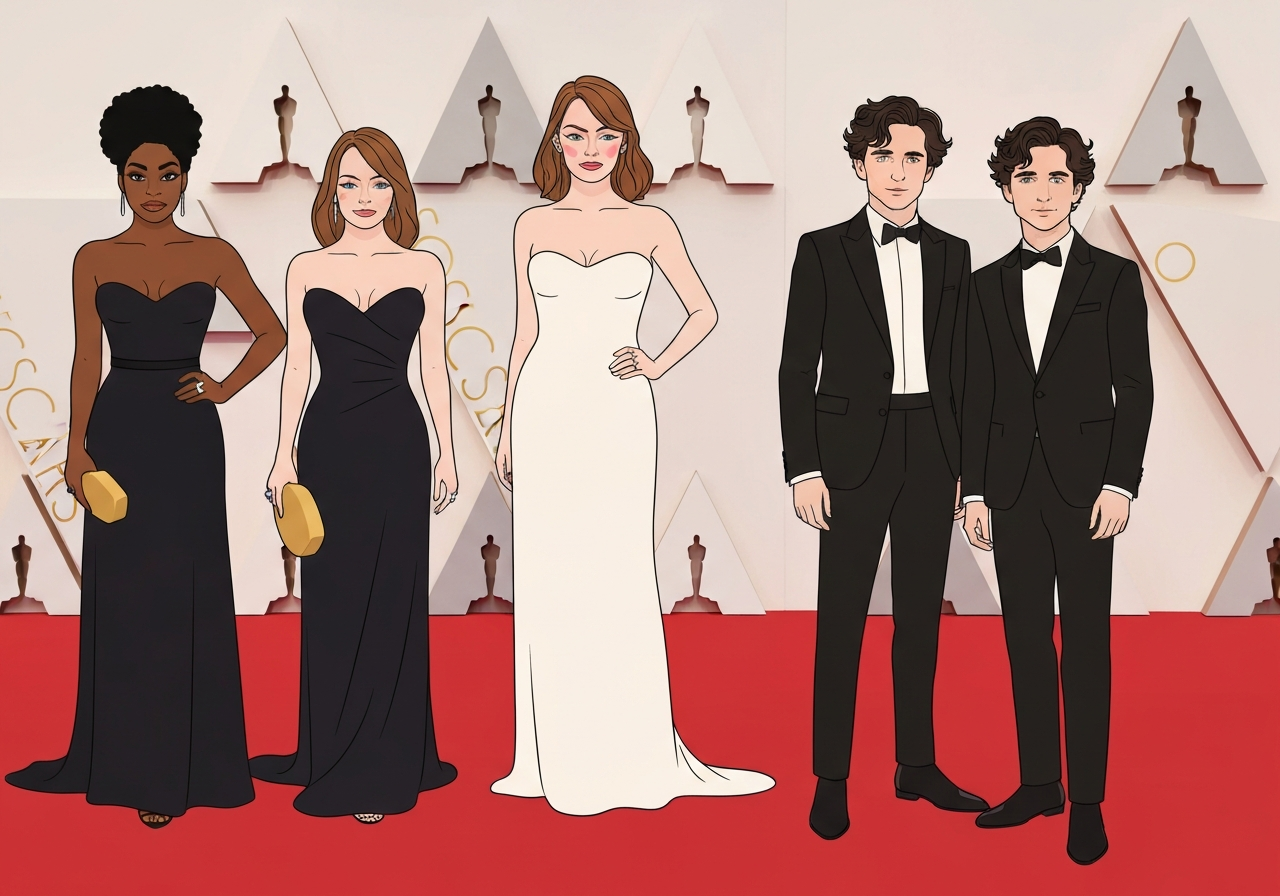
Lead: Hollywood’s biggest names paraded style on the Oscars red carpet in Los Angeles on Sunday, as nominees and guests alike showcased gowns, tuxedos and daring looks ahead of the ceremony. Standout moments included Emma Stone in a shimmering Louis Vuitton gown, Teyana Taylor in custom Chanel and Timothée Chalamet opting for an all-white suit. Several nominees—Rose Byrne, Jessie Buckley, Renate Reinsve and Wunmi Mosaku—arrived in signature designer pieces, underscoring an awards season in which fashion and film remain tightly linked. Photographers from Getty Images and Reuters captured the arrivals as viewers compared looks across social media.
Key Takeaways
- The red carpet took place Sunday in Los Angeles during the 2026 Academy Awards, featuring nominees and presenters from films including One Battle After Another, Hamnet, Sentimental Value and Sinners.
- Emma Stone, a best actress nominee, wore an oyster-toned Louis Vuitton gown; Teyana Taylor appeared in a black-and-white custom Chanel look and Timothée Chalamet, a best actor nominee, wore an all-white ensemble.
- Several nominees drew designer attention: Rose Byrne wore custom Dior, Renate Reinsve chose a red Louis Vuitton gown, and Wunmi Mosaku cradled a baby bump in a glittering cut-out dress.
- Veteran stars and presenters included Nicole Kidman (Chanel), Gwyneth Paltrow and Spike Lee; last year’s winners and returning nominees such as Zoe Saldaña were also present.
- KPop performers behind Demon Hunters arrived to perform, and the night mixed big-screen promotion with music acts and stage performances.
- Fashion trends on display ranged from feathered gowns and theatrical sleeves to minimalist tailoring and couture custom pieces by major houses like Louis Vuitton, Dior, Chanel and Gucci.
- The red carpet functioned both as a style showcase and a promotional platform for films vying in major categories, attracting global media attention.
Background
The Academy Awards red carpet has long been a high-profile platform where cinema’s creative and commercial sides intersect. Designers and stylists use the evening to present custom work to a global audience, while studios and publicists coordinate appearances to maximize visibility for nominated films. In 2026, that interplay was evident as nominees across acting, directing and screenplay categories chose looks intended both to reflect personal taste and to generate headlines.
Over recent years the Oscars carpet has also become a stage for cultural conversation—about sustainability, diversity, and the relationship between celebrity and craft. The presence of international performers and a mix of established stars and breakout actors continued that trend, with press coverage balancing fashion critique and awards reporting. Photographers from major wire services and image agencies provided instant delivery of looks to outlets worldwide.
Main Event
Arrivals began hours before the ceremony as cameras tracked nominees and guests along the carpet. Emma Stone, nominated for best actress, drew attention in a shimmering Louis Vuitton gown while Rose Byrne, up for If I Had Legs I’d Kick You, wore a black custom Dior piece embroidered with floral detailing. Jessie Buckley, whose role in Hamnet capped an awards campaign, chose a red-and-pink ensemble that marked a departure from her usual palette.
Wunmi Mosaku, nominated in the supporting category for Sinners, wore a glittering gown with a shoulder cut-out that highlighted her pregnancy. Renate Reinsve, a Sentimental Value nominee, favored a red custom Louis Vuitton dress by Nicolas Ghesquière, continuing a designers-forward awards-season strategy. Teyana Taylor and Regina Hall, both associated with One Battle After Another, delivered contrasting looks in Chanel and black-and-gold respectively.
Among the men, Leonardo DiCaprio kept to a classic black tuxedo, while Timothée Chalamet made a statement in an all-white suit for Marty Supreme. Other acting contenders present included Michael B. Jordan and Paul Mescal, who attended with his partner, Gracie Abrams. Directors and industry figures such as Chloe Zhao and Spike Lee chose dramatic silhouettes and signature accessories, contributing to the evening’s visual variety.
Analysis & Implications
The red carpet remains a cyclical publicity tool that amplifies awards narratives; designers gain runway-equivalent exposure while films receive free publicity tied to star visibility. For studios and agents, a carefully curated carpet appearance can extend a film’s conversation into mainstream culture, boosting streaming interest or box-office longevity post-ceremony. That dynamic was evident as nominees doubled as fashion statements to sustain momentum.
For fashion houses, dressing an Oscar nominee delivers immediate marketing value—images circulate globally and are repurposed across social platforms and outlets. The decision by multiple nominees to wear custom couture signals both the continuing prestige of legacy brands and the mutual benefit of these collaborations. This year’s mix of established couture and bold, experimental looks shows the industry balancing tradition with attention-grabbing innovation.
On a social level, the red carpet feeds discourse about representation and aesthetic trends. Pregnant nominees, cross-genre performers and international guests highlighted expanding definitions of who occupies center stage. Simultaneously, critics and commentators note that red-carpet moments can overshadow substantive conversation about nominated work unless media coverage intentionally bridges style and craft.
Comparison & Data
| Star | Film/Category | Designer/Look |
|---|---|---|
| Emma Stone | Best Actress nominee (Marty Supreme) | Oyster Louis Vuitton |
| Teyana Taylor | One Battle After Another | Custom Chanel black-and-white |
| Rose Byrne | If I Had Legs I’d Kick You (nominee) | Custom Dior, embroidered floral |
| Wunmi Mosaku | Best Supporting Actress nominee (Sinners) | Glittering gown, cut-out shoulder |
The table above samples notable pairings of nominees and designers seen on Sunday. While not exhaustive, it illustrates how couture houses continue to align with award-season talent. Such alignments often reflect long-standing relationships between stylists and design houses and are used strategically by publicists to reinforce a nominee’s public image.
Reactions & Quotes
Photographers, fashion commentators and fans reacted in real time, interpreting both safe choices and risk-taking looks for different audiences.
“A night of bold silhouettes and classic tailoring.”
Fashion commentator at the ceremony
The commentator’s remark summarized how attendees combined experimental pieces with time-honored red-carpet elegance. That balance helped the event appeal to both fashion insiders and mainstream viewers.
“Celebrating cinema and style together.”
Presenter on the red carpet
Presenters and hosts framed the arrivals as part of an evening meant to honor filmmaking while acknowledging the cultural reach of celebrity fashion. Their comments were aimed at uniting the ceremony’s entertainment and promotional aims.
“Which look was your favorite?”
Social media users
On platforms like X and Instagram, audience members quickly compared gowns and suits, turning the red carpet into an interactive moment where public taste and critical analysis met instant social feedback.
Unconfirmed
- Any claim that a single individual was universally judged “best dressed” remains subjective and unverified; public opinion varied across outlets and platforms.
- Reports of off-carpet wardrobe changes for specific guests were unconfirmed at the time of publication and not independently verified.
Bottom Line
The 2026 Oscars red carpet reinforced its dual role as a fashion showcase and a strategic publicity moment for films and talent. High-profile nominees used designer partnerships to shape their public narratives, while photographers and social platforms amplified those choices immediately.
For audiences and industry observers the carpet remains a bellwether: it signals trends, highlights alliances between stars and brands, and extends awards-season conversations beyond winners and acceptance speeches. In the days after the ceremony, how these images are replayed across media will help determine which films and personalities sustain momentum into the summer.
Sources
- BBC News (news organization)
- Reuters (news agency photo and event coverage)
- Getty Images (image agency credited for red-carpet photography)