
Lead
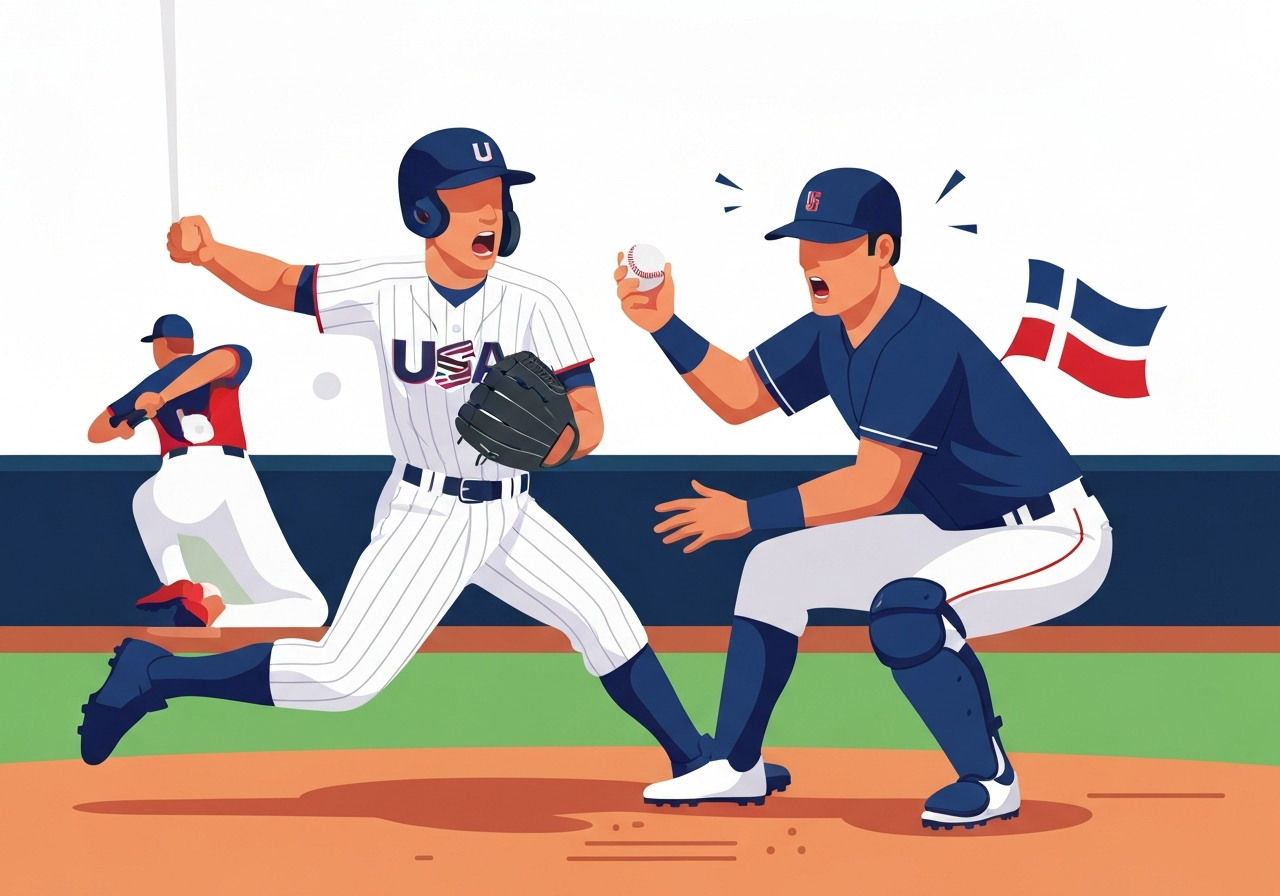
On Sunday, March 15, 2026, the United States defeated the Dominican Republic 2-1 in a World Baseball Classic semi-final decided by a controversial final pitch. Gunnar Henderson and Roman Anthony supplied the only runs with solo home runs, while Paul Skenes and a relieved bullpen limited the Dominican lineup to one run. The closing sequence — Julio Rodríguez on third and a full-count pitch called a strike that many saw below the zone — ended the game without a review, leaving the Dominican team and many spectators frustrated. The U.S. now advances to the WBC final, one win away from its second title.
Key Takeaways
- Final score: United States 2, Dominican Republic 1 in the WBC semi-final on March 15, 2026.
- Two homers decided the game: Gunnar Henderson (fourth inning) and Roman Anthony (go-ahead homer off Gregory Soto, 3-2 sinker).
- Paul Skenes (NL Cy Young Award winner) earned a win (2-0), allowing one run on six hits across 4.1 innings.
- Junior Caminero hit a solo homer in the second, part of the Dominican Republic’s tournament-record 15 home runs.
- Closer Mason Miller struck out Geraldo Perdomo for his second save, but the final pitch — called a strike on a full count — was ruled several inches below the zone and could not be challenged because the automated ball–strike (ABS) system was not used.
- The American roster featured marquee names including Bryce Harper and Aaron Judge and reached its third straight WBC title game (won in 2017; runner-up to Japan in 2023).
- The Dominicans reached the semifinals for the first time since winning the tournament in 2013 and had six players who finished in last year’s top-ten MVP voting.
- The U.S. will face the winner of Monday’s semi between Italy and Venezuela in Tuesday’s title game.
Background
The World Baseball Classic has grown into a premier international tournament, attracting major-league stars and national teams with deep professional talent pools. The United States entered the semis with a loaded roster built around Paul Skenes and sluggers like Aaron Judge and Bryce Harper; the team is aiming to return to the top of the 16-team bracket after a final loss to Japan in 2023. The Dominican Republic, historically a baseball powerhouse, had navigated earlier rounds with powerful offense and a lineup featuring several recent MVP-caliber seasons.
Rules and technology choices play a growing role in international events. The 2026 WBC did not deploy the automated ball–strike (ABS) system in this contest, meaning certain close calls that would be reviewable in other competitions remained final. That procedural detail became decisive in the final moments of this semi-final. The matchup also highlighted the tournament’s narrative: elite pitching versus an explosive, power-oriented lineup.
Main Event
Paul Skenes set the tone early, working 4.1 innings and allowing just one run on six hits while touching the high-90s with his fastball. The Dominican Republic struck first when Junior Caminero lifted a solo homer off Skenes in the second, giving his team a mark-setting 15th tournament home run and pushing his own batting average to .350 for the event.
The U.S. responded in the fourth when Gunnar Henderson, starting at third base instead of Alex Bregman, crushed a long ball off Luis Severino to tie the game. The contest featured standout defensive plays: Aaron Judge’s 95.7 mph throw cut down Fernando Tatis Jr. at third in the third inning, and Julio Rodríguez — after being hit on the wrist by a 98 mph Skenes heater earlier — scaled the center-field wall in the fifth to rob Judge of a home run.
In the fourth and fifth innings the pitching matchup remained tight. Anthony delivered the decisive blow in the later innings, connecting on a 3-2 sinker from Gregory Soto for a go-ahead solo home run. The U.S. bullpen then preserved the lead, with Mason Miller recording the final outs. With two outs in the ninth, Julio Rodríguez walked and advanced to third, bringing Geraldo Perdomo to the plate; Perdomo struck out on a full-count pitch, and the final offering — called a strike though many saw it below the zone — ended the game.
Analysis & Implications
The immediate sporting implication is straightforward: the United States advances to the WBC final and will have a chance to claim its second championship. Skenes’ outing further validated his status as an elite international starter, and the American bullpen’s performance under pressure will be a confidence boost heading into the title game. Offensively, the U.S. relied on small but decisive contributions rather than broad lineup domination.
For the Dominican Republic, the loss is a narrow one with counterfactuals that will be debated. Their tournament-long power was evident — a record 15 homers — and they presented one of the deepest rosters on paper. Yet this game underlined that in short international formats, timely pitching and defense can neutralize a heavy-hitting lineup. The managerial decisions around matchups and bullpen usage will be scrutinized, but the primary focus for the team will be how close they came to forcing a different finish.
The controversy over the final call raises questions about technology adoption in world tournaments. With ABS not in use in this match, a potentially game-changing close call could not be reviewed; that gap between available technology and tournament rules invites debate about consistency and fairness in high-stakes matches. Organizers will face renewed pressure to standardize review mechanisms across late-stage games to reduce ambiguity in decisive moments.
Comparison & Data
| Item | United States | Dominican Republic |
|---|---|---|
| Runs (semi-final) | 2 | 1 |
| Key homers | Henderson, Anthony | Caminero |
| Skenes (W) | 4.1 IP, 1 R, 6 H | — |
| Tournament homers (team) | — | 15 (tournament record) |
| Caminero batting | — | .350 (tournament) |
The table highlights the essentials: a one-run margin, two American homers versus the Dominican solo shot by Caminero, and Skenes’ efficient start. The Dominican total of 15 tournament home runs surpassed Mexico’s previous mark set in 2009 and underlined their power profile even in defeat. Stat lines suggest the U.S. relied on pitching depth and a timely offensive approach to win low-scoring, high-leverage innings.
Reactions & Quotes
“That game cannot end like that. A shame.”
Jeff Passan (ESPN, social media)
“ABS is not in use for this game, so there was no mechanism to challenge the final pitch.”
Match report (The Guardian)
Public reaction was immediate and polarized. Analysts praised the American pitching and defended Miller’s outing, while many fans and commentators focused on the final call and the absence of ABS as a structural shortcoming. The debate has moved beyond one pitch to broader discussions about equipment, replay policy, and parity between leagues and international rules.
Unconfirmed
- Whether an ABS review would have definitively overturned the final called strike remains untested because the system was not in use for this game.
- Reports of any formal protest by the Dominican federation or requests to the WBC competition committee had not been confirmed at the time of publication.
Bottom Line
The United States advances to the World Baseball Classic final after a 2-1 win marked by strong American pitching and two decisive homers. The narrow margin masks a larger narrative: a tournament where pitching depth and defensive plays can blunt potent offenses, and where single moments — whether a wall-climbing catch or a disputed final pitch — determine outcomes.
Beyond this match, organizers and national federations will likely revisit rules on review technology and consistency across high-stakes games. For fans and participants, the game was both a dramatic sporting contest and a reminder that clarity in officiating matters as much as on-field skill when titles are at stake.
Sources
- The Guardian (media report)
- World Baseball Classic (official tournament site)