
Lead
The annual Vanity Fair Oscar Party, held after the 2026 Academy Awards in Los Angeles, produced a fresh round of red‑carpet moments that Vogue captured in a curated slideshow by culture writer Emma Specter. The gallery presents standout outfits that continued conversations set on the Oscars carpet and highlighted several recurring fashion themes. Photographs and captions in the slideshow emphasize both traditional glamour and contemporary reinterpretations of evening wear. The night left clear signals about silhouette, fabric, and styling that designers and stylists are likely to build on this season.
Key Takeaways
- Vogue’s slideshow by Emma Specter gathered the evening’s most-discussed ensembles, framing the Vanity Fair party as a continuation of Oscar night’s aesthetic conversation.
- Several looks favored classic evening silhouettes updated with modern details, suggesting a lean toward hybrid traditions rather than full reinventions.
- Sheer fabrics, tailored suiting, and embellished minimalism recurred across multiple attendees, indicating cross‑gender and cross‑genre influences.
- Color choices ranged from deep jewel tones to modern neutrals, with metallic accents appearing selectively as focal points.
- Accessories and makeup were often used to pivot a look toward either red‑carpet formality or relaxed after‑party ease, underlining the dual role of Vanity Fair events as both staged and social.
Background
The Vanity Fair Oscar Party has been a cultural touchstone since its founding, situated at the intersection of Hollywood celebration and fashion spectacle. Traditionally held immediately after the Academy Awards, it gathers nominees, industry figures, and high‑profile guests whose post‑ceremony choices often serve as shorthand for the night’s style narrative. In recent years the event has been read as a space where emerging designers meet established houses and where red‑carpet risk is tested in a slightly less formal setting.
The 2026 edition arrived after a season in which designers balanced sustainability messaging with red‑carpet drama, and where gender fluidity in tailoring continued to gain visibility. Stylists and brands have been navigating competing pressures: to honor old Hollywood glamour while reflecting clients’ interest in comfort, craft, and contemporary political sensibilities. Those tensions shape what attendees choose to wear to Vanity Fair, where visibility is immediate and widely circulated through photo galleries like Vogue’s.
Main Event
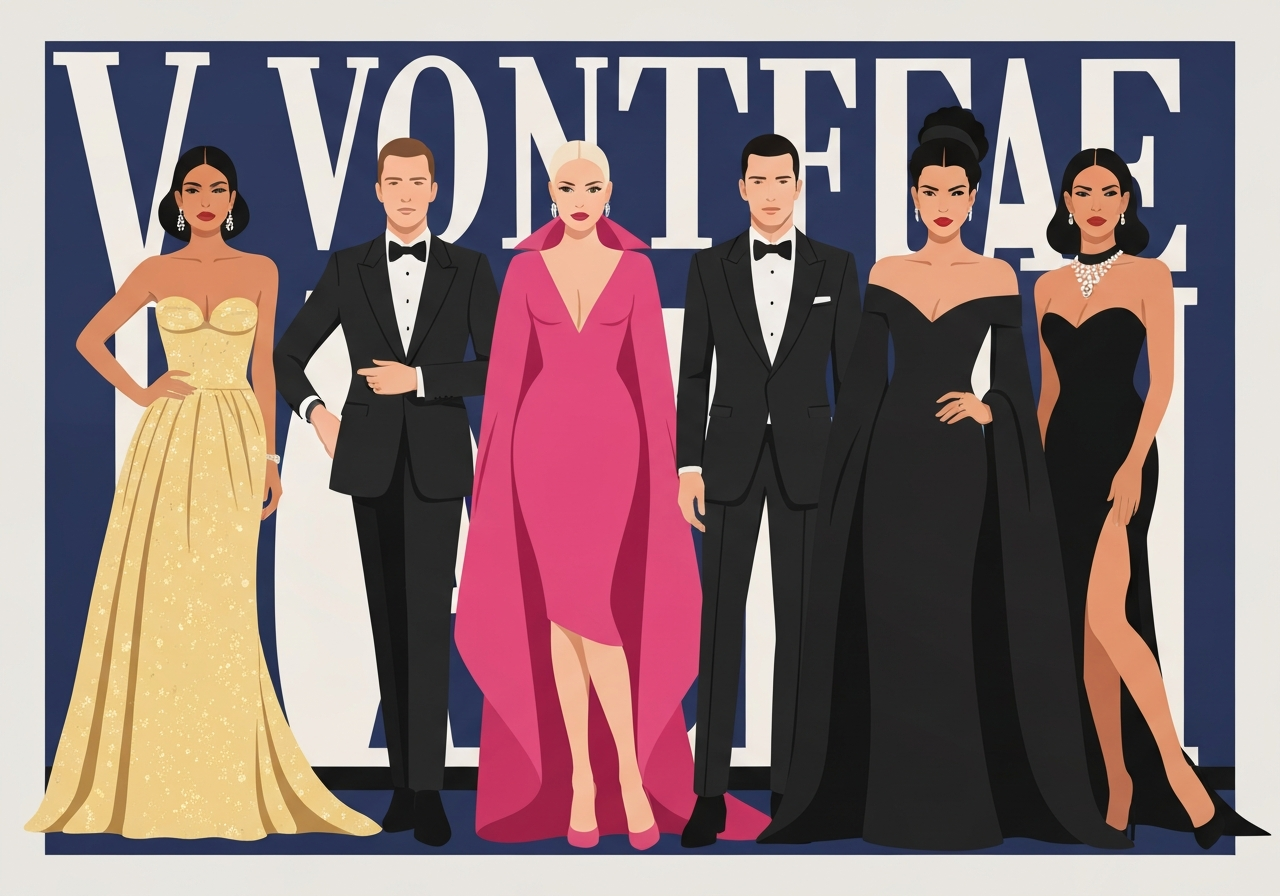
Photographers at the party captured a mix of impeccably tailored suits, romantic gowns, and statement separates. The slideshow highlights how attendees alternated between maximal and pared‑back approaches, sometimes within the same evening—choosing a sculptural gown for arrival and switching to a softer, less structured look by the time they reached the party’s interior. That flexibility underscores the party’s role as both showcase and social space.
Across the images, embellishment tended to be used sparingly and strategically: one or two dramatic elements—an embroidered bodice, a jeweled cuff, an architectural sleeve—served as the visual anchor. Hair and makeup choices mirrored that approach, often favoring a single focal point, such as a strong lip or a sculpted brow, rather than a fully maximalist beauty moment.
Tailoring was notable not only in traditional suiting but also in dresses that borrowed menswear techniques—structured shoulders, sharp waistlines, and clean lapels. This cross-pollination between genders and genres reinforced the slideshow’s implicit narrative: eveningwear in 2026 is about blending references to achieve a poised, intentional look rather than performing a single fashion archetype.
Analysis & Implications
The visual trends captured at Vanity Fair point to an industry that is reconciling spectacle with restraint. For designers, that means opportunities to repurpose classic codes—beading, satin, and drape—through modern construction and sustainable material choices. Brands that can combine visible craftsmanship with contemporary tailoring may find demand among A‑list clients and stylists seeking memorable yet wearable statements.
For the commercial market, the party’s looks suggest segmentation: while couture houses will continue to supply headline‑making gowns, there is growing space for mid‑price designers to provide elevated separates and tailored pieces that echo red‑carpet aesthetics for a wider clientele. Retailers and rental platforms could capitalize on demand for hybrid eveningwear that reads as both formal and adaptable.
On the cultural side, the stylistic signals from Vanity Fair underscore an ongoing shift in celebrity presentation. Public figures increasingly curate multiple looks across a single night to reflect different facets of their public persona—formal, intimate, playful—making the after‑party itself a planned moment of image work rather than an incidental appendage to the Oscars.
Comparison & Data
| Element | Prior Seasons | Vanity Fair 2026 |
|---|---|---|
| Silhouette | High drama and fitted gowns | Mix of tailored suiting and updated classics |
| Embellishment | Heavier all‑over beading | Selective, focal embellishments |
| Color | Bold primary palettes | Jewel tones and modern neutrals |
The table above summarizes qualitative shifts visible in the party images: a movement from uniformly maximal looks toward curated focal points and an interplay between tailoring and traditional eveningwear. Those patterns align with industry conversations about longevity and adaptability in high‑visibility dressing.
Reactions & Quotes
Photographers and industry observers circulated images rapidly, prompting commentary on social platforms and among stylists. Vogue’s slideshow framed the party as a continuation of the Oscars’ style narrative, noting the evening’s balance of classic and contemporary dressing.
The Vanity Fair after‑party kept the night’s fashion conversation alive, pairing time‑honored glamour with modern tailoring and selective ornamentation.
Vogue slideshow, Emma Specter (coverage)
Stylists and fashion editors responding to early photo arrays described the night as one where small, decisive details mattered more than all‑out maximalism—a shift that mirrors broader editorial trends this season.
What stood out was the emphasis on a single, strong element per look—be it a tailored line, a sculptural sleeve, or a statement accessory—rather than total ornamentation.
Fashion editors (industry commentary summarized)
Unconfirmed
- Attributions of specific gowns to particular designers are confirmed only when publicly announced by the wearer or their stylist; some photo captions remain unverified.
- Details about fabric sources, sustainability claims, or production methods for individual garments in the slideshow are not independently corroborated in Vogue’s gallery.
Bottom Line
The Vanity Fair 2026 after‑party, as presented in Vogue’s slideshow, underscored a move toward curated restraint—looks that combine classical eveningwear elements with precise contemporary touches. For designers and retailers, that signals demand for pieces that translate red‑carpet detail into wearable formats for broader audiences.
Going forward, watch for continued interplay between tailoring and ornament, and for stylists to prioritize singular, defining details over full maximalism. The photographic record from Vanity Fair will influence seasonal headlines, commercial collections, and how public figures choose to present themselves at major cultural moments.