
Lead
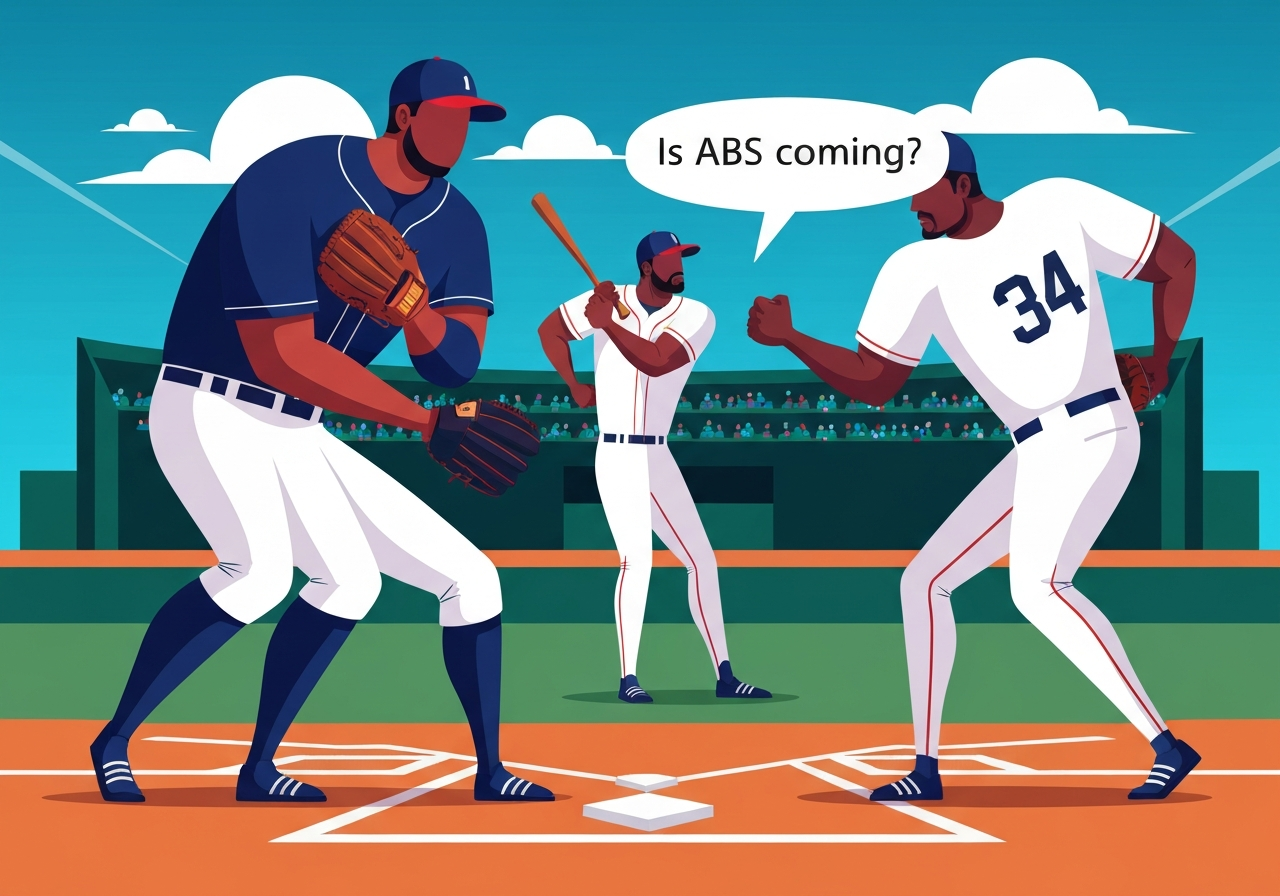
On March 16, 2026, the United States beat the Dominican Republic 2-1 in a World Baseball Classic semifinal at loanDepot Park, a game decided by two disputed strike calls — the most consequential on the final pitch. Mason Miller’s full-count slider to Geraldo Perdomo was called a strike despite being well below the knees, ending the D.R.’s run. Earlier in the game, home-plate umpire Cory Blaser called Juan Soto out on a low Garrett Whitlock breaking ball that many observers judged off the plate. The controversy has renewed calls for the WBC to adopt Major League Baseball’s new automated ball-strike system (ABS).
Key Takeaways
- The United States defeated the Dominican Republic 2-1 in the WBC semifinals on March 16, 2026; the final out was a called third strike to Geraldo Perdomo.
- Mason Miller’s final pitch to Perdomo was ruled a strike though replays show the pitch well below the knees; Perdomo had fouled off the two prior pitches, each above 100 mph.
- Earlier, Cory Blaser called Juan Soto out on a down Garrett Whitlock breaking ball, a second contested plate decision in the same game.
- Major League Baseball is introducing ABS for the 2026 regular season and playoffs for the first time in league history; it was available for spring training challenges in Florida and Arizona.
- The WBC used the pitch clock for the first time in this edition but did not implement ABS across its multi-site, multinational schedule.
- Team leaders from both sides and many fans signaled support for incorporating ABS into future WBC tournaments.
- An MLB official not authorized to speak publicly suggested ABS would likely be adopted for a future WBC — likely the next edition in 2029 — but that requires players’ union approval.
Background
The World Baseball Classic is a multinational tournament with games staged across different cities and countries; the 2026 edition played games in Miami, Houston, San Juan and Tokyo. Because the event spans multiple venues and jurisdictions, adopting league-level technology requires coordination across sites, timing for installation and agreement from the tournament’s organizers and participants. MLB has historically rolled out new rules and technology to the WBC on a lagging schedule: the pitch clock, now used in the WBC, was being readied for MLB regular-season play after the 2023 tournament but was not yet in force in 2023.
Automated ball-strike systems use camera and tracking data to determine the electronic strike zone and, in MLB’s model, to resolve challenges to ball/strike calls when managers or umpires request a review. MLB made ABS available for spring exhibitions and will deploy it during the 2026 regular season and postseason for the first time, representing a major change in how plate decisions are adjudicated. The WBC’s multi-site logistics and international coordination mean implementation requires additional lead time compared with a centrally scheduled MLB season.
Main Event
The semifinal at loanDepot Park featured multiple tense frames and a late U.S. rally that produced a 2-1 margin. In the decisive moment, with a full count, Mason Miller delivered a slider to Geraldo Perdomo that was called a swinging strike three. Television replay and pitch-tracking visuals show the pitch below the knees; the call immediately drew loud reaction from the crowd and from Dominican supporters in the stadium.
Perdomo, who fouled off the two previous pitches in an eight-pitch at-bat, maintained composure after the game and said in Spanish that these incidents happen because umpires are human. Albert Pujols, the Dominican manager, described the ending as disappointing but declined to heavily criticize the officiating in public remarks, saying he did not want to dwell on the last pitch.
Earlier in the inning, home-plate umpire Cory Blaser called Juan Soto out on a Garrett Whitlock breaking pitch that many analysts judged outside or below the zone. Both calls, coming in the same high-stakes game, galvanized debate among fans, players and media about whether the tournament should have access to MLB’s new technology for ball-strike adjudication.
Analysis & Implications
The immediate implication is a reputational one: high-profile missed calls in a marquee international semifinal amplify calls for objective review tools. For players and fans, the appeal of ABS is straightforward — it reduces human error on the plate and provides a consistent standard across broadcast replays and official scoring. That said, moving to ABS in the WBC is not merely a technical install; it requires synchronized equipment at each site, training for local officials and contractual agreement among stakeholders, including MLB, national federations and the players’ union.
For the WBC’s competitive integrity, adopting ABS would likely reduce the number of game-changing plate calls that become talking points after play. On the other hand, some critics argue that automated systems can alter the rhythm and human element of baseball and that the initial calibration of any electronic zone can itself be a source of dispute. The WBC’s multi-city structure heightens the operational challenge compared with a single professional league season.
Economically and politically, the decision to add ABS is tied to governance: MLB will need to negotiate with the Major League Baseball Players Association and with the WBC organizing bodies over scope, cost and adjudication protocols. If ABS is accepted for a future WBC, expect a phased rollout: high-profile sites and later-stage games would get priority, followed by a broader deployment once technical and labor details are settled.
Comparison & Data
| Technology | MLB Status | WBC 2026 Status |
|---|---|---|
| Pitch clock | Adopted in MLB regular season (2023) | Used in WBC 2026 |
| Automated Ball-Strike (ABS) | Deployed in MLB spring training; active for 2026 regular season and playoffs | Not implemented in WBC 2026 |
This table summarizes recent adoption. The pitch clock reached MLB play first and appeared in the WBC with a short lag; ABS is now entering MLB’s competitive calendar but was not available across the WBC’s multi-site schedule in 2026. Implementing ABS at every WBC venue requires time for hardware installation, site testing and agreement from players and event organizers.
Reactions & Quotes
Players, managers and observers offered guarded, mixed responses on the field and in postgame comments, emphasizing both acceptance and frustration.
“Those are things that happen. Everyone’s human.”
Geraldo Perdomo, shortstop, Dominican Republic (postgame)
Perdomo expressed acceptance of the call while also acknowledging the human element behind umpiring. His remarks reflected a desire to move on despite the high stakes.
“I don’t want to focus on the last pitch. It just wasn’t meant to be for us.”
Albert Pujols, Manager, Dominican Republic
Pujols stressed disappointment without launching a harsh public critique, choosing to frame the outcome as unfortunate rather than conspiratorial. That posture is common in post-elimination remarks aimed at protecting team cohesion.
“I’m a fan of it. I would assume it comes in next time.”
Mark DeRosa, Manager, Team USA
DeRosa, representing the winning side, voiced support for ABS and suggested it would be a logical addition for future tournaments.
Unconfirmed
- An unnamed MLB official suggested ABS would likely be adopted for the next WBC, likely in 2029; that timetable has not been publicly confirmed by MLB or WBC organizers.
- Formal approval and the precise implementation plan for ABS at a future WBC remain unresolved pending negotiation with the players’ union and host venues.
Bottom Line
The late-game blown strike calls in the March 16, 2026 WBC semifinal have intensified public debate about bringing MLB’s automated ball-strike technology to international competition. Practically speaking, ABS can address many disputed plate calls that decide elimination games, but adopting it across the WBC requires administrative agreement, union sign-off and technical rollout at multiple international sites.
For players and fans who prize consistency and fairness in officiating, ABS offers a clear benefit; for organizers, the trade-offs include cost, logistics and managing expectations during an initial deployment. Expect the WBC to study ABS seriously between now and the next tournament, and watch negotiations between MLB, the players’ union and WBC hosts for signals about timing and scope.