
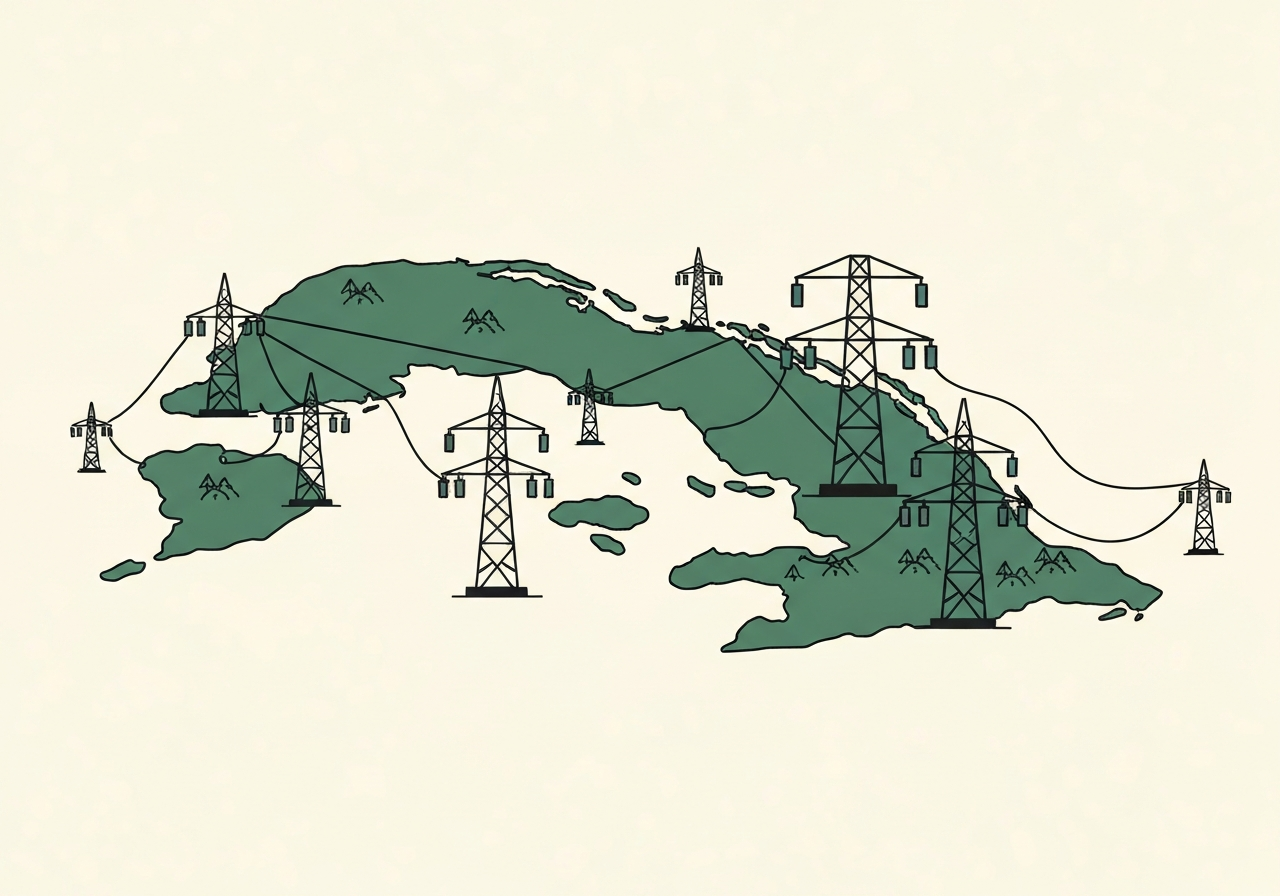
Lead: On March 16, 2026, Cuba’s national electricity system suffered a full collapse, the island’s state operator reported, leaving large parts of the country without power. The blackout followed weeks of reported fuel shortages and comes after Cuban leaders said no oil shipments had arrived in the previous three months. State crews and emergency teams began restoring service, while officials and outside observers debated whether shortages, aging infrastructure or external restrictions were the primary cause. Authorities warned that restorations will be gradual and that critical services are being prioritized.
Key Takeaways
- The national grid collapsed on March 16, 2026, according to Cuba’s state power operator; outages were reported across the island.
- President Miguel Díaz-Canel said no oil had been delivered to Cuba in the prior three months, a condition officials link to the crisis.
- Cuba relies heavily on oil for electricity generation; authorities have reported rationing of medical supplies and drops in tourism tied to energy shortages.
- Unofficial fuel prices have surged, with reports of up to $300 to fill a vehicle tank on the black market.
- Cuban officials have blamed tightened U.S. fuel flows; critics point to long-term underinvestment in generation and transmission assets.
- State crews are prioritizing hospitals, water systems and essential services during staged power restorations.
- CNN contacted the White House for comment; U.S. officials had not issued a public response at the time of reporting.
Background
Cuba’s electricity system has faced repeated interruptions in recent years, with authorities citing a combination of fuel scarcity and degraded infrastructure. The island’s thermal plants are heavily oil-dependent, leaving generation vulnerable to supply disruptions. Cuban leaders have increasingly framed outages as linked to external restrictions on fuel, while domestic critics and some engineers highlight deferred maintenance, aging turbines and weak grid interconnections.
The situation has broader socioeconomic consequences: intermittent power curtails factory production, complicates refrigeration for medicines and food, and deters international visitors. Cuban officials report that shortages have already prompted rationing of some medical supplies and contributed to reduced tourism revenues. Repairing or replacing large generating units and upgrading transmission lines would require capital and access to spare parts that have been limited by both financial constraints and trade frictions.
Main Event
Early on Monday, March 16, Cuba’s state-run power operator announced a nationwide system collapse and said teams were mobilized to restore service in stages. Operators reported that large generating units and critical substations lost synchronisation, triggering a cascading outage that affected urban and rural areas. The operator said restorations would begin with hospitals and water treatment facilities before returning service to residential and commercial zones.
President Miguel Díaz-Canel reiterated in public remarks that no oil shipments had arrived in the previous three months and that Cuban authorities had engaged in talks with U.S. counterparts to discuss outstanding bilateral issues. Government statements emphasized the prioritization of life‑sustaining services and the deployment of repair crews to the most affected regions. At the same time, regional governors and municipal officials reported localized challenges, including bottlenecks in spare-part deliveries and difficulties coordinating field repairs.
State media framed the blackout within the broader context of economic pressures and external constraints on fuel access, while independent commentators pointed to chronic underinvestment in generation and grid maintenance. Cuban emergency services set contingency protocols to protect patients, hospitals and essential infrastructure. International reaction was limited in the immediate hours after the collapse; CNN reached out to the White House for comment and found no immediate public reply.
Analysis & Implications
The collapse highlights two overlapping vulnerabilities: reliance on imported oil for power and prolonged underinvestment in generation and transmission assets. When thermal plants operate near the end of their technical life without adequate spare parts, a single supply shock or mechanical failure can cascade into a system-wide outage. That structural fragility means Cuba remains highly sensitive to external disruptions in fuel availability and internal maintenance shortfalls.
Economically, sustained or repeated nationwide outages can depress productivity, harm refrigerated supply chains (including medicines and food), and slow tourism recovery—an important source of foreign exchange. Reports of medical supply rationing underscore public health risks; prolonged disruptions to refrigerated logistics and medical equipment could compromise care, particularly for vulnerable patients dependent on electrically powered treatments.
Politically, the government faces pressure to demonstrate quick, credible fixes while balancing scarce resources. Public expectations for reliable electricity remain high, yet solutions—such as securing fuel, modernizing plants, or investing in renewable generation and grid resilience—require foreign exchange, technical partnerships and time. International actors considering aid or negotiation must weigh humanitarian imperatives against political and legal constraints tied to sanctions and bilateral relations.
Reactions & Quotes
Government sources framed the event as part of an acute fuel-shortage emergency while promising prioritized restoral of critical systems.
No oil has been delivered to the island in the last three months.
Miguel Díaz-Canel, President of Cuba
President Díaz-Canel’s remark links the outage to interrupted fuel flows and was followed by references to diplomatic contacts with U.S. officials; critics say attribution is incomplete without accounting for infrastructure decay.
The state power operator described restoration steps and prioritized service for hospitals and water plants while crews worked on reconnecting major units.
Efforts are underway to restore power across the island; crews are prioritizing hospitals and critical infrastructure.
State power operator (official statement)
Operators emphasized a staged approach to restart, noting that reconnection must be handled sequentially to avoid further instability.
Unconfirmed
- The precise technical trigger(s) for the March 16 collapse—whether mechanical failure, operational error, or fuel-induced derating—had not been publicly verified at the time of reporting.
- The extent to which U.S. policy alone accounts for recent fuel shortfalls is debated; independent verification of shipment records and third-party logistics data was not available.
Bottom Line
The March 16 nationwide grid collapse exposed a fragile system that combines heavy oil dependence with aging infrastructure and constrained access to spare parts. Immediate priorities are restoring power to hospitals, water systems and other life‑support services while preventing further cascading failures as units are brought back online.
Over the medium term, Cuba faces a strategic choice: secure stable fuel supplies and maintain legacy thermal capacity, or accelerate investment in grid modernization and alternative generation to reduce vulnerability. Both paths require substantial resources, sustained technical partnerships and time—factors that will shape public welfare and the island’s economic recovery in the months ahead.