
Lead
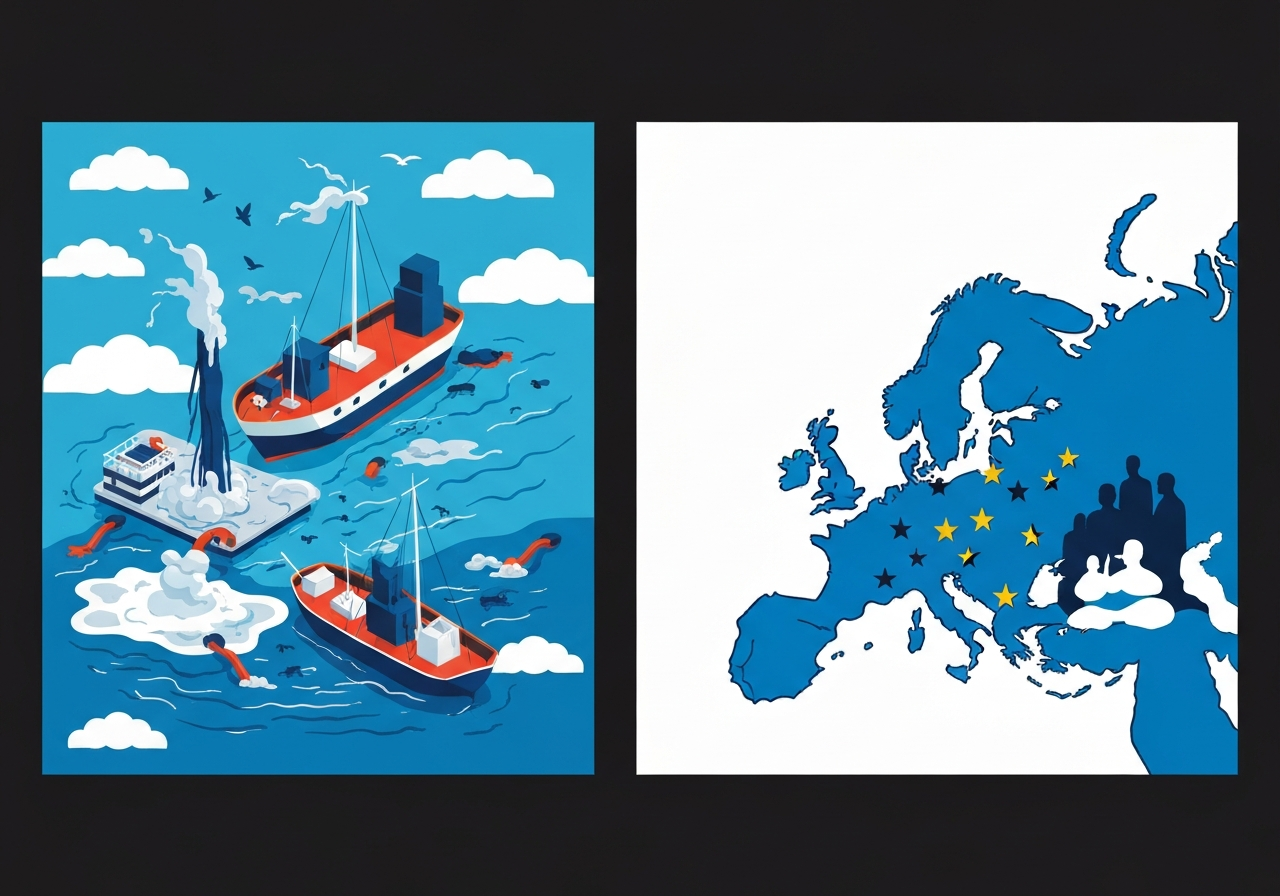
On March 16, 2026, EU foreign ministers in Brussels told U.S. leaders they will not send warships to secure the Strait of Hormuz, rejecting President Donald Trump’s appeal for European help after Iran partly closed the vital waterway. Ministers discussed widening the mandate of the EU naval mission Aspides to patrol the strait but concluded there was no appetite to extend operations into what many described as a U.S.-led conflict. Top EU diplomat Kaja Kallas stressed Europe’s interests are at stake but insisted: “This is not Europe’s war.” The decision comes as oil prices climbed above $100 a barrel amid continued disruption to Gulf shipping.
Key takeaways
- EU foreign ministers met in Brussels on March 16, 2026, and decided not to expand Aspides’ mandate to the Strait of Hormuz.
- The 27 EU member states expressed a preference to strengthen existing missions, but none supported active patrolling of the strait.
- The Strait of Hormuz carries roughly one-fifth (≈20%) of global seaborne oil; recent closures pushed Brent prices above $100 per barrel last week.
- U.S. President Donald Trump publicly urged allies to help secure the waterway and suggested France and other partners were in talks.
- German leaders emphasized NATO’s defensive role; Defense Minister Boris Pistorius said the U.S. and Israel “chose this path.”
- Luxembourg Deputy Prime Minister Xavier Bettel rejected what he called attempts at “blackmail,” saying small member states will not be coerced into combat roles.
- Four NATO diplomats told POLITICO a full NATO mission is unlikely because unanimous backing is improbable and allies could provide faster bilateral support.
Background
The current crisis traces to U.S. and Israeli airstrikes on Tehran on Feb. 28, 2026, which killed Iran’s supreme leader and prompted Tehran to threaten and largely close passages through the Strait of Hormuz in retaliation. The strait links the Persian Gulf and the Gulf of Oman and is a chokepoint for global oil flows; interruptions quickly ripple through world markets. Washington has framed reopening and securing the waterway as a collective security priority, arguing that even countries importing modest Gulf oil volumes have a stake in keeping trade lanes open.
The EU has an existing maritime security operation in the Middle East region, known as Aspides, focused on countering trafficking and protecting shipping. Member states have varying threat perceptions and force-posture thresholds, shaped by defense capacity, public sentiment and legal mandates. Historical precedents show European contributions to Gulf security are often bilateral and politically sensitive, especially when the mission could be perceived as combat involvement in a conflict initiated by non-European actors.
Main event
During the Brussels meeting, ministers spent hours in closed-door sessions weighing proposals to broaden Aspides’ remit to the Strait of Hormuz. Several delegations favored bolstering maritime surveillance or logistical support short of frontline patrols, but a consensus against sending EU warships into the strait emerged. Kaja Kallas briefed reporters after the talks, saying ministers wanted to strengthen regional efforts but would not change the mission’s mandate to include active deployment in Hormuz.
German leaders were among the most vocal in rejecting operational commitments. Defense Minister Boris Pistorius emphasized Germany’s duty to defend NATO territory and said Europe did not start the conflict. Chancellor Friedrich Merz reiterated a longstanding view that NATO is primarily defensive, arguing alliance structures are not designed for interventionist missions far from member territory.
Luxembourg’s Xavier Bettel framed the request from Washington as inappropriate pressure. In Brussels he warned against any form of coercion: “Don’t ask us,” Bettel said when reporters pressed him about troop or ship contributions. Meanwhile, U.S. officials including Ambassador to NATO Matthew Whitaker continued to press the case that securing the strait serves allied interests and that allies should offer support.
Analysis & implications
Politically, the EU stance underscores a transatlantic split over burden-sharing and strategic priorities. European capitals are wary of being drawn into what many see as a U.S.- and Israel-initiated escalation; they also face domestic political constraints and limited appetite for open-ended naval operations. That reticence may frustrate Washington and deepen bilateral tensions, particularly if U.S. officials publicly equate assistance with alliance credibility.
Operationally, excluding EU warships from Hormuz leaves the United States to rely on U.S. naval assets and on ad hoc bilateral support from willing partners. NATO’s structure — which generally requires consensus for collective missions — reduces the likelihood of a quick alliance-led deployment. Some allies could still provide logistics, intelligence-sharing or escortelement in nearby waters without a formal NATO or EU mandate.
Economically, prolonged disruptions to Hormuz risk sustained higher oil prices, feeding inflationary pressures in import-dependent economies and prompting emergency energy policy responses. Energy markets may react even to the perception of escalating involvement; insurance and shipping costs are likely to rise while companies reroute tankers around longer and costlier passages when feasible.
Regionally, a U.S.-led security focus on Hormuz could harden Tehran’s calculus and invite further asymmetric responses such as continued threats to commercial shipping or proxy strikes. European refusal to commit combat assets may constrain escalation, but it also removes a potential diplomatic instrument for collective pressure and shared deterrence.
Comparison & data
| Metric | Value/Note |
|---|---|
| Share of world seaborne oil via Hormuz | ≈20% |
| EU member states | 27 |
| Date of U.S./Israeli strikes on Tehran | Feb. 28, 2026 |
| Oil price | Brent > $100 per barrel (recent surge) |
The table highlights the strategic significance of the strait (roughly one-fifth of seaborne oil) and the diplomatic constraints: 27 sovereign EU states must reconcile divergent threat perceptions before expanding a common military mandate. Even modest changes to naval rules of engagement would require political agreement that, as ministers said, is currently lacking.
Reactions & quotes
EU leaders and member-state officials offered terse, sometimes pointed responses that reflected both strategic caution and political unease about Washington’s public pressure.
“This is not Europe’s war, but Europe’s interests are directly at stake.”
Kaja Kallas, EU High Representative (top EU diplomat)
Kallas framed the decision as defensive restraint: Europe will protect its interests but will not accept mission creep into a conflict many ministers believe was set in motion by other actors.
“Don’t ask us.”
Xavier Bettel, Deputy Prime Minister of Luxembourg
Bettel’s blunt response was aimed at what he described as attempts to pressure smaller member states into operations they had not agreed to; his remark explicitly rejected any form of coercion from allies.
“Ultimately that security of the Strait of Hormuz is in their interest.”
Matthew Whitaker, U.S. Ambassador to NATO
Whitaker reiterated Washington’s view that allied support is warranted given the global economic stakes, underscoring the diplomatic tug-of-war between the U.S. and hesitant European capitals.
Unconfirmed
- Which specific countries President Trump discussed with about securing the strait has not been confirmed publicly.
- There is no public, formal request from the United States to NATO for a collective mission as of March 16, 2026, according to diplomats cited; that could change if Washington submits an official proposal.
- Reports of which European navies might offer bilateral assistance remain unverified and subject to future announcements.
Bottom line
European leaders made a calculated decision to avoid direct military involvement in the Strait of Hormuz, reflecting political limits, legal constraints and the desire not to be drawn into a conflict initiated by other actors. The move preserves EU unity for now but risks aggravating transatlantic friction if Washington equates assistance with alliance credibility. For markets and regional security, the short-term effect is clear: shipping remains disrupted and oil prices elevated, while long-term outcomes hinge on whether diplomacy can reverse Iran’s restrictions or whether alternative security arrangements emerge.
Policymakers and markets should watch three dynamics closely: any formal U.S. request to NATO or the EU, moves by individual European states to provide bilateral support, and Tehran’s next steps regarding shipping and escalation. Each will shape whether the current impasse hardens into a prolonged strategic rupture or yields to negotiated de-escalation.