
Lead
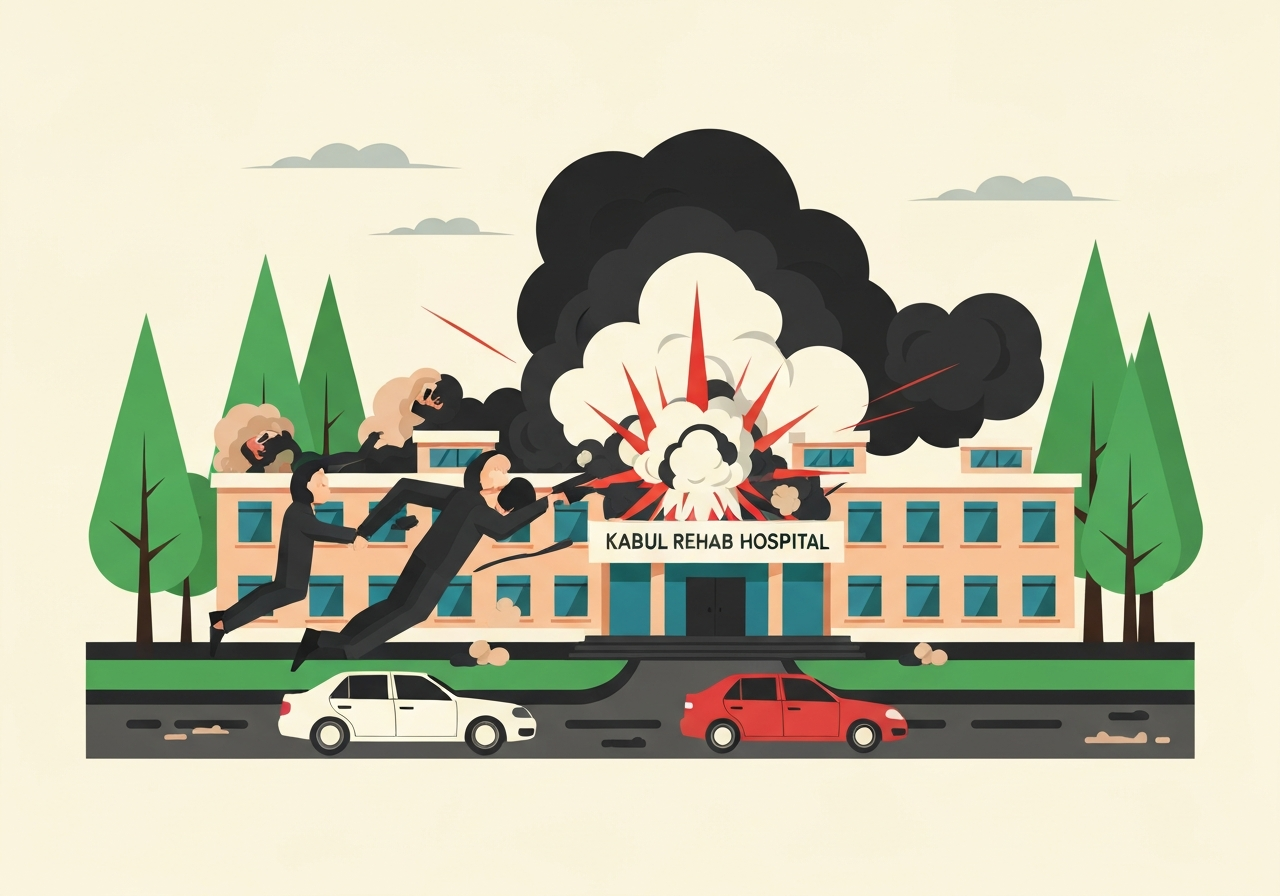
Afghan officials said a Pakistan airstrike struck a 2,000-bed drug rehabilitation hospital in Kabul around 9 p.m. local time on Monday, killing at least 400 people and injuring about 250. The attack came amid a weekslong escalation of cross-border fighting that began in late February and has seen repeated airstrikes and exchanges of fire. Pakistan rejected the allegation that it struck a hospital, saying its strikes targeted military infrastructure in Kabul and eastern provinces. International calls for a ceasefire remained unanswered as the two governments traded starkly different accounts.
Key Takeaways
- Afghanistan’s deputy government spokesperson reported the strike hit a 2,000-bed drug rehabilitation hospital in Kabul at about 9 p.m., with a death toll of 400 and roughly 250 injured so far.
- Pakistani officials deny any strike on civilian facilities and say their air operations hit “technical support infrastructure and ammunition storage facilities” in Kabul and Nangarhar.
- The incident follows weeks of intense border clashes that began in late February and disrupted a Qatar-brokered ceasefire from October.
- The U.N. Security Council urged Afghanistan’s authorities to step up counterterrorism efforts in a resolution adopted unanimously in the days before the strike.
- Both sides have issued conflicting casualty claims: Pakistan says its military has killed 684 Afghan Taliban fighters; Afghan officials report lower numbers and say they have killed more than 100 Pakistani soldiers.
- Local footage showed rescue teams working amid ruins and fires, with security forces and firefighters recovering bodies and treating survivors.
- Afghan officials described the strike as a potential violation of international norms; Pakistan framed its operations as precision attacks on militant infrastructure.
Background
The most serious fighting between Afghanistan and Pakistan in years erupted in late February after reciprocal cross-border attacks, with both capitals accusing the other of harboring or enabling militants. Pakistan accuses elements inside Afghanistan of providing sanctuary to the Pakistani Taliban and other groups that have struck inside Pakistan; Kabul denies formal support for such groups. A ceasefire mediated by Qatar in October held temporarily but was undermined by renewed operations and tit-for-tat strikes in recent months.
Those tensions have played out against a complex security environment in which multiple militant groups, including al-Qaida and Islamic State affiliates, retain a footprint in the region. Islamabad has publicly framed recent strikes as part of an “open war” against cross-border terrorism, while Afghan officials frame Pakistani operations as violations of Afghan sovereignty. The divergent narratives have hardened domestic political positions and complicated third-party diplomatic efforts to de-escalate.
Main Event
Afghan deputy government spokesperson Hamdullah Fitrat posted on X that an airstrike struck a large section of the drug rehabilitation hospital in Kabul late Monday, collapsing wards and igniting fires that rescue teams struggled to control. Local television footage shared on social platforms showed security personnel using flashlights to carry casualties out of burning ruins and firefighters attempting to douse persistent flames. Fitrat said rescue and recovery teams were on site amid chaotic scenes as authorities tallied victims.
Pakistan’s Information Minister, Attaullah Tarar, wrote on X in the early hours Tuesday that the Pakistani military had carried out “precision airstrikes” targeting military installations in Kabul and in the eastern province of Nangarhar, asserting that technical support and ammunition depots were destroyed. Islamabad rejected the hospital allegation and called Afghan statements “false and misleading,” accusing Kabul of seeking to inflame public sentiment. The two sides continue to provide incompatible accounts of what was struck and why.
The strike occurred hours after officials reported fresh exchanges of fire along the shared border that killed four people in Afghanistan, and amid both capitals’ claims of battlefield successes and losses. Afghan government spokesperson Zabihullah Mujahid publicly condemned the attack as targeting civilian sites and patients, calling it a crime against humanity. Pakistani officials said their targeting was precise and intended to avoid collateral damage, framing the operations as defensive measures against cross-border threats.
Analysis & Implications
The reported strike on a major medical facility—if independently confirmed—would represent a sharp escalation with immediate humanitarian consequences, given the high casualty figures and the destruction of critical health infrastructure. Hospitals and rehabilitation centers serve vulnerable populations; their loss worsens already fragile access to care in Kabul and could displace thousands of patients and staff. Even where intent is disputed, the operational consequences for medical capacity are tangible and urgent.
Strategically, the incident deepens mistrust between Kabul and Islamabad and reduces the political space for negotiated de-escalation. Pakistan’s framing of precision strikes on facilities it labels as supporting militant proxies is intended to justify cross-border action to a domestic audience, while Afghanistan’s emphasis on civilian harm is aimed at international opinion and calls for accountability. That divergence complicates mediation by outside actors and raises the risk of further retaliatory actions.
Regionally, intensified conflict along the Afghanistan–Pakistan border risks creating security vacuums that other extremist groups could exploit. The presence of transnational networks, including al-Qaida and Islamic State affiliates, makes prolonged instability dangerous beyond bilateral bounds. Economically, continued hostilities will further strain humanitarian supply lines and could disrupt cross-border trade and relief operations in provinces already facing shortages.
Comparison & Data
| Claimant | Reported Figure | Description |
|---|---|---|
| Afghan government | 400 killed, ~250 injured | Deaths and injuries reported from the Kabul drug rehab hospital strike |
| Pakistan government | Destroyed military infrastructure | Claims strikes hit technical support and ammunition storage in Kabul and Nangarhar |
| Pakistan military (earlier claim) | 684 Afghan Taliban killed | Casualty figure claimed by Pakistan in broader operations; disputed by Kabul |
| Afghan officials (earlier claim) | 100+ Pakistani soldiers killed | Casualty figure claimed by Afghan authorities in cross-border clashes |
The table shows competing tallies and assertions from both sides; there is no independent, third-party verification of the hospital strike or the figures currently cited. Discrepant numbers are common in active conflicts and reflect differing methodologies, motivations, and access to verification on the ground. Humanitarian agencies and neutral monitors—where able to access sites—will be essential to confirm casualty counts and assess damage to civilian infrastructure.
Reactions & Quotes
Afghan officials framed the strike as a flagrant attack on civilians and medical care, calling for international condemnation and accountability. Their public statements aim to mobilize diplomatic pressure and humanitarian assistance for the victims.
“Targeting hospitals and civilian sites to perpetrate horrors is a crime against humanity.”
Zabihullah Mujahid, Afghan government spokesperson
Pakistan’s government reiterated that its operations were directed at militant infrastructure, seeking to justify the strikes as counterterrorism measures. Islamabad’s messaging emphasizes precision and a focus on military targets to counter allegations of civilian harm.
“The Pakistani military carried out precision airstrikes on technical support infrastructure and ammunition storage facilities used by terror proxies.”
Attaullah Tarar, Pakistan Information Minister
International bodies have urged restraint and called for measures to protect civilians. The U.N. Security Council had recently urged Afghan authorities to step up counterterrorism efforts while expressing concern about rising violence across the border—a reflection of wider international unease about the bilateral clashes.
Unconfirmed
- The precise cause of the Kabul hospital collapse and whether the building was struck by Pakistani munitions remains unverified by independent observers.
- The reported death toll of 400 and 250 injured comes from Afghan officials and has not yet been independently confirmed by neutral monitors or international agencies.
- Pakistan’s assertions that all strikes hit only military infrastructure and caused no collateral damage have not been substantiated by third-party on-site verification.
- The divergent casualty counts claimed by both sides for recent battles lack independent confirmation and may reflect overlapping or misattributed incidents.
Bottom Line
The reported strike on a major Kabul hospital, if validated, marks a troubling escalation with severe humanitarian consequences and a likely erosion of any fragile restraints between Afghanistan and Pakistan. The immediate priority is independent verification of the strike, protection and treatment of survivors, and safe access for medical and humanitarian teams.
Absent a credible, transparent investigation and urgent diplomatic engagement, the incident risks entrenching reciprocal violence, complicating regional security, and creating openings for other extremist groups to exploit the instability. International actors and neutral monitors will play a critical role in verifying facts and pressing both sides toward de-escalation.