
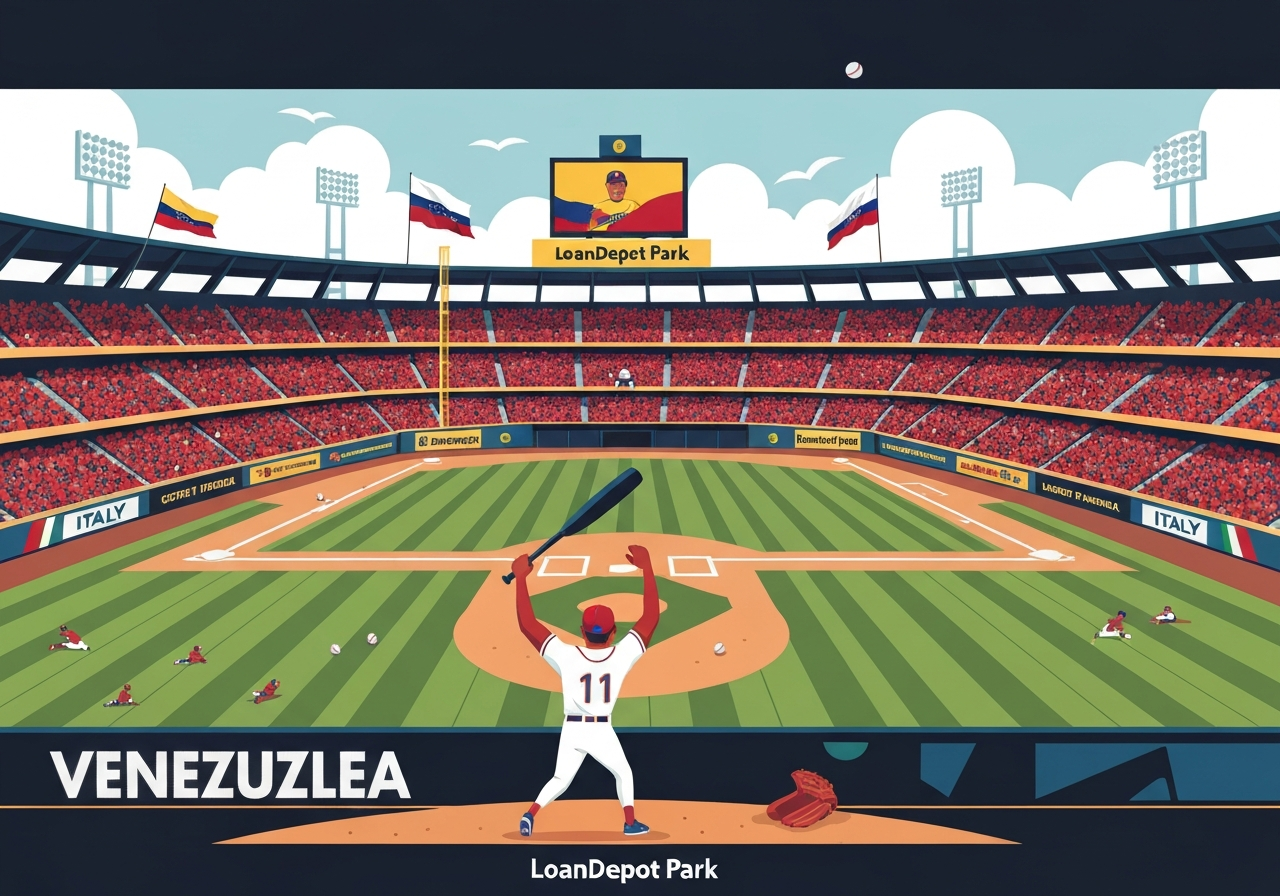
On March 16, 2026 at loanDepot Park in Miami, Venezuela beat Italy 4-2 to reach the World Baseball Classic final. The win was sealed by a balanced effort: a fourth-inning solo homer by Eugenio Suárez and a decisive seventh-inning rally that produced multiple runs. Pitching and situational defense held Italy to two runs, while Venezuela’s offense delivered timely hits from Luis Arraez and others. The game featured tense moments — including an umpire struck by a pitch in the sixth inning — and a raucous crowd waving flags for both nations.
Key Takeaways
- Final score: Venezuela 4, Italy 2; game played March 16, 2026 at loanDepot Park, Miami.
- Eugenio Suárez hit a solo home run in the fourth inning that gave Venezuela a key lead.
- Luis Arraez delivered an RBI single in the seventh inning that extended Venezuela’s advantage.
- Ronald Acuña Jr. scored in the seventh, part of the rally that turned a close game into a multi-run lead.
- Home plate umpire Jeremie Rehak was checked after being struck by a pitch before the bottom of the sixth inning.
- Venezuelan pitchers, including José Buttó and Andres Machado, closed out critical innings to preserve the lead.
- LoanDepot Park hosted a partisan but mixed crowd, with visible support for both Italy and Venezuela throughout the contest.
Background
The 2026 World Baseball Classic has expanded baseball’s international showcase, and the semifinal between Italy and Venezuela brought together a mix of MLB stars and domestic standouts. Venezuela entered the semifinals with expectations after deep talent on its roster; Italy advanced by combining veteran pitching performances and opportunistic offense. Historically, Venezuela has been one of the WBC’s stronger teams, while Italy has been an overperformer at recent international tournaments, leveraging dual-national players and experienced pros.
LoanDepot Park in Miami has become a regular WBC venue, selected for its large Latin American fan base and MLB-quality facilities. The semifinal matchup carried extra interest because several players on both sides are notable MLB contributors, creating a higher-stakes atmosphere than standard exhibition play. National pride and roster depth mattered: Venezuela’s lineup featured established power and contact hitters, while Italy’s pitching staff tried to neutralize those threats with a mix of starters and relievers.
Main Event
The game opened with both teams exchanging opportunities but few runs in the early innings. Italy manufactured offense in the second and fourth innings, while Venezuela responded with situational hitting and a run-scoring burst in the middle innings. In the fourth, Eugenio Suárez connected for a solo home run that energized Venezuelan supporters and shifted momentum toward the visitors’ dugout.
The seventh inning proved decisive. Venezuela produced multiple hits, including Luis Arraez’s RBI single, and Ronald Acuña Jr. crossed the plate during the sequence to pad the lead. Italy threatened in isolated plate appearances but could not mount a multi-run counterattack; Venezuela’s bullpen answered with scoreless frames in the late innings.
There were tense moments behind the plate when home plate umpire Jeremie Rehak was checked after being struck by a pitch prior to the bottom of the sixth. Umpires and medical staff evaluated him before play resumed. On the field, defensive plays — notably at shortstop and first base — helped extinguish Italian rallies and preserve Venezuela’s advantage down the stretch.
Analysis & Implications
Venezuela’s victory underscores its depth across both pitching and lineup construction. The team combined middle-order power (Suárez) with contact and situational hitters (Arraez, Acuña) to generate a balanced attack; that balance is crucial in short, high-leverage tournament games where single innings often decide outcomes. The bullpen’s ability to limit Italy to two runs allowed Venezuela’s offense to operate with less pressure in the late frames.
For Italy, the semifinal exit highlights the challenge of converting scoring chances into runs against top-tier international competition. Italy produced baserunners and creative small-ball moments but left runners stranded in key innings. Against teams with MLB-caliber relievers, those missed opportunities become decisive. Italy’s overall WBC run, however, continues to signal the program’s growth and the value of its dual-national recruitment strategy.
On a broader level, the game demonstrated the WBC’s role in promoting baseball narratives beyond MLB seasons: it pits national programs against one another under high visibility, influencing player reputations, coaching evaluations, and national program investments. Venezuela advances to the final, where it will face the tournament’s other semifinal winner; that matchup will test whether Venezuela’s late-inning offense and dependable relief staff can sustain success against another elite opponent.
Comparison & Data
| Metric | Venezuela | Italy |
|---|---|---|
| Runs | 4 | 2 |
| Notable HRs | Eugenio Suárez (solo, 4th) | — |
| Key RBI | Luis Arraez (7th inning) | Vinnie Pasquantino / Jon Berti contributions |
| Umpire incident | Home plate umpire Jeremie Rehak checked after being hit by a pitch (6th) | |
The boxscore reflects a close contest decided by one pivotal inning. Venezuela’s ability to convert in the seventh (multi-run inning) separated the teams; otherwise the game remained within one or two runs for much of the contest. Defensive plays and bullpen matchups were the primary determinants after the fourth inning homer by Suárez.
Reactions & Quotes
“We stayed with the plan and got big hits when it mattered,”
Venezuela manager (postgame comment)
That comment, offered in the mixed zone after the game, framed Venezuela’s view that timely offense and steady pitching produced the result. Players in the Venezuelan dugout celebrated together after the final out, with pitcher José Buttó among those visibly relieved and elated.
“Credit to Venezuela — they made the plays and we didn’t capitalize enough,”
Italy coach (postgame reflection)
Italy’s coach acknowledged missed opportunities and credited Venezuela for executing in high-leverage moments. Fans on both sides delivered audible reactions; Venezuelan supporters celebrated loudly after the seventh-inning rally while Italian flags and chants persisted throughout the night.
Unconfirmed
- Individual pitching decisions (official winning and losing pitchers) should be confirmed through the official boxscore; this summary does not assign final pitching decisions beyond noting key contributors.
- Any postgame injury details or roster changes reported unofficially in the stadium after the game remain unverified.
Bottom Line
Venezuela’s 4-2 win over Italy in the March 16, 2026 semifinal combined power, clutch hitting and bullpen steadiness to advance the team to the WBC final. A fourth-inning home run and a productive seventh inning provided the scoring edge Venezuela needed to separate itself from a resilient Italian side.
Looking ahead, Venezuela will face one more top opponent for the WBC title; its mix of timely offense and reliable relief work will be tested again. Italy’s tournament run nonetheless boosts its international standing and reinforces the depth emerging from programs that integrate major-league talent with dual-national players.