
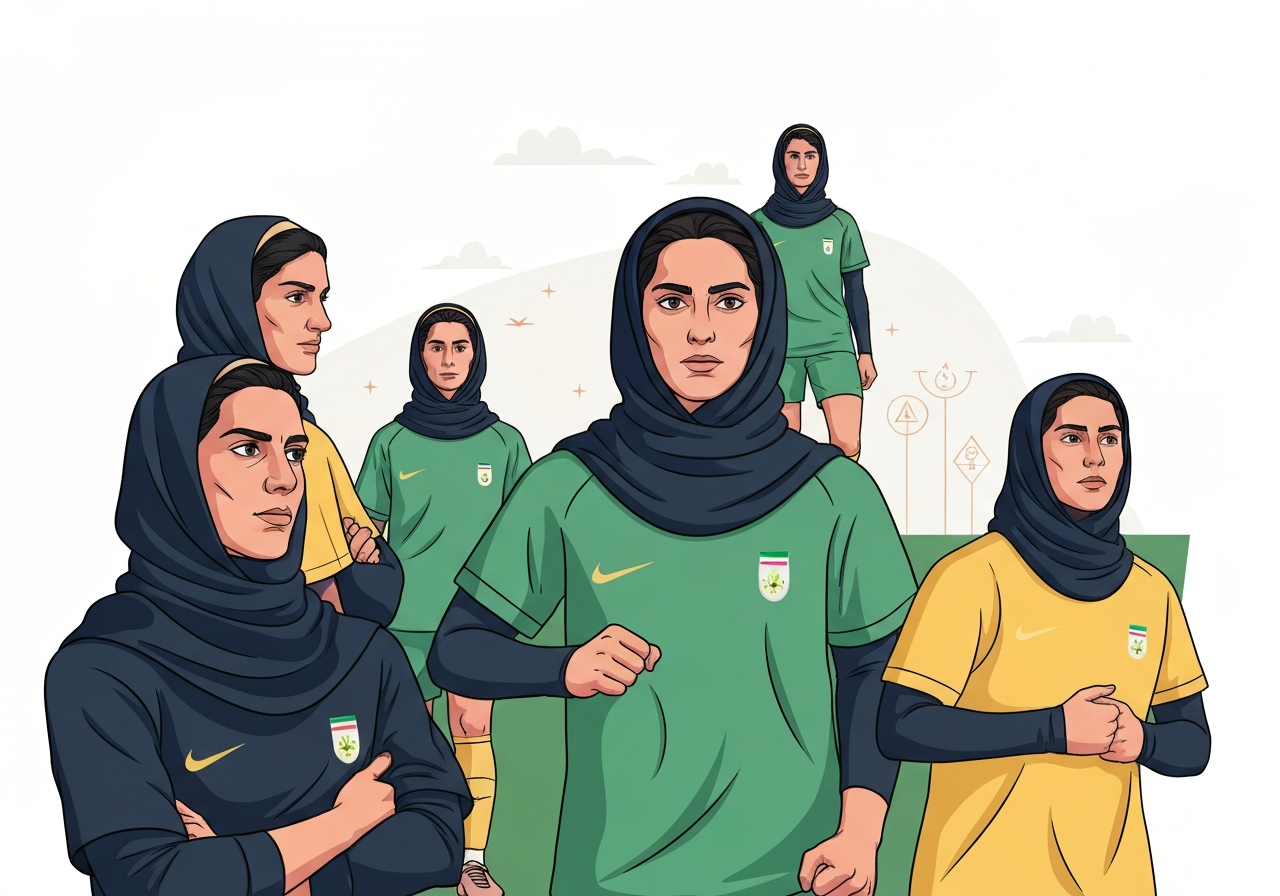
Two Iranian women soccer players granted asylum in Australia made a public appearance training with a professional club in Brisbane on Monday, their first photos since receiving humanitarian visas. Fatemeh Pasandideh and Atefeh Ramezanisadeh were shown smiling alongside the Brisbane Roar women’s elite squad after most of Iran’s delegation departed Australia bound for Oman. The images and brief social-media comments came as officials said the two have been moved to an undisclosed safe location and are receiving government assistance. The episode follows a chaotic sequence after Iran’s exit from the Women’s Asian Cup and Australia’s offer of humanitarian visas to several team members.
Key Takeaways
- Fatemeh Pasandideh and Atefeh Ramezanisadeh were pictured training with Brisbane Roar on Monday, marking their first publicly shared appearance since asylum was granted.
- Seven people initially accepted Australia’s humanitarian offers (six players and one staffer); five later reversed their decisions and returned with the rest of the delegation.
- The remainder of Iran’s squad left Sydney for Kuala Lumpur on March 10 and then flew to Oman Monday night, according to reports.
- The players arrived in Australia shortly before the Iran war began on Feb. 28 and drew attention after a muted response to Iran’s national anthem at the tournament.
- Brisbane Roar posted a welcome message and said it offered the two players “a place to train, play and belong”; the club referred further questions to Australia’s Department of Home Affairs.
- Pasandideh posted a photo with FIFA Chief Football Officer Jill Ellis overlaid with the words, “Everything will be fine,” and both players left brief thank-you comments on the club post.
- Australian officials said the two are in a secure, undisclosed location and receiving government support; the Asian Football Confederation said it will monitor the players through Iran’s football federation.
Background
The Iranian women’s national team traveled to Australia for the Women’s Asian Cup shortly before the conflict in Iran escalated on Feb. 28. At the opening matches some players’ silent response to Iran’s national anthem attracted international attention and was interpreted in various ways by commentators and observers. The team completed its group-stage campaign but was eliminated from the tournament, prompting urgent public concern about the players’ safety if they returned to Iran amid the broader unrest.
As Australia prepared to offer humanitarian visas, Iranian officials publicly rejected the notion the women would be at risk on return. Iranian First Vice President Mohammad Reza Aref said Iran would “welcome its children with open arms” and guaranteed their security, while diaspora groups and some public figures raised alarms about potential repercussions. The diplomatic and media attention created a fraught environment as team management, confederation officials and national authorities navigated competing responsibilities to players’ welfare and international protocol.
Main Event
On Monday Brisbane Roar posted Instagram photos showing Pasandideh and Ramezanisadeh training and posing with the club’s elite women’s squad. The club used supportive language and an image of a lioness, echoing the moniker used by some Iranian players and supporters. Both players left short messages of thanks beneath the post; the club declined further comment and directed inquiries to Australia’s Department of Home Affairs.
Australian authorities have said the two players who remained in Australia after accepting visas were relocated to an undisclosed safe location and are receiving assistance. Officials described private airport meetings with individual players without team minders present as part of the visa process. Initially, six players and one staff member accepted humanitarian visas and assurances of permanent residence, but five who had accepted later chose to rejoin the delegation and left Australia.
The rest of Iran’s delegation departed Sydney for Kuala Lumpur on March 10 and later flew from Kuala Lumpur to Oman on Monday night, a move the Asian Football Confederation said was arranged with the Iranian embassy. AFC General Secretary Windsor John told The Associated Press the confederation and FIFA would keep in touch with Iran’s federation to check on the players’ welfare.
Analysis & Implications
The public training photos signal a temporary stabilization for the two women who accepted asylum, offering them access to club facilities and a degree of visibility that can help secure further sporting or residency pathways. For Brisbane Roar and Australian authorities, the case illustrates how sport, diplomacy and human-rights concerns increasingly intersect at high-profile tournaments. The club’s open support is likely aimed at providing immediate care while avoiding actions that could complicate ongoing immigration or diplomatic processes.
The reversals by five of the seven who initially accepted Australia’s offers highlight the complex pressures faced by athletes in exile scenarios: family considerations, community influence, fear of reprisals, and uncertainty about life abroad can all drive last-minute decisions. Reports that local Iranian groups urged reversals—if accurate—would indicate effective transnational influence on vulnerable individuals; however, public evidence for coercion remains limited and contested.
At a broader level, the incident underscores how national sporting delegations can become flashpoints in geopolitical crises. Offers of asylum by host nations raise procedural and ethical questions about confidentiality, the timing of public disclosures, and the protection of claimants’ autonomy. For football governing bodies, the episode may prompt tighter protocols for safeguarding players travelling from conflict zones and clearer coordination with host governments.
Comparison & Data
| Category | Number |
|---|---|
| Players/staff who initially accepted Australia offers | 7 (6 players + 1 staffer) |
| Those who later reversed and left | 5 |
| Remaining in Australia | 2 (Pasandideh, Ramezanisadeh) |
The quick numerical swing—from seven initial acceptances to two remaining—illustrates how fluid asylum decisions can be under social and diplomatic pressure. Comparisons with past sporting asylum cases show similarly rapid reversals when external influence or incomplete information affects the individuals involved.
Reactions & Quotes
Brisbane Roar framed its post as a welcome and pledged support while the women consider their next steps. The club’s CEO emphasized a commitment to a supportive environment.
“We remain committed to providing a supportive environment for them whilst they navigate the next stages.”
Brisbane Roar CEO Kaz Patafta (club statement)
Iranian officials rejected claims the players would be unsafe on return and framed the situation as internal family and national affairs. The statement underlined Iran’s official position that returning athletes would be protected.
“Iran welcomes its children with open arms and the government guarantees their security.”
Iran First Vice President Mohammad Reza Aref (official statement)
The Asian Football Confederation stressed it will stay in contact with Iran’s football federation and FIFA to monitor the players’ welfare, reflecting the governing bodies’ dual responsibilities to member associations and individual athletes.
“We will check on them regularly through the Iranian football federation as they are our girls as well.”
Windsor John, AFC General Secretary (interview)
Unconfirmed
- Whether the five who returned were subject to direct pressure from Tehran remains unproven in public reporting and lacks independent corroboration.
- Specific reasons each individual gave for reversing their asylum acceptance have not been released publicly, so motivations are not definitively known.
- The nature and duration of any future monitoring or welfare checks by AFC/FIFA through Iran’s federation have not been outlined in detail.
Bottom Line
The images of Pasandideh and Ramezanisadeh training with Brisbane Roar mark a notable, if tentative, outcome for two athletes who accepted asylum amid geopolitical turmoil. While they have access to club facilities and government support in Australia, the broader case highlights the volatile mix of sport, politics and individual safety that can emerge at major tournaments.
For policymakers, sports bodies and clubs, the episode reinforces the need for clear protocols on protecting athletes in distress, careful handling of asylum offers, and respect for the autonomy of individuals making life-defining choices. Observers should watch for follow-up reporting on the two players’ legal status, any formal pathways to residency, and how confederations handle welfare monitoring going forward.
Sources
- Associated Press (news agency) — original reporting on the asylum offers, team movements and statements.
- Brisbane Roar Instagram (club social post) — images and welcome message posted by the club.
- Asian Football Confederation (sports governing body) — comments attributed to AFC General Secretary on player welfare.
- Australian Department of Home Affairs (government) — referenced as the agency handling visa and welfare questions.