
Lead
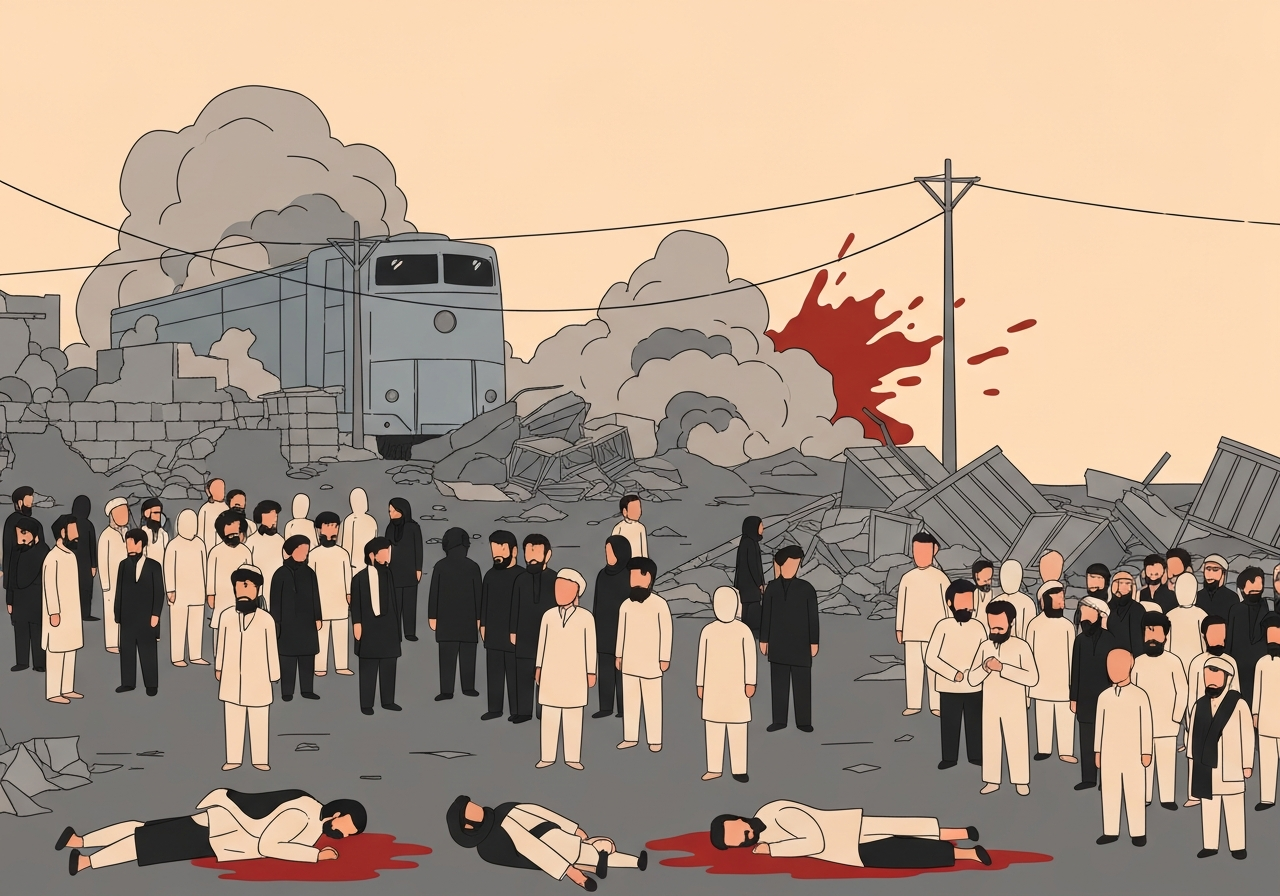
Afghan officials say a Pakistani airstrike struck a drug rehabilitation center in Kabul on the night of March 16–17, 2026, killing at least 400 people and injuring about 250, in the deadliest incident of a three-month cross-border conflict. Afghan emergency teams recovered bodies from smoking rubble as officials described the site as a Taliban-run rehabilitation compound that housed roughly 200 patients. Pakistan acknowledged carrying out multiple strikes inside Afghanistan but said the struck site was an ammunition depot, calling Afghan statements “false claims.” A Taliban spokesman warned that Afghanistan would retaliate, raising the risk of a wider war between the neighbors.
Key Takeaways
- At least 400 people were killed and 250 injured after a march 16–17, 2026 airstrike on a Kabul rehabilitation center, according to Afghan officials.
- The building struck was a drug rehabilitation facility run by the Taliban government and reportedly sheltered about 200 patients at the time of the attack.
- Pakistan said it carried out six strikes in Afghanistan and took responsibility for this attack but asserted the target was an ammunition depot, not a civilian facility.
- Afghan authorities and rescue teams described the scene as heavy rubble and burning wreckage, with ongoing recovery operations into the following day.
- The incident is the deadliest event in a three-month escalation of cross-border strikes that began in late February 2026.
- A Taliban spokesman warned of retaliation, amplifying the danger of rapid escalation to all-out conflict between the two countries.
Background
Relations between Pakistan and Afghanistan deteriorated sharply in late February 2026 after a series of cross-border incidents and mutual accusations, leading to an intensified campaign of air and artillery strikes. Long-standing tensions include disputes over militant safe havens, border management, and political influence across a porous frontier where many communities have kin on both sides. Both governments have at times engaged in diplomatic talks, but those channels have reduced amid recent violence and reciprocal military actions. The conflict has unfolded against a fragile humanitarian backdrop in Afghanistan, where health infrastructure and civilian protections remain limited following years of instability.
Drug rehabilitation centers in Kabul and elsewhere operate in a complex environment: some are run by local authorities or the de facto Taliban administration, while others are supported by NGOs. Such facilities are commonly known in their neighborhoods and, depending on circumstances, can house dozens or hundreds of inpatients and staff. International humanitarian law obliges parties to avoid targeting civilian objects and to take precautions to minimize civilian harm; however, combatants sometimes allege dual-use functions for sites that may complicate assessments. The clash of claims between Islamabad and Kabul reflects these competing narratives and raises questions for independent verification.
Main Event
On the night of March 16–17, 2026, Afghan emergency services responded to a large explosion at a compound in Kabul identified by residents and local organizations as a drug rehabilitation center. Afghan officials reported that rescue workers removed scores of bodies from collapsed structures and burning debris, with hospitals receiving hundreds of injured patients. The Afghan Ministry of Public Health told authorities and media that roughly 200 patients had been present in the struck building, a figure cited as part of the casualty assessment.
Pakistan issued a statement taking responsibility for multiple strikes inside Afghanistan on the same night, saying the operations were aimed at militant targets and that the specific site was an ammunition storage facility. Pakistani military and government spokespeople described Afghan statements about civilian casualties as “false claims,” and they emphasized that the strikes were part of broader counterterrorism measures. Afghan officials countered that the compound was widely known locally as a rehabilitation center, and they disputed Islamabad’s characterization.
As news of the casualties spread, a Taliban spokesman warned that Afghanistan would retaliate for the attack, a statement that Afghan officials and analysts said could push the two states into direct confrontation. Local humanitarian groups called for immediate access to the site to recover remains and assist survivors, while hospitals in Kabul reported receiving large numbers of wounded. International observers and diplomats began urging restraint and independent investigation to establish what happened and to verify competing claims.
Analysis & Implications
The scale of reported civilian deaths—if confirmed—marks a sharp escalation in a conflict that until now had produced periodic strikes and tit-for-tat rhetoric but not this level of mass casualties. A strike that hits a facility known to house patients raises serious legal and moral questions about target selection, proportionality, and precautions under international humanitarian law. If Pakistan’s ammunition-depot claim cannot be independently substantiated, the attack could prompt international condemnation and calls for accountability.
Politically, the incident increases pressure on both capitals. In Kabul, Afghan authorities and the de facto Taliban administration may use the strike to rally domestic and regional support and to justify retaliatory operations. In Islamabad, civilian and military leaders will face scrutiny over cross-border strike authorization, intelligence accuracy, and the potential diplomatic fallout with neighboring states and international partners. The risk of an escalating spiral is substantial: reciprocal strikes, mobilization of forces, or proxy escalations could widen the conflict beyond targeted operations.
Humanitarian consequences are immediate and severe: hospitals already stretched by limited resources must absorb hundreds of wounded, families face mass bereavement, and access for relief organizations may be constrained by security concerns. Longer term, attacks that strike healthcare or rehabilitation facilities can degrade trust in local services, displace vulnerable populations, and compound public-health crises, including drug-treatment interruptions and secondary injuries. International actors that provide assistance or recognition may be forced to reassess engagement strategies in both humanitarian and diplomatic arenas.
Comparison & Data
| Category | Reported Figure |
|---|---|
| Deaths (Afghan officials) | At least 400 |
| Injured | About 250 |
| Patients in struck building (MoH) | Approximately 200 |
| Strikes Pakistan said it carried out that night | Six |
The table above aggregates the principal figures reported by Afghan authorities and Pakistan’s description of the night’s operations. These numbers are the basis for initial humanitarian response planning and for demands for investigation; they are subject to revision as independent verification proceeds.
Reactions & Quotes
Afghan emergency teams and local organizations described chaotic recovery efforts at the strike site and called for swift international attention to the scale of civilian harm.
“False claims”
Pakistani military/government officials (statement)
Pakistani spokespeople used that phrase in public remarks denying that the strike targeted a civilian rehabilitation facility. Their statement emphasized that the operation formed part of a broader set of strikes aimed at militant infrastructure.
“Afghanistan would retaliate”
Taliban spokesman (statement)
The Taliban spokesman’s warning signaled intent to respond to what Afghan officials called a major civilian catastrophe, a declaration that analysts warn could trigger rapid escalation unless diplomatic channels and de-escalation measures are pursued.
Unconfirmed
- Whether the struck compound contained ammunition or other military materiel, as claimed by Pakistan, remains unverified by independent investigators.
- The precise breakdown of victims (patients, staff, civilians, or combatants) has not been independently confirmed and may change as forensic work continues.
- The full timeline and number of Pakistan’s strikes across Afghanistan that night are still being reconciled among international monitors and open-source reporting.
Bottom Line
The reported killing of at least 400 people in a single cross-border strike marks a potential turning point in a three-month conflict between Afghanistan and Pakistan, elevating the risk of a broader military confrontation. Competing official accounts—Afghan claims that the site was a rehabilitation center and Pakistan’s assertion that it was an ammunition depot—make independent verification urgent for legal, humanitarian, and diplomatic responses.
Immediate priorities are independent investigation, humanitarian access, and diplomatic engagement to prevent further escalation. For readers, the key issues to watch are whether impartial investigators can establish what was struck and who was responsible, how regional actors respond, and whether either side pursues retaliatory operations that could widen the conflict.
Sources
- The New York Times (U.S. national newspaper; original reporting and timeline)