
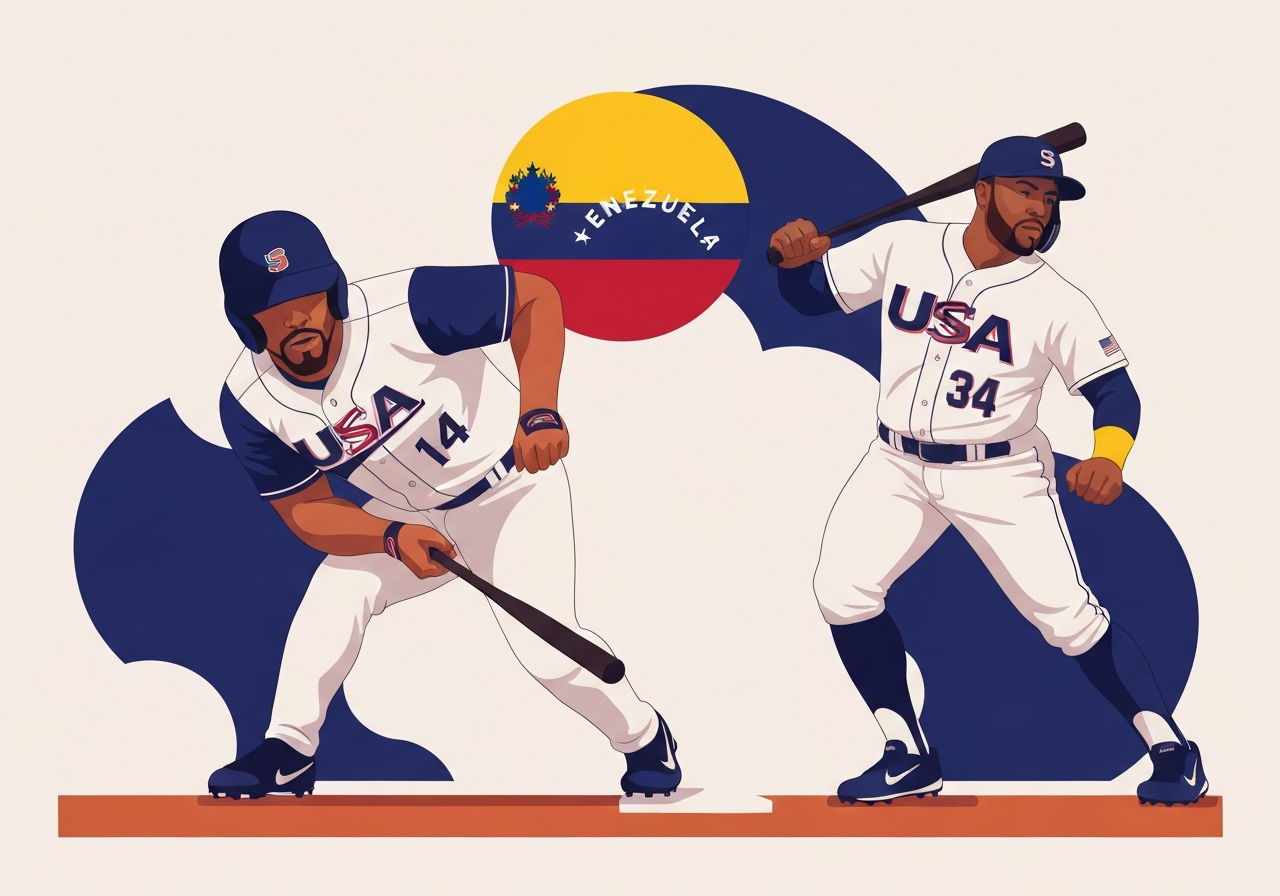
Lead: Team USA and Venezuela meet in the World Baseball Classic final on Tuesday, March 17, 2026, at 8 p.m. ET in Miami, capping a tournament that has paired two star-laden rosters on the field and two nations with strained ties off it. Venezuela reached the championship after a semifinal win over Italy on Monday, while the United States advanced by defeating the Dominican Republic on Sunday, marking the Americans’ third straight WBC final. Beyond baseball, the matchup takes place amid heightened political friction between Washington and Caracas following a US operation that resulted in Venezuelan President Nicolás Maduro’s capture and transfer to New York to face narcotics-related charges.
Key Takeaways
- Game time: The WBC final is set for Tuesday, March 17, 2026, at 8 p.m. ET on Fox in Miami.
- Tournament paths: Venezuela beat Italy in the semifinal on March 16; Team USA eliminated the Dominican Republic on March 15 to reach its third straight WBC title game.
- US roster and form: Team USA features top sluggers led by Aaron Judge and a bullpen supporting a 3.00 team ERA and opponents hitting .194 in the tournament.
- Venezuela’s balance: Venezuela ranks fourth in team batting average; opponents are hitting .215 against Venezuelan pitchers, who allow about 1.09 baserunners per inning.
- Recent geopolitics: In January 2026 US forces captured President Nicolás Maduro and moved him to New York on drug-trafficking charges; Maduro denies wrongdoing.
- Sanctions and pressure: The US Treasury has publicly accused Maduro of leading an alleged criminal network and in August offered a $50 million reward for information leading to his arrest or conviction.
- Fan context: Large Venezuelan expatriate crowds in Miami have turned the WBC into an emotional outlet—mixing pride, hope, and questions about the country’s future.
Background
The United States and Venezuela have a complicated, often adversarial relationship stretching back decades. Political tension intensified under Hugo Chávez and continued through Nicolás Maduro’s presidency as Washington imposed sanctions and pressed Caracas over governance and alleged illicit finance. Beginning in mid-2024, US policy tightened sanctions further, and Caracas pivoted more toward China, Russia, India and other trading partners for economic relief and links.
The return of Donald Trump to the presidency in 2025 marked a notable escalation in rhetoric and action. The administration designated the Tren de Aragua gang as a foreign terrorist organization, signaled broad deportation policies affecting migrants (including Venezuelans), and increased maritime interdiction operations in the Caribbean to counter drug-smuggling claims. In late 2025 and early 2026 those moves culminated in measures ranging from stricter interception of tankers to an intensified law-enforcement posture.
Tensions reached an especially acute point in January 2026 when US forces conducted an operation in Caracas that resulted in President Maduro’s capture and transfer to New York to face drug-trafficking charges brought by US authorities. US officials have framed recent actions as targeting narcotics networks; Venezuelan officials and many citizens view them through a mix of anger, relief, uncertainty and skepticism. Maduro publicly denies the US allegations against him.
Main Event
On the field, the final promises a classic confrontation of power and depth. Team USA’s lineup includes Aaron Judge, Bryce Harper, Kyle Schwarber, Alex Bregman and Bobby Witt Jr.—a combination of high-impact hitters capable of changing games with a single swing. After a shaky pool stage, the Americans regained momentum late and used strong pitching to advance, outdueling the Dominican Republic in the semifinal.
That pitching depth has been a defining feature for the US: opponents are batting .194 and the staff has amassed the tournament’s highest strikeout totals while issuing the fewest walks. The bullpen has been particularly reliable, and the team posted a 3.00 ERA through the knockout rounds. Starter Nolan McLean, however, struggled in a recent outing against Italy and will be a storyline to watch as the US seeks stability for the final.
Venezuela’s roster blends raw energy with consistent contact hitting. Ronald Acuña Jr. has been a focal point, turning in highlight moments including a leadoff homer against Japan’s Yoshinobu Yamamoto in the quarterfinals. Maikel García led the tournament in hits entering the final rounds, and Luis Arráez has contributed unexpected power, lifting Venezuela to the tournament’s fourth-best team batting average.
Venezuelan pitching has contained opponents to a .215 average while permitting roughly 1.09 baserunners per inning, a mark that underlines the staff’s effectiveness in high-leverage situations. The team’s chemistry and the vocal backing of expatriate fans in Miami have given Venezuela momentum that extends beyond box scores, shaping the emotional tenor of the final.
Analysis & Implications
Sports and geopolitics are mixing in unusual ways for this matchup. On one level, the game is a straightforward elite-skill contest between two deep rosters; on another, it’s being viewed by many Venezuelans and Americans through the lens of recent diplomatic and security events. For Venezuelan fans, the tournament has become a communal space to express pride and process complex feelings about the country’s sudden political developments.
For Washington, the capture and prosecution of Maduro are being framed as part of a broader campaign against narcotics networks and corrupt financial structures. That framing carries international implications: US maritime interdictions, sanctions and rewards tied to specific individuals have pushed Venezuela further into economic dealings with non-Western partners and have increased the stakes of any diplomatic engagement.
Domestically in the US, the White House’s posture toward Venezuela has become a political issue tied to migration debates, regional security, and broader narratives about law enforcement abroad. The WBC final — a high-visibility event with large diaspora attendance — amplifies those tensions in a public, emotional setting that blends sports fandom with personal and political histories.
Looking ahead, the immediate sports outcome will likely have limited direct influence on formal diplomatic channels, but it will shape public sentiment. A Venezuelan victory could intensify expatriate celebration and deepen a symbolic moment of national pride; a US win will reinforce the Americans’ recent dominance on the WBC stage and may be portrayed as a different sort of morale boost for US audiences tracking the broader policy picture.
Comparison & Data
| Metric | Team USA | Venezuela |
|---|---|---|
| Opponents’ batting average | .194 | .215 |
| Team ERA (approx.) | 3.00 | — |
| Baserunners allowed per inning | <1.00 | 1.09 |
| Team batting rank (tournament) | — | 4th |
| Recent semifinal results | Defeated Dominican Republic (Mar 15) | Defeated Italy (Mar 16) |
The table highlights where each roster has excelled: the United States has been defined by limiting opponents and producing strikeouts, while Venezuela has leaned on consistent contact and timely hitting. These statistical edges set up a contest of power versus balance, with situational hitting and late-inning pitching likely to decide the outcome.
Reactions & Quotes
Venezuelan expatriates in Miami have mixed joy with cautious optimism following Maduro’s capture; many attended early WBC games as a form of cultural reunion. Reporters on the ground noted that celebrations were tempered by uncertainty about what comes next for governance in Caracas.
“That was a great day,” said one Venezuelan fan at a Miami game, referring to the day Maduro was captured.
Miami-based Venezuelan supporter
Other fans expressed long-held hopes finally feeling realized while acknowledging doubts about the future. Among US officials and commentators, the operation that led to Maduro’s transfer has been defended as part of counter-narcotics efforts, though it continues to draw international scrutiny.
“We will not tolerate networks that traffic drugs into our communities,” a US official said as the administration outlined recent maritime and enforcement steps.
US administration statement (paraphrased)
Sports voices have largely kept the focus on the game; players from both teams have declined to make extensive public statements about the political situation, emphasizing preparation and competition instead. Journalists at the tournament note that many athletes prefer to separate team dynamics from the geopolitical context, even as fans read broader meaning into the matchup.
Unconfirmed
- Precise operational details of the US raid in Caracas remain classified and publicly unverified beyond official statements.
- Broader claims that Maduro personally ran an organized crime network labeled the Cartel de los Soles are U.S. allegations that have not been adjudicated in open court.
- Predictions that the WBC final will materially change US–Venezuela diplomatic policy are speculative and lack direct confirmation from decision-makers.
Bottom Line
The March 17, 2026 WBC final between Team USA and Venezuela is both a top-tier baseball matchup and a symbolic moment loaded with political subtext. On the field, it pits explosive American sluggers and a stingy pitching staff against a Venezuelan team combining contact hitting and high-energy play, making the immediate outcome unpredictable.
Off the field, the game will be watched through the lens of recent events—most notably the US operation that captured President Maduro and the cascading sanctions and maritime actions that followed. While the match will not resolve geopolitical disputes, it will serve as a visible moment for Venezuelan expatriates and American audiences to process competing narratives about accountability, hope and national identity.