
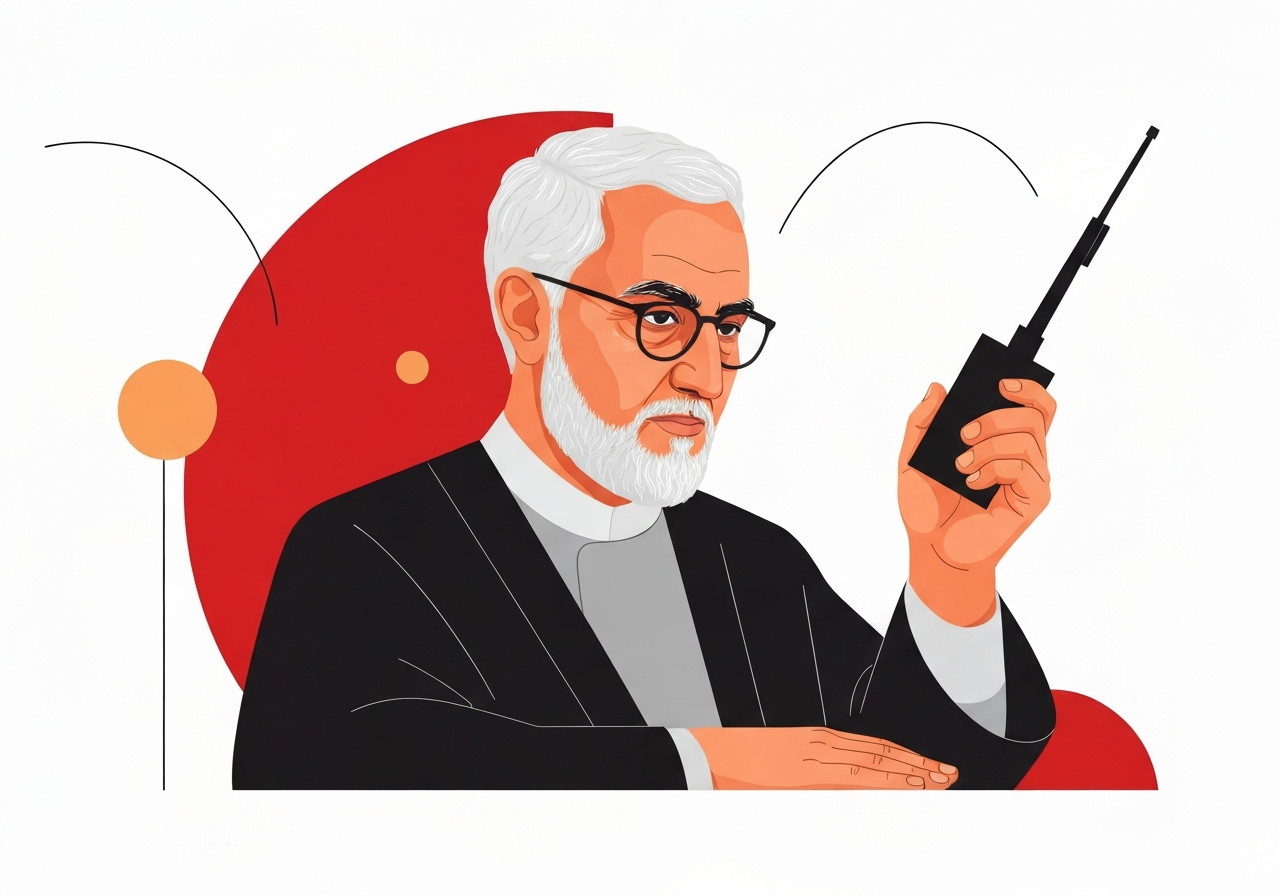
Brigadier General Gholamreza Soleimani, 62, the head of Iran’s Basij volunteer paramilitary, was killed on March 17, 2026, the Islamic Revolutionary Guard Corps (IRGC) said, blaming an “attack by the American-Zionist enemy.” The IRGC and Iran’s semi-official Tasnim news agency published the announcement amid a broader US‑Israeli campaign targeting Iran’s military and security apparatus. Soleimani had led the Basij since his appointment by Supreme Leader Ali Khamenei on July 2, 2019, and was a veteran of the 1980–1988 Iran–Iraq War. His death follows a series of high-profile Iranian political and military fatalities in the same conflict.
Key takeaways
- Gholamreza Soleimani, aged 62 and born in 1964 in Farsan, Chaharmahal and Bakhtiari province, was reported killed on March 17, 2026 by the IRGC.
- Soleimani led the Basij, a volunteer force estimated at about 450,000 personnel, from July 2, 2019 until his death.
- He was a frontline veteran of the 1980–1988 Iran–Iraq War and joined the IRGC in 1982, later commanding the Saheb al‑Zaman Corps in Isfahan from 2006.
- Promoted to brigadier general in July 2017, Soleimani combined regional IRGC commands with Basij leadership responsibilities.
- Iran said the killing was part of an “American‑Zionist” attack; independent confirmation of the attacker remains unresolved.
- Soleimani and the Basij have been sanctioned by Western governments, including the EU, for alleged roles in violent repression of protests.
- The announcement came amid intensified strikes and counterstrikes that have targeted senior Iranian figures and facilities.
Background
The Basij was formed in the aftermath of the 1979 Islamic Revolution as a volunteer internal security and social‑mobilisation force under the IRGC. Over decades the Basij has been used both for civil defence and for domestic crowd control through its nationwide local branches. Its stated remit includes cultural work, disaster response and internal security; critics and many Western governments emphasise its role in suppressing dissent.
Gholamreza Soleimani rose through ranks shaped by the Iran–Iraq War, when thousands of young volunteers were mobilised. After the 1988 ceasefire he held a series of regional commands, taking on roles that bridged conventional IRGC combat units and Basij detachments. His 2006 command of the Saheb al‑Zaman Corps in Isfahan marked a notable consolidation of local Basij and IRGC structures under his leadership.
Main event
On March 17, 2026, the IRGC released a statement—distributed via Tasnim—that Soleimani had been killed in an attack it described as carried out by the “American‑Zionist enemy.” State outlets presented the death as part of an escalating campaign that has struck multiple senior officials. Iran also announced the killing of Ali Larijani, secretary of the Supreme National Security Council, in the same wave of strikes.
Official Iranian coverage portrayed Soleimani as a pillar of internal security who had repeatedly been dispatched to quell unrest. The Basij, under his command since 2019, was active in suppressing the nationwide antigovernment demonstrations in late 2019 and again during and after the 2022–2023 protests following Mahsa Amini’s death.
Iranian state media emphasised Soleimani’s wartime service—he fought in major operations such as Tariq al‑Qods, Fath ol‑Mobin and Beit ol‑Moqaddas—and his academic profile, noting a bachelor’s degree in history from the University of Isfahan and work on a doctoral thesis in Islamic Iranian history. Officials highlighted his elevation to brigadier general in July 2017 and the Khamenei‑issued mandate to “elevate the Basij and the culture of resistance” when he became commander.
Analysis & implications
Soleimani’s killing removes the senior commander of Iran’s most ubiquitous internal security network, a body that stretches into neighbourhoods, schools and workplaces. For Tehran, the death poses an immediate operational challenge: replacing a long‑serving leader who combined combat experience with institutional knowledge of Basij networks. The Basij’s decentralised structure may blunt short‑term disruption, but leadership losses at the top can complicate coordination in politically sensitive operations.
Strategically, Tehran is likely to frame the attack as evidence of direct hostile intervention by the US and Israel, using the event to justify further hardline security measures and internal consolidation. Internationally, the strike could accelerate reciprocal targeting and raise the risk of broadened military exchange, particularly if Iran pursues retaliatory actions against actors it holds responsible.
Politically, the killing may bolster hardliners inside Iran who argue for stronger security controls and retaliation, while creating space for rivals of the regime to highlight the human cost and governance failures tied to prolonged militarisation. Economically, the heightened insecurity risks additional sanctions, investment withdrawal and disruptions to trade routes that are already sensitive to regional tensions.
Comparison & data
| Detail | Fact |
|---|---|
| Year of birth | 1964 |
| Age at death | 62 |
| Basij personnel (est.) | ≈450,000 |
| Basij leadership start | 2 July 2019 |
| IRGC rank promotion | Brigadier general, July 2017 |
| Iran–Iraq War | 1980–1988 |
The table lists verifiable dates and figures referenced in reporting and official biographies. The estimated Basij size is commonly cited in open‑source reporting and official Iranian statements; however, exact active personnel numbers and force readiness fluctuate and are often not publicly audited.
Reactions & quotes
Iran’s military and state media offered strongly worded responses and framed the killing as part of a foreign campaign against the Islamic Republic.
“He was martyred in an attack by the American‑Zionist enemy.”
IRGC statement via Tasnim (semi‑official)
European and Western governments have previously cited the Basij in sanctions listings for its role in domestic crackdowns. Those measures and human rights assessments shape how external capitals characterise any strike on Iranian security officials.
“Basij forces used lethal violence against unarmed protesters,”
European Union (sanctions justification, 2021)
On the ground inside Iran, public reaction is mixed and closely policed: state supporters framed the death as martyrdom, while families of victims of prior crackdowns called for accountability for domestic abuses. Independent verification of popular sentiment is limited by restrictions on assembly and reporting.
Unconfirmed
- Independent verification of the attacker(s) responsible for Soleimani’s death is not publicly available; Iran attributes the strike to “American‑Zionist” forces but outside confirmation is pending.
- The full operational circumstances—location, method, and whether the strike targeted other facilities or individuals in the same action—have not been independently corroborated.
- Casualty figures linked to recent protest suppression (described in some reports as “thousands” killed) have not been uniformly verified by independent monitors.
Bottom line
The killing of Gholamreza Soleimani removes a central architect of Iran’s internal security architecture and raises the political temperature inside Tehran. While the Basij’s extensive local networks reduce the likelihood of immediate collapse, leadership loss at this level complicates command, coordination, and the political messaging the regime uses to manage dissent.
Regionally, the event heightens the risk of further tit‑for‑tat operations and makes rapid escalation more likely if Iran or its opponents choose to widen the theatre of conflict. For observers and policymakers, the next days of official statements, forensic confirmation, and diplomatic activity will determine whether this act becomes an inflection point or another tragic episode in a broader, grinding confrontation.
Sources
- Al Jazeera — international news outlet (reporting and biography summary).
- Tasnim News Agency — semi‑official Iranian news agency (IRGC statement distribution).