
Lead
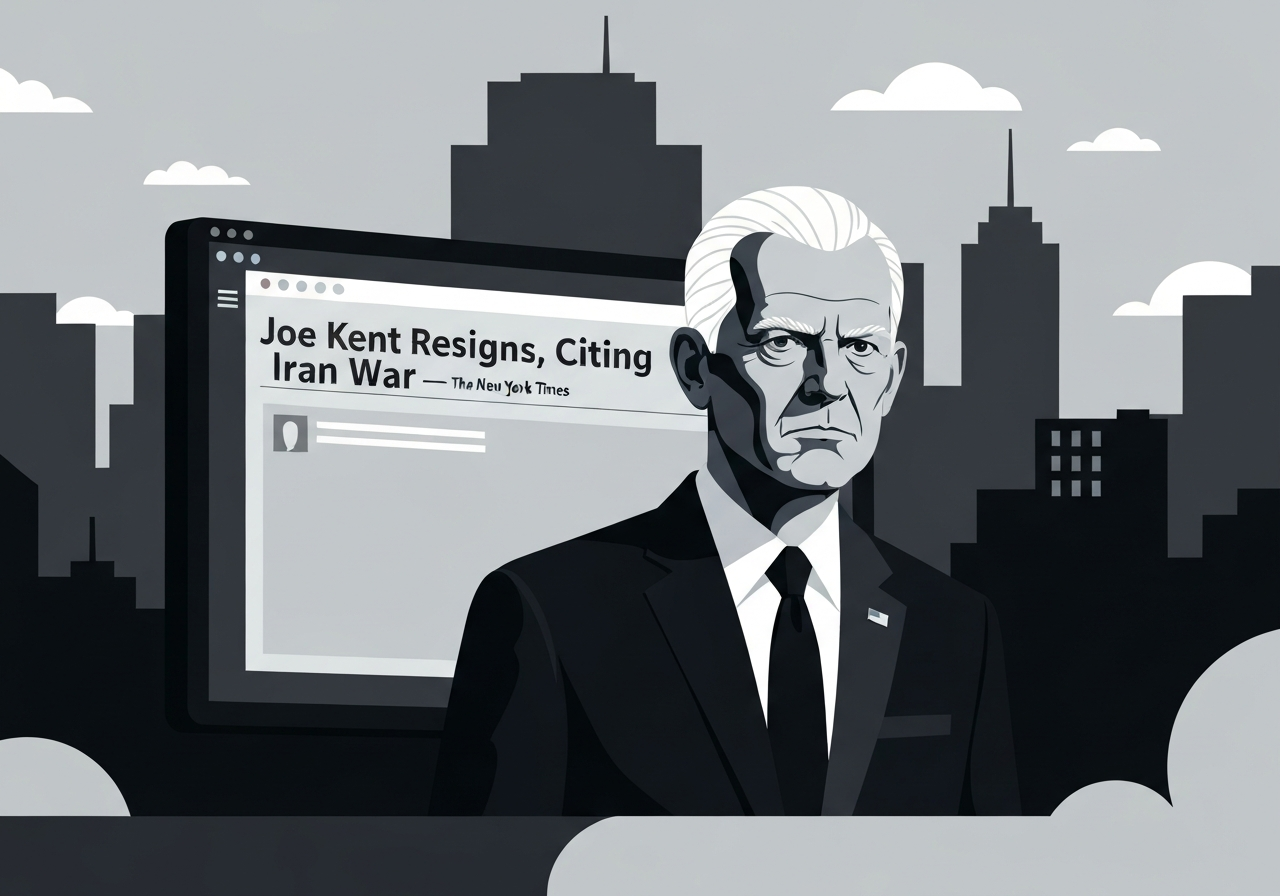
On March 17, 2026, Joe Kent, director of the National Counterterrorism Center, resigned from the Trump administration, citing opposition to the U.S.-Israeli campaign in Iran and alleging outside pressure on policy. His departure is the first senior administration resignation explicitly tied to the Iran war and surfaced amid rising unease in the Republican coalition. Kent posted a resignation letter saying he could not support the military campaign and blamed Israeli influence and its American supporters for pushing the United States into the conflict. The move exposes growing fissures within the administration over a war that, as of March 17, had been under way for 18 days.
Key Takeaways
- Joe Kent resigned as director of the National Counterterrorism Center on March 17, 2026, publicly citing opposition to the U.S.-Israeli war in Iran.
- The Iran conflict had continued for 18 days as of March 17, 2026, creating strain inside the Republican coalition between interventionist and anti-interventionist wings.
- Kent said in his letter that Iran posed no imminent threat and that U.S. action reflected pressure from Israel and its American lobby; those influence claims remain contested.
- President Trump publicly criticized Kent after the resignation, calling him weak on security; the president’s rebuke highlighted an immediate rupture between the administration and dissident voices.
- Director of National Intelligence Tulsi Gabbard, Kent’s superior, issued a measured statement backing the president while avoiding direct reference to Kent’s assertions.
- Kent is a high-profile figure known to some for endorsing fringe theories; his political profile made his resignation both unexpected and symbolically potent.
- Officials and analysts warn the departure could complicate counterterrorism continuity and heighten domestic political pressure on the administration.
Background
The Trump administration’s senior leadership had been comparatively stable before this resignation, with few public defections over policy in the current term. That stability has been challenged by the decision to engage militarily in Iran, which began in late February 2026 and had reached 18 days of active conflict by March 17. Within the Republican coalition, an anti-interventionist constituency that rallied around Mr. Trump’s prior pledges to avoid prolonged foreign wars has grown increasingly uneasy as the Iran campaign extended without a clear end date.
Joe Kent, as director of the National Counterterrorism Center, occupied a post meant to coordinate analysis and operations related to terrorism threats across agencies. The NCTC role sits at the intersection of policy, intelligence, and operations, and its director often serves as a bridge between analysts and policymakers. Kent’s resignation therefore carries operational as well as political significance. Meanwhile, Director of National Intelligence Tulsi Gabbard, who oversees the intelligence community, faced an immediate management and messaging challenge following the public split.
Main Event
On March 17, 2026, Kent posted a letter addressed to President Trump in which he stated he could not in good conscience support the ongoing war in Iran and argued that Iran did not present an imminent threat to the United States. He added that policy had been shaped by pressure from Israel and its American lobby, framing his departure as a protest against both the decision to go to war and the influences behind it. The resignation was submitted publicly and rapidly circulated across social and traditional media platforms, amplifying its political impact.
The president responded sharply on the same day from the Oval Office, deriding Kent as weak on security and saying the administration would move forward without him. That public rebuke underscored the administration’s unwillingness to accommodate public dissent on the conflict and signaled to other officials the risks of vocal opposition. Tulsi Gabbard posted a concise, carefully worded statement on social media that affirmed support for the president while not explicitly naming Kent or rebutting his claims, leaving room between institutional loyalty and internal disagreement.
The resignation surprised many inside and outside government because few senior figures had previously broken publicly with the administration over the Iran campaign. Kent’s departure may prompt personnel reviews or reassignment in the near term, as colleagues and subordinates adjust to new leadership at the NCTC. Intelligence community officials will also need to manage both the immediate operational handoff and the longer-term effects on morale and interagency cooperation.
Analysis & Implications
Kent’s resignation highlights a growing ideological split inside the Republican coalition between an anti-interventionist bloc and more hawkish elements that support robust action in Iran. For voters who prioritized transactional or noninterventionist foreign policy, his departure validates those concerns and could widen intra-party debate ahead of upcoming political cycles. The public nature of the exit makes reconciliation harder, as the act itself is a political signal beyond a routine personnel change.
Operationally, the loss of an NCTC director at a moment of heightened regional conflict raises immediate continuity questions. The NCTC coordinates intelligence across multiple agencies; even a temporary leadership gap can complicate information flow and rapid decision-making. Administration officials will need to designate an acting director or expedite a replacement to reassure partners and maintain operational tempo against concurrent threats.
Internationally, the resignation may be read by allies and adversaries alike as evidence of domestic discord over the war, which could embolden Iran or complicate coalition diplomacy with Israel. If the administration is perceived as internally divided, negotiation leverage and alliance management may become more difficult. Conversely, a swift and orderly personnel response could mitigate such perceptions and restore a measure of institutional steadiness.
Comparison & Data
| Item | Detail |
|---|---|
| Resignation date | March 17, 2026 |
| Reported duration of Iran war | 18 days (as of March 17, 2026) |
| Position | Director, National Counterterrorism Center (NCTC) |
This snapshot underscores the timing: Kent left his post while the Iran campaign remained at an early but open-ended stage. Historically, senior resignations over policy differences have sometimes precipitated broader reviews or shifts; the immediate effect often depends on how fast leadership replaces key personnel and whether institutional procedures preserve operational continuity. In this case, the administration’s next personnel moves will shape whether the resignation becomes a momentary rupture or a longer-term inflection point.
Reactions & Quotes
Shortly after Kent’s announcement, President Trump publicly dismissed the resignation as evidence of weak judgment on security matters. The president’s immediate rebuttal framed the departure as a clearing of dissident voices rather than an opening for debate. That response sought to limit political fallout and signal confidence to supporters and officials.
It’s a good thing that he’s out because he said Iran was not a threat.
President Donald J. Trump
Kent’s letter, posted publicly, explained his moral and policy objections and tied his decision to a belief that external lobbying shaped the choice to enter the conflict. His explicit invocation of conscience makes his resignation a politically charged moral statement rather than a routine bureaucratic turnover. Observers noted that by publishing his rationale, Kent intended to influence public debate as well as internal policy discussions.
I cannot in good conscience support the ongoing war in Iran; Iran posed no imminent threat to our nation.
Joe Kent, Director, National Counterterrorism Center (resignation letter)
Tulsi Gabbard, the director of national intelligence, issued a concise statement that reaffirmed institutional support for the president while avoiding a direct public clash with Kent’s claims. Her calibrated response reflected the intelligence community’s dual need to maintain presidential confidence and internal coherence amid a politically sensitive dispute. Analysts said her posture aimed to stabilize the intelligence apparatus without inflaming partisan tensions.
The director offered a measured endorsement of the administration’s leadership without addressing personnel disputes directly.
Tulsi Gabbard, Director of National Intelligence (statement summary)
Unconfirmed
- Kent’s specific assertion that U.S. policy shifted because of pressure from Israel and a powerful American lobby has not been independently verified.
- Reports of additional imminent senior resignations connected to the Iran war are unconfirmed and should be treated as speculative until substantiated by official notices.
- Any internal intelligence assessments directly contradicting Kent’s public claim about Iran’s immediacy as a threat have not been released publicly and remain undisclosed.
Bottom Line
Joe Kent’s March 17, 2026 resignation is notable because it is the first high-level administration exit explicitly tied to opposition to the Iran war. The public nature of his letter and the sharp rebuttal from the president magnify the political symbolism of the act, feeding a narrative of division within the Republican coalition and the broader administration.
In practical terms, the resignation poses short-term challenges for counterterrorism coordination and a test for the administration’s ability to manage personnel transitions while conducting military operations. How the White House, the intelligence community, and Congressional allies respond in the next days and weeks will determine whether this becomes a singular protest or the opening of a sustained intra-party policy debate.
Sources
- The New York Times — news report on Kent’s resignation and related statements (media)
- National Counterterrorism Center (NCTC) — official office page describing NCTC responsibilities (official agency)