
Lead
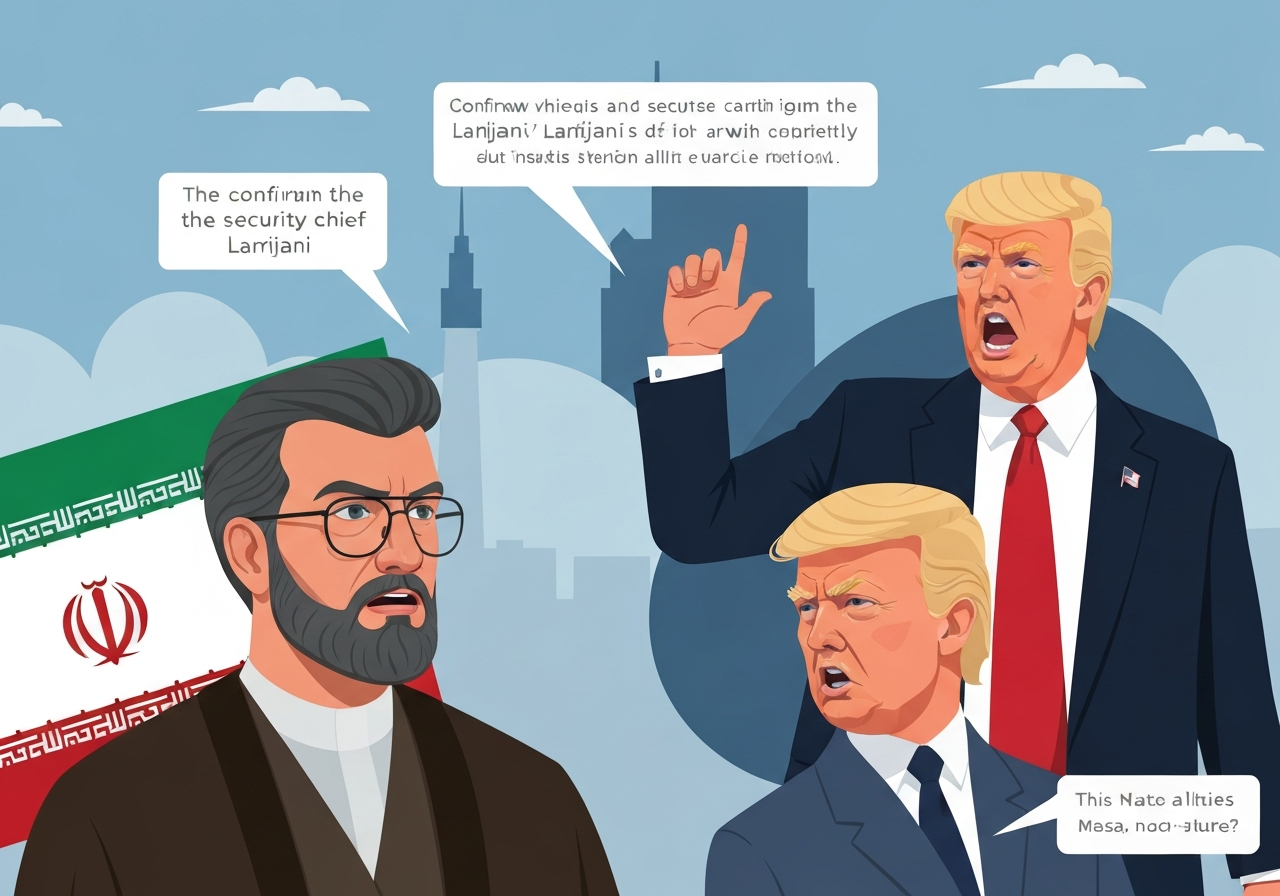
Iranian state media has confirmed the death of Ali Larijani, secretary of the Supreme National Security Council, after an air strike that officials say targeted his convoy. The killing, confirmed early in the current phase of the conflict, has prompted vows of retaliation from Iran’s military leadership and fresh missile exchanges with Israel. The US said it struck Iranian missile sites near the Strait of Hormuz using 5,000‑pound penetrator bombs, citing a threat to shipping. Meanwhile, regional strikes have hit Beirut and Tel Aviv and diplomatic facilities in Baghdad, even as political leaders including former US President Donald Trump publicly criticised NATO and other allies.
Key Takeaways
- Ali Larijani, Iran’s top national security official, was confirmed killed in an air strike by Iranian state media; Iranian leaders have vowed revenge.
- The US military reported using multiple 5,000‑pound deep‑penetrator munitions against hardened Iranian missile sites along the Strait of Hormuz.
- The Strait of Hormuz disruption affects roughly 20% of global seaborne oil trade and has contributed to a rise in energy market volatility.
- Israeli strikes on Beirut were reported to have killed at least six people, while an Iranian missile strike on Tel Aviv was reported to have killed two people in their 70s.
- Explosions were reported near the US embassy compound in Baghdad’s Green Zone; the diplomatic facility has been attacked multiple times since the war began.
- A UN agency reported a projectile struck an Iranian nuclear power plant site but said there was no damage, according to officials.
- Donald Trump publicly criticised NATO and other US partners, saying the US “no longer need or desire” their help in the conflict, a statement that drew swift political response.
Background
Hostilities in the region have escalated over recent weeks after a series of cross‑border strikes, targeted killings and retaliatory attacks involving Iran, Israel and allied militia groups. Proxy dynamics—particularly involving Hezbollah in Lebanon and Iran‑aligned militias in Iraq and Syria—have widened the geographic scope of the fighting. Civilian population centres from Tehran to Beirut and Tel Aviv have experienced air strikes, rocket fire and the heightened presence of security forces, increasing civilian displacement and fear.
Maritime security has emerged as a parallel flashpoint: Iran’s actions near the Strait of Hormuz, and the subsequent military responses, threatened a critical artery for global oil shipments. The use of heavy penetrating munitions and strikes on missile sites indicates an escalation in the type and scale of ordnance being deployed, raising both tactical and strategic risks for the wider region. International actors—state militaries, regional proxies and global powers—now face complex decisions about direct intervention, force protection and diplomatic engagement.
Main Event
Iranian state outlets confirmed that Ali Larijani, who served as secretary of the Supreme National Security Council and was a prominent political figure, was killed in an air strike. State military spokespeople described Larijani as a senior national security figure and said his death would be avenged. Iran’s army chief Amir Hatami issued a statement promising a “decisive, deterrent and regretful response” at an appropriate time and place, framing any reply as measured retaliation rather than indiscriminate escalation.
In parallel, Iran’s Islamic Revolutionary Guard Corps (IRGC) reported launching missiles toward central Israel in retaliation for the strike, and Israeli emergency services responded to missile impacts in and around Tel Aviv. Israeli authorities reported two civilian deaths in the Tel Aviv area, both in their 70s. On the Lebanese front, Israeli strikes on Beirut neighbourhoods were reported to have killed at least six people and injured dozens, with local authorities indicating identities would require DNA verification.
The US Central Command said US forces struck Iranian missile sites along the Strait of Hormuz, employing multiple 5,000‑pound deep penetrator munitions against hardened positions it said threatened international shipping. US officials framed the strikes as aimed at neutralising anti‑ship cruise missiles that could endanger commercial vessels. The US action followed a period during which maritime traffic was sharply disrupted by Iranian operations in the waterway.
Across Iraq, explosions were heard near the heavily fortified Green Zone in Baghdad and there were reports of new attacks on the US embassy compound. International agencies and journalists cited local security sources for those reports. Separately, a UN agency reported a projectile struck an Iranian nuclear power plant site, but said the incident caused no damage—an assertion that officials emphasised while investigations continued.
Analysis & Implications
The killing of a senior Iranian security official broadens the conflict’s stakes by removing a high‑level actor and prompting formal vows of revenge from Tehran’s security establishment. Such a targeted death raises the risk of calibrated retaliation by Iran or affiliated militias that could aim for deterrence rather than all‑out escalation, but miscalculation remains a serious hazard. The interplay between state responses (missile strikes, air operations) and proxy attacks complicates attempts to de‑escalate through back‑channel diplomacy.
Maritime disruption in the Strait of Hormuz has immediate economic consequences. With roughly 20% of global seaborne oil transiting the strait, sustained interference or attacks on shipping could push energy prices higher and prompt rerouting that increases insurance and transit costs. The US strikes on hardened missile sites—using high‑cost deep penetrating munitions—signal an intent to degrade capabilities that threaten commercial lanes, but also demonstrate how kinetic options are being used alongside diplomatic messaging.
Regionally, Lebanon and Iraq remain vulnerable to spillover. Israeli strikes in Beirut and retaliatory rocket fire extend humanitarian impact beyond Iran and Israel, stressing medical and civic infrastructure. Attacks near diplomatic compounds in Baghdad underscore the difficulty of protecting overseas missions amid asymmetric threats. International intermediaries and multilateral institutions may face pressure to broker ceasefires or humanitarian windows, but political incentives for restraint vary widely across actors.
Comparison & Data
| Item | Value / Note |
|---|---|
| Deep penetrator used by US | 5,000‑pound munitions; reported unit cost ≈ $288,000 |
| Largest bomb used in past Iran strikes | 30,000‑pound ordnance used in prior attacks on underground sites |
| Strait of Hormuz | ~20% of global seaborne oil passes through |
The numbers above show the scale and cost of ordnance being employed and the strategic importance of maritime chokepoints. Using deep‑penetrator munitions suggests attempts to defeat hardened, buried infrastructure, while the economic leverage inherent in the Strait of Hormuz remains a central pressure point for actors seeking to influence international responses.
Reactions & Quotes
Officials and public figures issued terse statements that highlight the diplomatic and military friction surrounding the events:
“At the appropriate time and place, a decisive, deterrent, and regretful response will be given.”
Amir Hatami, Iranian army chief (official statement)
Hatami’s comment framed Iran’s likely reply as purposeful and punitive rather than uncontrolled retaliation, signalling leadership intent to calibrate responses.
“We successfully employed multiple 5,000‑pound deep penetrator munitions on hardened Iranian missile sites.”
US Central Command (official statement)
The US military framed its strikes as targeted action to protect international shipping, emphasising the technical capability used and the stated maritime threat.
“The US no longer need or desire the help” of NATO and other allies in this conflict.
Donald J. Trump (public statement)
Former President Trump’s remarks, widely circulated, added a political dimension to allied coordination, prompting immediate responses from NATO partners and domestic critics concerned about cohesion among Western allies.
Unconfirmed
- Exact details of the air strike that killed Ali Larijani—specific origin of the strike has been attributed in statements but some operational details remain unverified by independent open sources.
- Full casualty and identity lists from recent strikes in Beirut are provisional; authorities have said DNA tests may be required to confirm some victims.
- Some reports of damage at an Iranian nuclear power site were described by a UN agency as a projectile strike with no damage, but independent on‑site verification is pending.
Bottom Line
The confirmed death of a senior Iranian security official and the immediate vows of retaliation mark a significant turn in the current conflict, elevating the potential for carefully measured reprisals that nonetheless risk wider escalation. Maritime security concerns and the use of heavy penetrating ordnance signal that states are prioritising both capability destruction and protection of commercial lanes, but these actions also raise the threshold for further kinetic responses.
For observers and policymakers, the coming days will be critical: monitoring who conducts follow‑on strikes, the accuracy of casualty reporting, and whether diplomatic channels can secure pauses or de‑escalatory arrangements will determine if the conflict remains intense yet contained, or expands into broader regional confrontation. Energy markets, civilian safety in urban centres, and the posture of international partners will all be affected.