
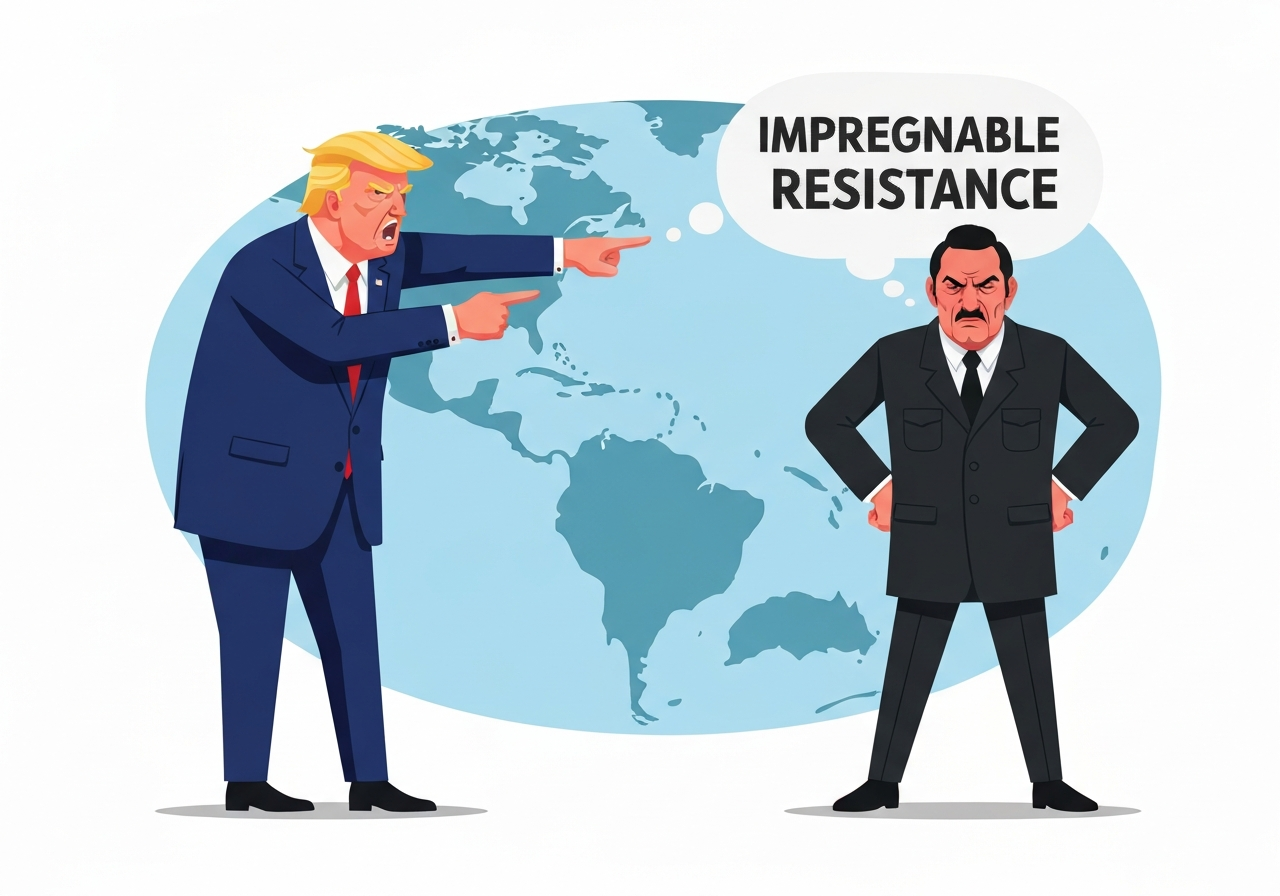
Lead: On March 17, 2026, after remarks by U.S. President Donald Trump indicating he might ‘do something with Cuba’ soon, Cuban President Miguel Díaz-Canel warned any external aggression would face ‘impregnable resistance.’ The comments arrive amid acute energy shortages, island-wide blackouts and rising U.S. pressure that has included threats tied to oil shipments. Cuban officials and U.S. authorities are sending mixed signals about negotiations, legal actions and economic openings for the Cuban diaspora.
Key Takeaways
- President Trump hinted at imminent action on Cuba on March 16–17, 2026, saying he might ‘take’ the island ‘in some form’ or ‘do anything I want with it.’
- Cuban President Miguel Díaz-Canel posted on X that any external aggressor would meet ‘impregnable resistance,’ framing the response as national defense.
- U.S. measures this year included threats of tariffs on countries selling oil to Cuba, which effectively halted many petroleum shipments and exacerbated fuel shortages and power outages.
- Federal prosecutors in Miami are reportedly targeting Cuban officials for possible economic, drug, violent and immigration-related prosecutions, increasing legal pressure on Havana.
- Cuba announced plans to allow nationals living abroad to invest in domestic companies, a controlled economic opening whose impact is limited by persistent U.S. sanctions.
- U.S. officials have said publicly they do not seek to provoke an abrupt collapse of Cuba’s government but aim to push for a negotiated transition; details remain unspecified.
Background
Relations between Washington and Havana have been tense for decades, with periodic opening and retrenchment. Since late 2025 and into 2026, U.S. policy toward Cuba has shifted toward increased pressure, including financial measures and threats of secondary sanctions on countries supplying oil. Those moves have aggravated Cuba’s long-standing economic vulnerabilities, contributing to severe fuel shortages and utility failures on the island.
Cuba’s political system remains a one-party communist state led by Miguel Díaz-Canel, who has emphasized sovereignty and resistance to perceived external coercion. The island’s economy is heavily state-directed, though officials have this month announced limited reforms to allow foreign and diaspora investment—moves framed as pragmatic adjustments amid economic strain but constrained by current sanctions and banking restrictions.
At the same time, U.S. law enforcement activity has increased: prosecutors in Miami are reportedly building cases against Cuban leaders on multiple alleged offenses. Those investigations add a legal dimension to already heightened diplomatic and economic tensions, complicating any potential negotiation track between the two governments.
Main Event
On March 16–17, 2026, President Trump made remarks at a White House event suggesting the United States might ‘do something with Cuba very soon’ and had previously floated a ‘friendly takeover’ or ‘taking Cuba in some form.’ He told reporters he believed he could ‘do anything I want with it,’ while also indicating preference to address the war with Iran first. Trump has not provided a public operational plan or timeline for any such action.
Cuban President Díaz-Canel responded on X late on March 17, 2026, characterizing the U.S. statements as threats intended to topple Havana and exploit the island’s resources. He framed the Cuban response as unequivocal defense: ‘any external aggressor will clash with an impregnable resistance.’ The Cuban statement emphasized national unity and readiness to resist foreign intervention.
Earlier this year the U.S. applied economic pressure through threats of tariffs on countries selling oil to Cuba, which analysts say brought many petroleum shipments to a near halt. That contributed to widespread fuel shortages and prompted island-wide blackouts this week, which in turn fueled public unrest and reported protests over shortages and services.
Officials in both countries offered mixed signals about the near-term outlook. A U.S. official told reporters in January that Washington does not seek to precipitate a sudden collapse of Cuba’s government but aims to negotiate a transition away from the current system. Meanwhile, Cuban authorities announced a limited policy to allow Cuban nationals abroad to invest on the island, a step described by some U.S. observers as insufficient to solve structural problems.
Analysis & Implications
Politically, public talk of ‘taking’ Cuba raises the stakes in an already fraught bilateral relationship. Even rhetorical language from a U.S. president can shift perceptions in Havana, embolden hardliners, or justify crackdowns under the pretext of defending sovereignty. For Cuban leaders, presenting resistance as ‘impregnable’ serves both domestic rallying and international signaling to potential allies.
Economically, sanctions and threats to oil suppliers have immediate humanitarian effects by disrupting fuel availability, which cascades into power outages, reduced medical and transport services, and heightened public discontent. Cuba’s limited opening to diaspora investment may be a pragmatic attempt to attract foreign exchange, but banking restrictions and secondary sanctions on counterparties could sharply limit tangible inflows.
From a security standpoint, the prospect of any U.S. kinetic operation would involve complex logistical, legal and diplomatic challenges and risks wider regional destabilization. Recent U.S. actions referenced by officials—an operation targeting Venezuelan President Nicolás Maduro and a military campaign in Iran—illustrate a more assertive posture, but each intervention carries different strategic and legal contexts; Cuba presents its own unique constraints given proximity and historical sensitivities.
Comparison & Data
| Event | Date / Period | Immediate Impact |
|---|---|---|
| Trump remarks hinting at action on Cuba | March 16–17, 2026 | Heightened diplomatic tensions; Cuban leadership public warning |
| Threats of tariffs on oil suppliers to Cuba | Early 2026 | Sharp reduction in petroleum shipments; fuel shortages |
| Island-wide blackouts and protests | March 2026 | Service disruptions; reported public unrest |
| Cuba announces diaspora investment policy | March 2026 | Potential capital channel; constrained by sanctions |
The table summarizes recent milestones shaping the current crisis. The shift in U.S. tactics since late 2025—from diplomatic pressure to punitive economic measures and more assertive military actions elsewhere—provides context for Havana’s defensive posture. Data on shipment volumes and economic flows remain limited in open sources due to opaque reporting and sanctions-related secrecy.
Reactions & Quotes
‘In the face of the worst scenario, Cuba is accompanied by a certainty: any external aggressor will clash with an impregnable resistance.’
Miguel Díaz-Canel (Cuban presidency post on X)
The Cuban president framed the response as a national duty and a deterrent to external designs, aiming to consolidate domestic support and warn foreign governments against intervention.
‘Cuba has an economy that doesn’t work and a political and governmental system that can’t fix it. What they announced yesterday is not dramatic enough.’
Marco Rubio (as reported by CBS News)
That remark—reported in media coverage—reflects a U.S. criticism that limited economic reforms fall short of structural change; it underscores pressure from some U.S. policymakers for more decisive measures.
Unconfirmed
- Whether the White House has a concrete military or political plan to ‘take’ Cuba is not confirmed; no official operational details have been released.
- Reports that U.S. action aims to provoke an immediate Cuban government collapse are unverified; U.S. officials have publicly denied seeking an abrupt collapse.
- The practical scale and timeline of diaspora investment and whether it will meaningfully alter Cuba’s economic trajectory remain uncertain given sanctions and banking limits.
Bottom Line
The immediate confrontation is primarily rhetorical but carries tangible consequences: sanctions and threats have worsened energy shortages, prompting blackouts and public unrest that intensify domestic instability. Havana’s vows of ‘impregnable resistance’ are designed to deter intervention and shore up internal legitimacy, even as limited economic openings are offered as damage control.
For policymakers and observers, the crucial questions are whether rhetoric escalates into coercive measures, how third-party states will respond to secondary sanctions, and whether modest economic reforms can arrest decline while avoiding human hardship. Monitoring shipment data, legal actions in Miami and any clarifying statements from Washington and Havana will indicate whether the dispute stays rhetorical or moves toward concrete confrontation.
Sources
- CBS News — U.S. news media report summarizing remarks, Cuban response and related developments (March 17, 2026).