
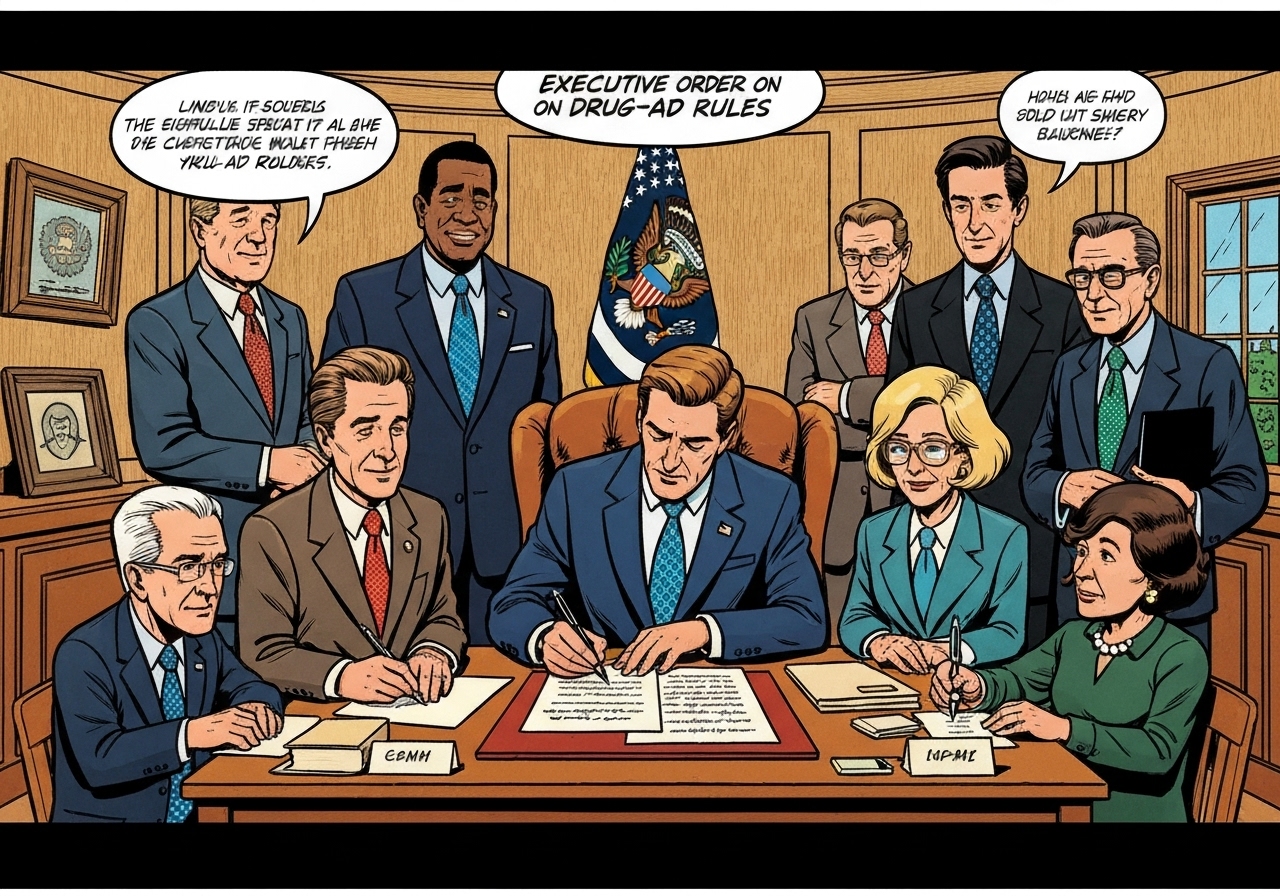
Lead: On Sept. 9, 2025, President Trump signed an executive action aimed at stricter enforcement of direct-to-consumer pharmaceutical advertising while Health and Human Services Secretary Robert F. Kennedy Jr. released the Make America Healthy Again (MAHA) children’s health report the same day in Washington. The measures direct FDA and HHS to demand clearer safety warnings in ads and to pursue investigations and research on childhood health drivers. The administration announced stepped-up enforcement — including roughly 100 cease-and-desist notices and thousands of warnings — and outlined new studies on vaccine injuries, fluoride, diet and other factors. The moves set the stage for congressional oversight, public debate and legal challenges.
Key Takeaways
- The White House signed an executive memo on Sept. 9, 2025, directing FDA and HHS to enforce transparency and require drug ads to disclose risks rather than redirecting viewers to websites or hotlines.
- Officials said the administration will send about 100 cease-and-desist letters and “thousands” of warning letters to online pharmacies and advertisers alleged to be flouting FDA rules.
- The MAHA report outlines new research and policy actions on childhood chronic disease, including studies on vaccine injuries, fluoride exposure, diet and chemical exposures; it proposes creating an Administration for a Healthy America (AHA).
- The CDC experienced a leadership shake-up: Susan Monarez, moved to be fired last month, will testify before the Senate HELP Committee on Sept. 17, joined by Dr. Debra Houry, who resigned as CDC chief medical officer.
- FDA data cited in statements notes low myocarditis/pericarditis rates after recent COVID vaccines — roughly 8 cases per million overall under 65, with an estimated peak of 38 per million in males 16–25.
- The administration signaled dietary policy actions, urging states to restrict junk food in SNAP and seeking limits on petroleum-based food dyes.
- MAHA and HHS described plans to expand vaccine-injury reporting and launch new NIH research programs; advocates warn the wording could fuel vaccine hesitancy despite longstanding evidence of vaccine benefits.
Background
Direct-to-consumer pharmaceutical ads have been common in the U.S. since the late 20th century; since 1997, companies have often met risk-disclosure requirements by pointing consumers to webpages or toll-free numbers instead of including full warnings in the ad itself. Regulators have historically relied on industry compliance plus occasional enforcement letters; recent criticisms contend enforcement has waned. The new administration frames this step as restoring rigorous oversight and transparency.
The MAHA report, released Sept. 9, 2025, consolidates proposals from the Make America Healthy Again Commission and HHS leadership to address what officials describe as the leading drivers of childhood chronic disease: poor diets and ultra-processed foods, cumulative chemical exposures, sedentary lifestyles and what the commission terms “overmedicalization.” It recommends new research, agency reorganization and policy shifts spanning nutrition assistance, FDA regulation and public-health education.
Main Event
At an event in Washington on Sept. 9, the president signed a memorandum directing the HHS secretary and FDA to ensure that prescription drug advertising is transparent about risks and side effects. A senior administration official told reporters the government would pursue enforcement actions against online pharmacies and advertisers alleged to be avoiding full disclosures; the official said the administration expects to send roughly 100 cease-and-desist letters and thousands of warnings.
HHS Secretary Robert F. Kennedy Jr. framed the initiative as part of a broader effort to reduce what he called “overmedicalization” and to require companies to present “all critical safety facts” in advertising. The administration cited examples — including a high-profile telehealth ad during the Super Bowl for a weight-loss medication — as motivating the crackdown, and said social-media influencers often omit harm disclosures.
The MAHA report sets out a suite of actions: creating an Administration for a Healthy America, launching NIH studies into vaccine injuries and autism root causes, evaluating fluoride in drinking water, restricting certain food additives and encouraging states to limit junk-food purchases through SNAP. Officials gave limited operational detail and did not specify an overall budget or full timetable for implementation.
Separately, the CDC has been unsettled by recent departures. Susan Monarez, abruptly moved to be fired less than a month after Senate confirmation, will appear before the Senate Health, Education, Labor and Pensions Committee on Sept. 17, alongside Dr. Debra Houry, who resigned as CDC chief medical officer. Monarez’s lawyers called the firing “legally deficient,” and she has alleged political pressure related to vaccine advisory recommendations; HHS officials deny improper pressure.
Analysis & Implications
Policy implications are wide-ranging. If enforced, the ad-rule changes could alter how drugmakers budget for marketing and how social-media platforms police branded content. Requiring full on-screen warnings would increase ad production costs and could reduce short-form influencer promotions that do not accommodate detailed disclosures. That, in turn, may shift industry strategy toward longer-form communications or greater regulatory compliance.
The administration’s emphasis on vaccine-injury research and transparency is likely to inflame polarized debates. Public-health experts note that while investigating rare adverse events is standard practice, framing that work in political or populist terms risks amplifying vaccine hesitancy. The MAHA proposals arrive amid declining early-childhood immunization rates in some areas, prompting concerns that ambiguous messaging may depress uptake further.
Congressional oversight is probable. Senate Republicans and Democrats have both expressed concern about the CDC leadership changes; a Sept. 17 HELP Committee hearing with Monarez and Houry will examine personnel decisions and alleged politicization. The hearing could produce subpoenas, legislative proposals to protect agency independence, or statutory clarifications about administrative authority over public-health agencies.
Comparison & Data
| Topic | Recent Figure | Previous/Context |
|---|---|---|
| Enforcement letters planned | ~100 cease-and-desist; “thousands” warnings | Prior years: enforcement historically higher; 2023–24 reportedly saw only one letter |
| Myocarditis/pericarditis rate | ~8 cases per million (overall under 65) | Peak estimated 38 cases per million in males 16–25, per FDA |
| Lives saved by vaccines (WHO study) | ~154 million over 50 years | Measles vaccine alone ~94 million lives averted |
The table summarizes numerical claims cited by officials and agencies: enforcement counts come from an administration official’s briefing; vaccine-safety rates are FDA estimates for COVID-era vaccines; the WHO life-saved estimate comes from a 2024 global analysis. Numbers are presented as reported by officials and agencies and are subject to revision as agencies publish formal data.
Reactions & Quotes
Officials and outside voices reacted quickly, reflecting partisan and expert divides. Supporters hailed the moves as restoring consumer protections; critics warned of politicizing health agencies and stoking mistrust.
“Pharmaceutical ads hooked this country on prescription drugs. We will shut down that pipeline of deception and require drug companies to disclose all critical safety facts in their advertising.”
HHS Secretary Robert F. Kennedy Jr. (statement)
Context: Kennedy framed the actions as part of a broad MAHA strategy aimed at reducing chronic disease and overmedicalization.
“For the good of the nation and the world, the science at CDC should never be censored or subject to political pauses or interpretations.”
Dr. Debra Houry (resignation message)
Context: Houry resigned as CDC chief medical officer and will testify before the Senate; her statement signals concern about political interference in scientific agencies.
“We will investigate and enforce to ensure consumers are not misled by pharmaceutical advertising that omits important safety information.”
Senior administration official (background briefing)
Context: An administration official previewed enforcement plans to reporters, noting historical declines in formal FDA enforcement letters.
Unconfirmed
- Claims that HHS Secretary Kennedy threatened to fire Susan Monarez unless she resigned are asserted by Monarez in an op-ed and described by her lawyers; HHS denies the allegation and it remains to be substantiated in oversight proceedings.
- The MAHA report proposes reorganizations and new offices; specific staffing levels, timelines and exact budgets have not been released and remain unspecified.
- Suggested direct causal links between increased psychiatric drug prescriptions in the 1990s and current gun violence are being raised as hypotheses for study by the administration; those connections have not been established by peer-reviewed research.
Bottom Line
The Sept. 9 executive action and MAHA report mark a coordinated push by the White House to reshape health messaging, regulation and research priorities around children’s chronic disease and pharmaceutical advertising. If implemented, the ad-enforcement steps could materially change how drugmakers and online platforms communicate about medicines and may reduce short-form influencer promotions that omit risk disclosures.
At the same time, heightened focus on vaccine injuries, fluoride and other contested topics risks deepening political and public-health fault lines. The coming weeks — including the Sept. 17 Senate hearing with Susan Monarez and forthcoming agency rulemaking or enforcement bulletins — will determine whether these proposals translate into durable policy, legal challenges or congressional action.