
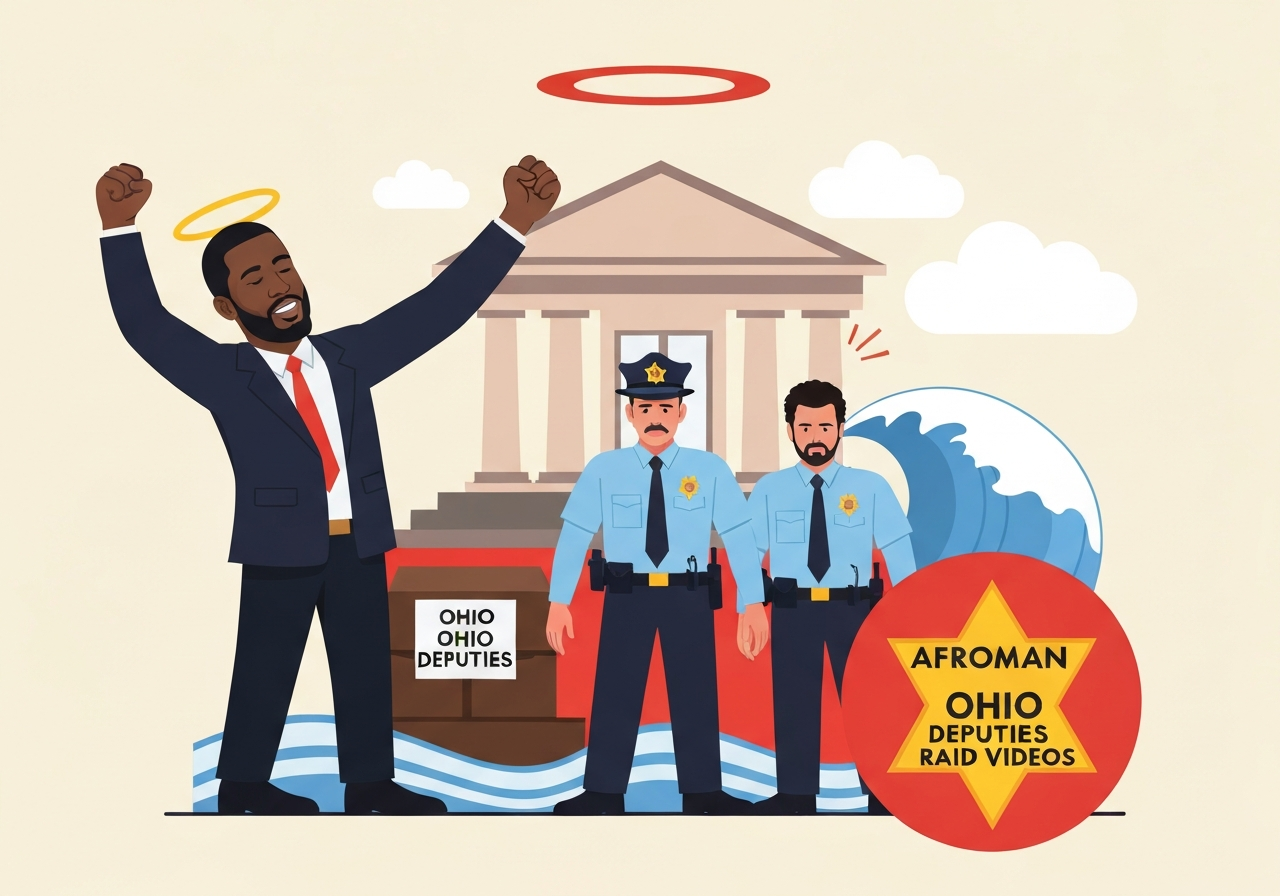
Grammy-nominated rapper Afroman (Joseph Foreman) prevailed Wednesday in a defamation trial brought by seven Adams County, Ohio, sheriff’s deputies who said he ridiculed them in viral music videos that used his home security footage from a 2022 raid. The jury ruled for Foreman after the deputies sought nearly $4 million, a decision the artist celebrated outside the courthouse and later posted to social media. The case became a test of how far parody and artistic license extend when public officials are the targets. The verdict raises fresh questions about the balance between reputational harm and First Amendment protections for satirical commentary.
Key Takeaways
- Jury verdict: Afroman won the defamation suit brought by seven Adams County deputies over videos about a 2022 raid.
- Damages sought: The deputies asked for nearly $4 million in compensation related to alleged reputational and emotional harm.
- Viral reach: The videos were viewed more than 3 million times on YouTube, amplifying the dispute into a public controversy.
- Subject matter: Videos included footage of deputies executing a raid that reportedly searched pockets and a kitchen, inspiring songs such as “Lemon Pound Cake.”
- Legal focus: The trial centered on whether the rapper’s satirical songs and posts crossed from protected parody into actionable falsehoods.
- Personal impact: Foreman testified the raid—conducted under a warrant for a drug and kidnapping probe in 2022—traumatized his children and damaged property, which he cited as a motive for his songs.
- Locale and identity: Foreman, 51, lives in Winchester, about 50 miles (80 km) from Cincinnati; the deputies are from Adams County, Ohio.
Background
The dispute began after a 2022 search warrant brought Adams County deputies into Afroman’s home as part of an investigation described in the warrant as involving narcotics and kidnapping. No criminal charges followed the raid, but Foreman captured the operation on his home surveillance system and later used that footage as the basis for satirical songs and music videos. Those videos mixed recorded images of rifle-bearing officers, searches of clothing and a scene showing an officer near a kitchen cake with lyric-driven mockery directed at specific deputies.
The videos gained widespread attention online, exceeding 3 million views on platforms including YouTube, which intensified the conflict between Foreman and the law-enforcement plaintiffs. The deputies said the posts publicly humiliated them and harmed their families, noting incidents such as children being teased at school. Foreman countered that his material was protected political and social commentary under the First Amendment and that his creative work was aimed at criticizing an official action, not fabricating criminal conduct.
Main Event
The trial unfolded in a county courtroom where Foreman appeared in a red, white and blue suit and defended his work as satire and social commentary. He testified that the raid damaged his property—a broken gate and front door—and traumatized his then 10- and 12-year-old children, explaining those harms motivated him to publish the diss tracks to help recoup losses and respond publicly. The deputies described emotional and reputational fallout, saying the videos cast them as dishonest or morally suspect and led to personal consequences for family members.
Prosecutors were not pursuing criminal charges related to the raid, and the privacy of any investigatory details remained limited by the warrant and law-enforcement procedures. Foreman’s legal team argued in closing that exaggeration and mockery are common tools in artistic critique of public actors, while the deputies’ counsel maintained the rapper disseminated intentional falsehoods that crossed the line from opinion into defamation. Jurors weighed those competing claims and found in favor of Afroman.
In court, Foreman pointed to specific lyrics and visuals—such as lines referencing the warrant’s mention of “narcotics and kidnapping” and a slowed clip of an officer near a cake—that he said were expressive responses to his lived experience of the raid. Deputies disputed aspects of his portrayal, including implied accusations of theft over $400 reported missing after the incident. The trial record included testimony about both the content of the videos and the social impact on deputies and their families.
Analysis & Implications
The verdict underscores continuing legal tensions over satire, parody and the protection afforded to speakers who target public officials. U.S. courts have long given broad First Amendment leeway to criticism of public actors, but the line becomes contested when commentary includes provably false factual claims that damage reputation. This case will likely be cited in future litigation that tests whether artistic exaggeration can be reasonably understood as opinion rather than assertion of fact.
For artists and commentators, the decision affirms that high-profile public criticism—especially when presented as parody—can enjoy constitutional protection, reducing the prospect of successful defamation claims against satirical content. For law-enforcement personnel and other public servants, the ruling highlights the practical difficulty of litigating reputational harm arising from viral media and comedy that intentionally blurs fact and fiction for impact.
Beyond the courtroom, the case has broader public-policy implications: it may influence how platforms moderate satirical content about officials and how reputational complaints are framed in civil suits. Local governments and police departments might respond by pursuing clearer policies around public communication and by documenting official actions thoroughly to reduce ambiguity that can be exploited in public commentary.
Comparison & Data
| Item | Reported figure |
|---|---|
| Videos’ views | > 3,000,000 (YouTube) |
| Deputies suing | 7 |
| Damages sought | Nearly $4,000,000 |
| Raid year | 2022 |
| Afroman’s age | 51 |
These figures illustrate why the dispute reached court: millions of views amplify reputational effects, and a multi-million-dollar damages claim raises the stakes for both plaintiffs and defendants. While the deputies emphasized personal and family impacts, the defense emphasized expressive rights and the viral scope that turned a local incident into national discussion.
Reactions & Quotes
Outside the courthouse, Afroman celebrated the verdict and framed his work as protected expression. He told supporters the decision affirmed his right to comment on what he described as official misconduct and posted a short celebratory clip to social media.
“Freedom of speech!”
Joseph Foreman (Afroman), rapper
Defense counsel highlighted the historical role of satire in social critique, arguing that artists commonly employ exaggeration to convey public-interest concerns. The lawyer emphasized that public officials expect to face criticism as part of their roles.
“No reasonable person would expect a police officer not to be criticized.”
David Osborne, defense attorney
The deputies and their attorney presented a different view, saying the videos crossed from satire into damaging fabrications. They described instances of harassment and family distress attributed to the viral posts and questioned the fairness of being portrayed in such a light for entertainment value.
“Where in the world is it OK to make something up for fun that’s damaging to others?”
Sgt. Randy Walters, plaintiff deputy
Unconfirmed
- Whether the $400 the videos referenced was definitively taken by any deputy remains disputed in testimony but was not separately criminally charged.
- Any internal disciplinary actions by the Adams County sheriff’s office related to the 2022 raid were not detailed in the public trial record and remain unreported here.
Bottom Line
The Afroman verdict reaffirms that satire and artistic critique directed at public actors enjoy strong constitutional protection, particularly when the speaker is a public figure and the content reads as expressive commentary rather than straightforward factual assertion. At the same time, the episode shows how social-media amplification can convert a local law-enforcement action into a high-stakes reputational and legal clash.
Future cases will likely parse the facts of each piece of content more narrowly—distinguishing clear falsehoods presented as fact from rhetorical exaggeration—so both artists and potential plaintiffs should expect detailed factual inquiry in court. For communities and officials, the ruling underscores the need for clear communication and documentation to address public controversy before it escalates online.