
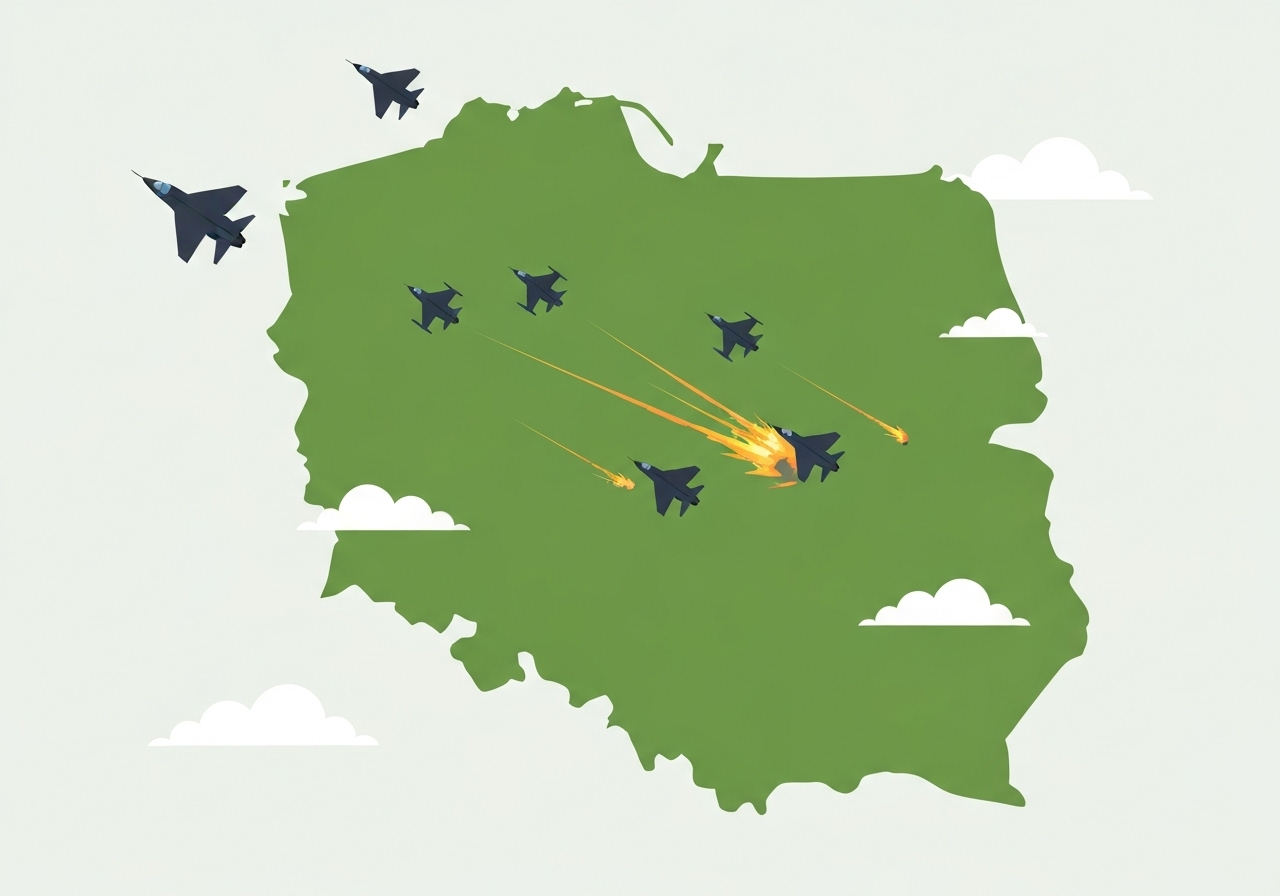
On 10 September 2025, Poland said it scrambled national and NATO air defences to intercept multiple drones after a Russian air attack struck western Ukraine, marking the first reported time Warsaw engaged defensive assets inside its own airspace during this war. Polish military authorities said the objects — described as “drone-type” — repeatedly violated Polish airspace, and that weapons had been used to neutralise some targets. The incident prompted temporary closures of several airports, including Warsaw’s Chopin, according to the U.S. Federal Aviation Administration, and widespread air-raid alerts were in effect across Ukraine. Polish officials urged residents in several eastern regions to stay home while forces searched for downed objects.
Key Takeaways
- Poland reported engaging its and NATO air defences on 10 September 2025 after Russian strikes hit western Ukraine; it described the intrusions as multiple “drone-type” objects.
- The Polish military named Podlaskie, Mazowieckie and Lublin as regions most at risk and said personnel were locating downed objects on the ground.
- The U.S. Federal Aviation Administration listed four temporarily closed Polish airports, including Warsaw Chopin and Rzeszow–Jasionka, a known logistics hub for aid to Ukraine.
- Ukraine’s air force reported air-raid alerts for the whole country as of 03:15 GMT; an earlier Ukraine statement about drones over Zamosc in Poland was later removed from its Telegram channel.
- U.S. and NATO politicians framed the incursions as a test of alliance resolve, with U.S. lawmakers calling the violations alarming; Russia’s defence ministry did not immediately comment.
- Poland has been on heightened alert since a stray Ukrainian missile struck a Polish village in 2022, killing two; officials say this is the first recorded use of Polish or allied assets to destroy drones in Polish airspace during the war.
Background
Since Russia’s full‑scale invasion of Ukraine in February 2022, NATO members bordering Ukraine have increased vigilance over potential spillover. In November 2022 a stray Ukrainian missile struck the village of Przewodów in southeastern Poland, killing two people and prompting emergency consultations within NATO. That incident pushed Warsaw to bolster early‑warning and air‑defence readiness along its eastern flank.
In 2025, Russia and Belarus launched large‑scale Zapad exercises that neighboring NATO states described as escalatory; Poland said it would temporarily close its border with Belarus during parts of the drills. The exercises and recurring cross‑border incidents have sustained concerns in Warsaw, Vilnius and Riga about airspace sovereignty and the risk of inadvertent escalation.
Main Event
Polish military command said on 10 September that multiple violations of Polish airspace by “drone‑type objects” occurred while Russia conducted strikes in western Ukraine. The command said an operation was underway to identify and neutralise the objects and that weapons had been employed; service personnel were searching for downed items on the ground. Defence Minister Wladyslaw Kosiniak‑Kamysz told followers on X that Polish aircraft had “used weapons against hostile objects” and that Warsaw remained in constant contact with NATO command.
Separately, the U.S. Federal Aviation Administration posted notices indicating four Polish airports were temporarily closed amid the drone threat, including Warsaw Chopin and Rzeszow–Jasionka, the latter an important transfer point for passengers and military equipment bound for Ukraine. Polish authorities had not immediately issued an official nationwide airport closure order in parallel statements, and some local notices were evolving as the situation unfolded.
Ukraine’s air force said all regions of the country were under air‑raid alerts for several hours as of 03:15 GMT, including western provinces that border Poland. An earlier Ukraine military post that said Russian drones had entered Polish airspace and threatened Zamosc was later removed from the service’s Telegram channel; Polish and NATO statements focused on the identification and neutralisation effort rather than attributing direct damage inside Poland.
Analysis & Implications
The use of drones that cross into NATO airspace raises immediate political and operational questions. Under Article 5, NATO members retain the right to defend their territory; Poland’s reported engagement of defensive weapons underscores how alliance obligations may be tested at the tactical level. Even absent a formal invocation of collective defence, any engagement that results in damage or casualties on NATO soil would demand rapid political and military coordination.
Operationally, the incident highlights the blurred lines between cross‑border strikes, stand‑off weapons and autonomous systems. Drones are harder to attribute quickly than larger aircraft or missile salvos, complicating both immediate responses and longer‑term deterrence signalling. NATO’s coordinated radar and command networks can help identify incursions, but protracted attribution debates can delay unified political responses.
For Ukraine, the episode matters in two ways: first, it may complicate logistics if airports and transit hubs are intermittently closed; second, it elevates the international stakes of Russia’s campaigns near allied borders. If such incursions become routine, NATO members supplying Ukraine would face tougher domestic debates about the risks of deeper entanglement and about rules for engagement when allied assets defend national airspace.
Comparison & Data
| Date | Incident | Reported Casualties | Polish Engagement |
|---|---|---|---|
| 11 Nov 2022 | Stray Ukrainian missile hit Przewodów | 2 killed | Heightened alert; no shootdown reported |
| 10 Sep 2025 | Drone incursions amid Russian strikes on western Ukraine | No confirmed Polish casualties | Poland/NATO assets reportedly used to neutralise drones |
The table contrasts the 2022 accidental strike that caused fatalities with the 2025 drone incursions that, as of reporting, produced no confirmed Polish casualties but did trigger defensive engagements and temporary airport closures. The difference illustrates both the changing threat mix and the variable risk of kinetic spillover into NATO territory.
Reactions & Quotes
Polish and international political figures framed the incident within wider concerns about Russian testing of NATO responses. U.S. lawmakers urged a firm political answer should NATO territory be threatened.
“These incursions cannot be ignored — Putin is testing our resolve to protect Poland and the Baltic nations,”
Senator Dick Durbin (U.S. Senate)
Another U.S. lawmaker described the episode as an attack on an ally and called for strong measures against Russia, reflecting partisan but broadly hawkish sentiment in Washington.
“Russia is attacking NATO ally Poland with drones — an act of war that demands a decisive response,”
Representative Joe Wilson (U.S. House)
On the ground, Poland’s defence leadership described active measures to intercept and neutralise threats while coordinating with NATO command structures.
“Polish aircraft have used weapons against hostile objects; units remain on full readiness,”
Wladyslaw Kosiniak‑Kamysz, Polish Defence Minister
Unconfirmed
- Exact number of drones shot down or neutralised in Polish territory has not been independently confirmed by Polish authorities or NATO as of reporting.
- Whether the drones intentionally targeted Polish territory or transited inadvertently from strikes over Ukraine remains unclear pending further technical and intelligence assessments.
- FAA notices listed airport closures, but there was no simultaneous, detailed nationwide Polish civil aviation bulletin confirming all those closures at the time of the military statement.
Bottom Line
This episode marks a notable escalation in the operational dynamics around the Ukraine war: Warsaw reports the first recorded use of national and allied defensive assets to engage drones in Polish airspace during the conflict. That tactical step heightens the diplomatic stakes between NATO and Moscow and places a premium on rapid, reliable attribution and alliance coordination.
In practical terms, the incident may disrupt logistics and air travel transiently and will likely intensify domestic political pressure in NATO capitals to clarify rules of engagement and deterrence posture. Observers should watch for official NATO assessments, forensic findings on the drones’ origin and any further cross‑border incidents that could force a broader alliance response.
Sources
- Reuters (news agency)
- U.S. Federal Aviation Administration (official notices)
- Polish Ministry of National Defence (official)
- Ukraine Ministry of Defence (official)