
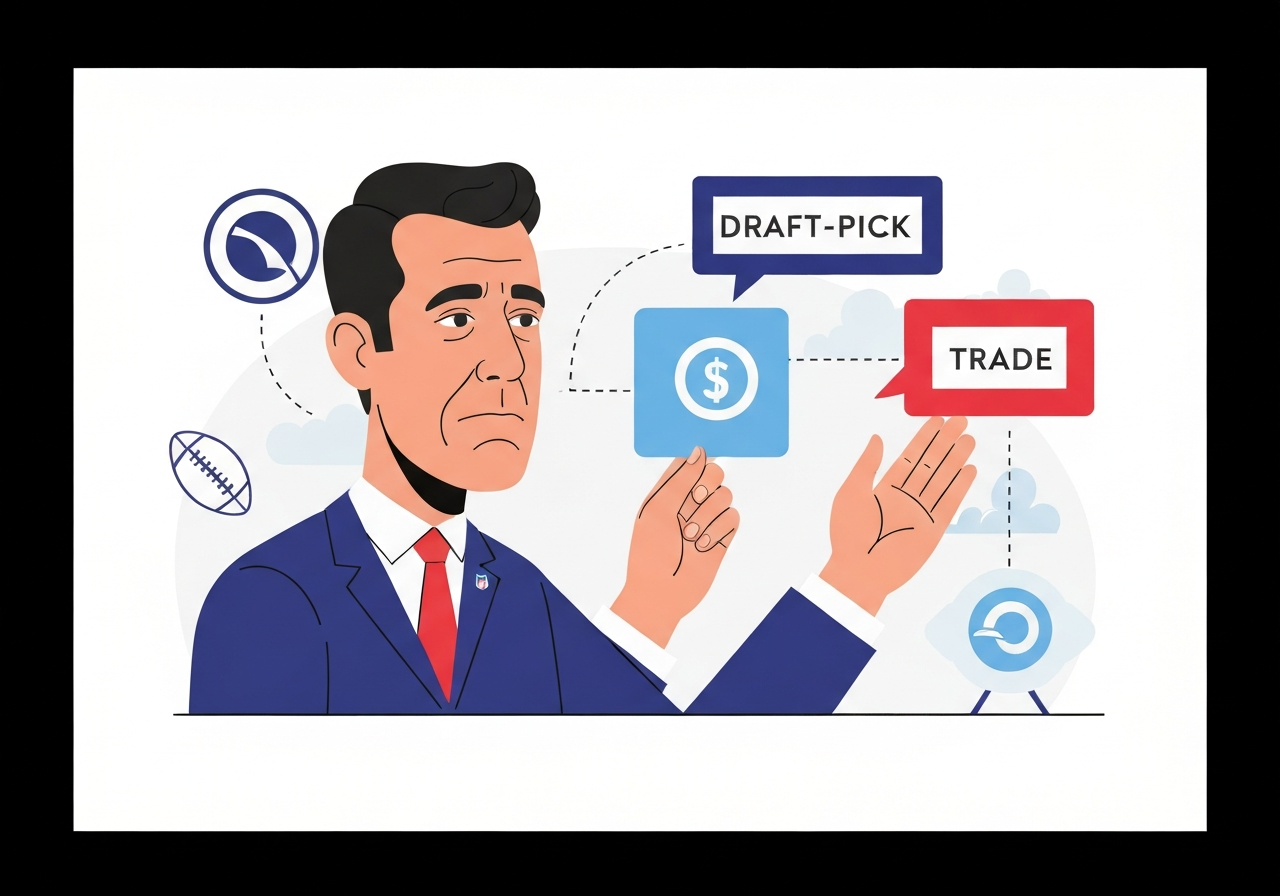
Lead: The Los Angeles Rams have pulled two proposed rule changes tied to the two-point play that factored into their loss to the Seattle Seahawks in the 2025 regular season, but Rams president Kevin Demoff has publicly endorsed a separate offseason proposal. The Cleveland Browns want to let teams trade future draft picks up to five years ahead instead of the current three-year limit. Demoff explained his support on X, arguing expanded trading would increase transactions and fan interest. The proposed change requires 24 team votes to pass and is now part of the offseason rule debate.
Key Takeaways
- The Rams withdrew two rule-change proposals related to the two-point play after they contributed to a loss to the Seattle Seahawks in the 2025 regular season.
- The Cleveland Browns have submitted a proposal to extend the allowable trading window for future draft picks from three years to five years.
- Rams president Kevin Demoff publicly signaled support for the Browns’ proposal via X, saying expanded trading fuels interest and roster-building options.
- The rule change would need 24 affirmative club votes within the league to become approved policy.
- Advocates say more tradable picks could mean more trades, offering teams greater flexibility in short- and long-term roster construction.
- Opponents caution that a five-year window could deepen long-term asset risk and complicate salary-cap planning.
- The decision point is slated for this offseason as part of the league’s regular rule-review and competition-committee cycle.
Background
The NFL currently permits teams to trade draft picks up to three years into the future; that limit frames how franchises balance present needs against long-range planning. Trading future picks is a core mechanism for roster building: teams that want immediate roster upgrades often surrender future selections, while rebuilding clubs accumulate future picks as capital. Over time, the league and clubs have debated how to calibrate the trade window to preserve competitive balance while enabling strategic flexibility.
The Browns’ proposal to extend that window to five years reflects a push by some franchises to increase the velocity of transactions and to give teams more levers for constructing rosters across multiple seasons. That proposal arrived amid other offseason rule conversations that followed the Rams’ controversial two-point-play proposals being withdrawn; the withdrawn items were tied to a play sequence that influenced the Rams’ 2025 regular-season loss to the Seahawks. The broader context includes owners, front offices and the competition committee weighing trade activity, fan engagement and long-term fairness.
Main Event
In the days after the Browns filed the five-year trading proposal, Kevin Demoff used his public X account to outline why he believes the change makes practical and commercial sense. Demoff argued that increased tradeability of picks would prompt more transactions and greater fan interest, and that additional pick inventory creates more options for team building. His post reframed the change as both a sporting and engagement measure rather than a narrow competitive tweak.
The Rams also removed two distinct proposals concerning the two-point play — measures that had drawn attention because of their link to a late-season loss to Seattle in 2025. Team officials characterized the withdrawals as part of an internal reassessment after that outcome, even as the front office signaled willingness to support other clubs’ proposals that could enhance league dynamism. The Browns’ submission has since circulated among club executives and committee members for review this offseason.
League procedure requires 24 club votes to adopt a rules change; that supermajority threshold means proponents must build interclub consensus. Early reactions reported by league insiders indicate a mix of enthusiasm and caution: some general managers welcome more trade levers, while others warn of the risks of mortgaging future drafts beyond a three-year planning horizon. With discussions ongoing, the issue is expected to surface in committee meetings and club deliberations this spring.
Analysis & Implications
Extending the trade window to five years would alter the calculus of long-term roster management. Teams comfortable trading future picks could more aggressively pursue immediate roster upgrades, leaning on a deeper horizon of draft capital. That may advantage clubs with stable front offices and clearer long-term plans, as they can better project needs and avoid overcommitting assets inadvertently.
From a competitive-balance perspective, critics argue a longer trading window could allow wealthier or better-run franchises to leverage future assets to consolidate short-term advantages, potentially increasing disparity. Proponents counter that the increase in trades would spread resources differently and create market-based redistributions, with more picks flowing to teams that prioritize long-term stockpiling.
Commercially, more trades tend to generate media attention, social-media chatter and viewer interest around draft-day activity — a point Demoff highlighted. Increased transactional volume can boost offseason narratives and the draft’s entertainment value, benefiting broadcasters and the league’s product. However, league policymakers must weigh those commercial upsides against the integrity of future drafts and the clarity of franchise planning.
Comparison & Data
| Feature | Current (3-year) | Proposed (5-year) |
|---|---|---|
| Maximum future pick horizon | 3 seasons | 5 seasons |
| Potential trade inventory | Limited to nearer-term assets | Increased pool of tradable picks |
| Roster planning horizon | Short-to-mid term | Short-to-long term |
| Risk to long-term assets | Lower | Higher |
This comparative table highlights the structural differences rather than forecasting exact trade counts. If adopted, clubs would likely adjust valuation models and draft-asset accounting to reflect the extended horizon; front offices would need new protocols for cap and pick forecasting across five seasons.
Reactions & Quotes
“Nothing creates more interest in the NFL than trades,”
Kevin Demoff (Rams president) via X
Demoff used that line to summarize his view that expanded trading capacity would deepen fan engagement and provide teams more roster-building options. His commentary framed the Browns’ proposal as a pragmatic move to increase league activity.
“Allowing teams to trade picks up to five years out instead of three years”
Cleveland Browns (proposal summary)
The Browns’ filing, as summarized publicly, specifies the five-year horizon as the core change; proponents emphasize the additional flexibility it would grant clubs when assembling rosters and making personnel decisions.
Unconfirmed
- Whether the Browns’ five-year proposal will secure the 24 club votes required to pass this offseason is not yet confirmed.
- The exact implementation details (for example, transitional rules or limits on traded conditionality) have not been published publicly.
- Any wider package of rule changes tied to this trade-window proposal or linked to the withdrawn two-point-play measures remains uncertain.
Bottom Line
Kevin Demoff’s public endorsement of the Browns’ proposal elevates its profile and suggests at least some momentum among club executives for changing how future draft capital can be used. The central trade-off is straightforward: more tradable picks can increase transactions and fan engagement but also raise the stakes for long-term asset management and competitive balance. Whether the proposal becomes policy depends on coalition-building among owners and the competition committee during the offseason review process.
Clubs, fans and media should watch committee deliberations and subsequent club votes closely. If adopted, the change would reshape draft-market dynamics and force teams to update valuation models, risk frameworks and planning horizons for roster construction over the next five seasons.