
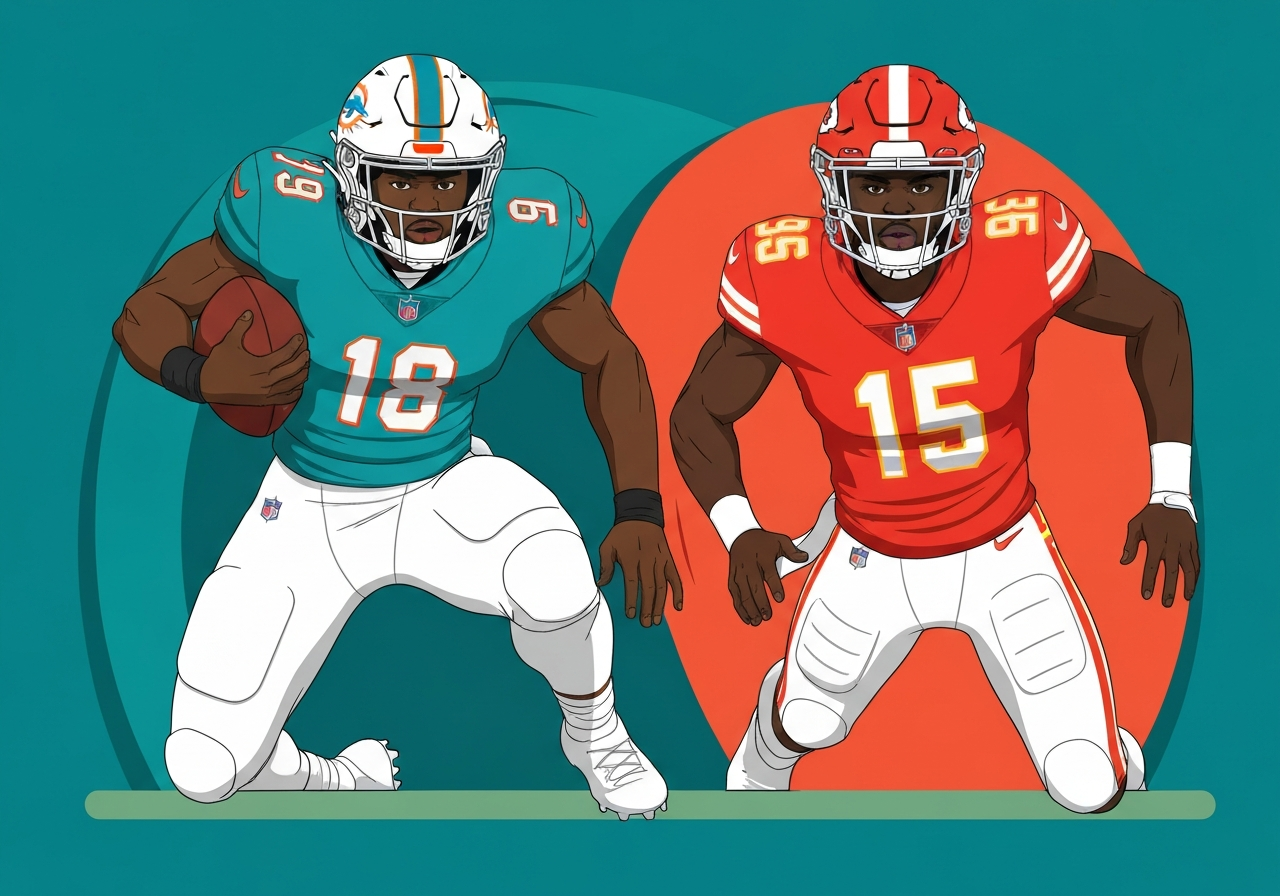
Updated March 19, 2026 — Eric Edholm revises his 2026 NFL mock draft after weeks of free-agent moves and two trades that involved first-round picks. The updated board ranges from high-upside edge rushers and cornerbacks to a deeper-than-expected wide receiver and offensive tackle pool. Notably, Miami — having traded Jaylen Waddle to Denver — targets a YAC receiver at No. 11, while Kansas City uses its late first-round choice on a physically gifted edge prospect. The mock preserves exact pick positions and key medical or workout caveats noted in the pre-draft process.
Key takeaways
- Two first-round picks changed meaningfully since January, with hundreds of signings and multiple trades shaping team needs across the league.
- Top-end depth at edge rusher and cornerback remained a theme; receiver and offensive tackle prospects populate the middle of Round 1.
- Miami replaced Jaylen Waddle (traded to Denver) by selecting a yards-after-catch (YAC) receiver at No. 11 to aid new QB Malik Willis.
- Kansas City used pick No. 29 on a high-motor, athletic edge rusher (Lawrence) who posted a 40-inch vertical and 1.59-second 10-yard split at his testing site.
- Medical or experience questions persist for several prospects: McCoy missed 2025 with a torn ACL; Tyson missed multiple college games across seasons.
- Teams prioritized positional fits: Browns doubled up on physical receivers and linemen (Mauigoa at No. 6, Cooper at No. 24); Chargers and Steelers targeted long, athletic linemen and rushers for schematic fit.
Background
The 2026 cycle has been defined by heavy offseason roster churn. Since the initial mock in late January, hundreds of free-agent moves and at least two trades affecting first-round capital have altered team priorities. Some clubs used free agency to patch short-term holes, while others preserved draft capital for long-term projects. The result is a first round that feels top-light at the very peak but unusually deep at certain roles — namely wide receiver, offensive tackle and front-seven defenders.
Front offices entered the pre-draft window weighing medically uncertain but high-ceiling prospects against ready-now veterans added in free agency. Teams such as Tennessee and Dallas have historical precedent for drafting players coming off missed seasons (the mock references Micah Parsons in 2021 as a comparable draft-time medical concern), which affects how franchises evaluate 2026 entrants like McCoy. Additionally, several clubs reshaped their secondary and pass-rush rooms; the Chiefs lost starting corners in the offseason and targeted coverage help early.
Main event
At the top of the board, Mendoza — long considered a near-lock — remains the No. 1 selection in this update. The pick is framed as a generational foundation piece who still needs surrounding talent to maximize impact; signer Tyler Linderbaum is noted as a complementary veteran center. The Jets take Reese at No. 2 with plans to deploy him as an early edge rusher while veteran additions give him room to develop after just 16 college starts.
The Cardinals pick a speed rusher (Bailey) at No. 3 to pair with Josh Sweat, while the Titans at No. 4 select Love — a dynamic back to complement Cam Ward and Tony Pollard. At No. 5 the choice came down to Ohio State teammates Styles and Caleb Downs; Styles was tabbed for his physical traits and immediate impact at Will linebacker. The Browns address tackle with Mauigoa at No. 6, a 6-foot-5 1/2, 329-pound lineman who can swing between tackle and guard.
Mid-round firsts fill schematic needs: Commanders pick Tate at No. 7 to add separation for Jayden Daniels; Chargers and Chiefs prioritize press-man corner and interior pass-rush sources with Delane (No. 9) and Downs (No. 10) on their respective boards. The Dolphins, having dealt Jaylen Waddle, select Lemon at No. 11 as a YAC specialist to support new QB Malik Willis. Notable medical considerations include McCoy (No. 12), who missed 2025 with a torn ACL but draws parallels to other successful returns to the NFL stage.
Analysis & implications
This mock underlines an important draft-market dynamic: teams that solved short-term gaps in free agency often drafted for upside and future plug-and-play starters. Cleveland — by taking Mauigoa and later Cooper — signals a multi-year plan to rebuild both the line and pass-catch corps around their QB room. That approach balances immediate protection needs with the pursuit of long-term receiving weapons who excel outside their frames.
For Miami, trading Jaylen Waddle to Denver created both cap/movement flexibility and a glaring receiving vacancy. Selecting a YAC receiver at No. 11 is a low-risk, high-reward pick that aligns with a coaching change under Jeff Hafley if he emphasizes press-man coverage and contested catch points. The pick also reflects a desire to provide Malik Willis with a playmaker who can generate chunk gains after contact.
Kansas City’s late-first investment in Lawrence speaks to a broader league trend: premium teams with established starting cores are increasingly aggressive in adding third-down disruptors late in Round 1. Lawrence’s testing numbers and length checked boxes for a defense that seeks edge athleticism complementary to its interior rushers. If he translates to NFL speed, the Chiefs could regain consistent pressure without sacrificing coverage resources.
Comparison & data
| Pick | Team | Player | Primary role |
|---|---|---|---|
| 6 | Browns | Mauigoa | OT/OG, versatile mauler |
| 11 | Dolphins | Lemon | YAC receiver |
| 24 | Browns (2nd) | Cooper | Outside receiver |
| 29 | Chiefs | Lawrence | Edge rusher, athletic pass rusher |
The table highlights a pattern: teams with early picks often took linemen or high-floor defenders, while late-first choices (like No. 29) targeted explosive pass-rush traits. Across the round, performance metrics (testing numbers and collegiate workload) weighed heavily: some high-upside athletes lack volume starts, increasing variance in their rookie-year impact.
Reactions & quotes
Team and league observers reacted quickly to the mock board. Below are concise attributions and brief quoted takes drawn from analysis and public commentary.
“Replacing a dynamic vertical target with a YAC specialist changes the offense but can unlock different playmaking avenues for the quarterback.”
Eric Edholm, NFL.com (analysis)
This summarizes the Dolphins’ strategic pivot after trading Jaylen Waddle: instead of a like-for-like replacement, Miami chose a complementary skill set to diversify routes and after-catch production.
“Adding an athletic edge late in Round 1 is a low-risk move for a contender to recapture consistent pressure.”
League defensive analyst (independent analysis)
That assessment contextualizes Kansas City’s selection of Lawrence at No. 29: contenders can afford to choose fit and upside late in the first round, betting that coaching and surrounding talent will accelerate development.
“Medical red flags mean more due diligence, but several clubs have precedent for drafting players coming off missed seasons with success.”
Draft scout (pro scouting)
This speaks to McCoy’s case at No. 12, where recent surgical history is balanced against athletic upside and scheme fit.
Unconfirmed
- Links between potential trades for A.J. Brown and the Patriots’ No. 31 pick remain speculative and were not confirmed by teams at the time of publication.
- Outcomes of Tennessee’s March 31 pro day (McCoy) and other individual workouts noted in this mock were pending at publication and could materially alter player rankings.
- Reports about long-term positional shifts (for example, moving Penei Sewell across the line) are organizational strategies under consideration but not finalized.
Bottom line
This revised mock draft reflects two competing forces: the immediate patching of roster holes via free agency and the continued prioritization of long-term upside in the draft. Teams that spent in free agency tended to pick for upside or fit; teams that preserved picks addressed clear roster gaps. The Dolphins’ selection to replace Jaylen Waddle is emblematic of a broader theme — franchises are now drafting around scheme and coaching plans rather than mirror-imaging past personnel.
For prospects, the 2026 class offers a mix of polished, high-volume college performers and explosive athletes with limited starts or medical histories. That creates a volatile rookie class where several late-first and early-second picks can develop into immediate contributors or longer-term projects. League observers should watch pro days and final medical reports closely: those results will likely rearrange the board ahead of the April 23–25 NFL Draft coverage on NFL Network and NFL+.