
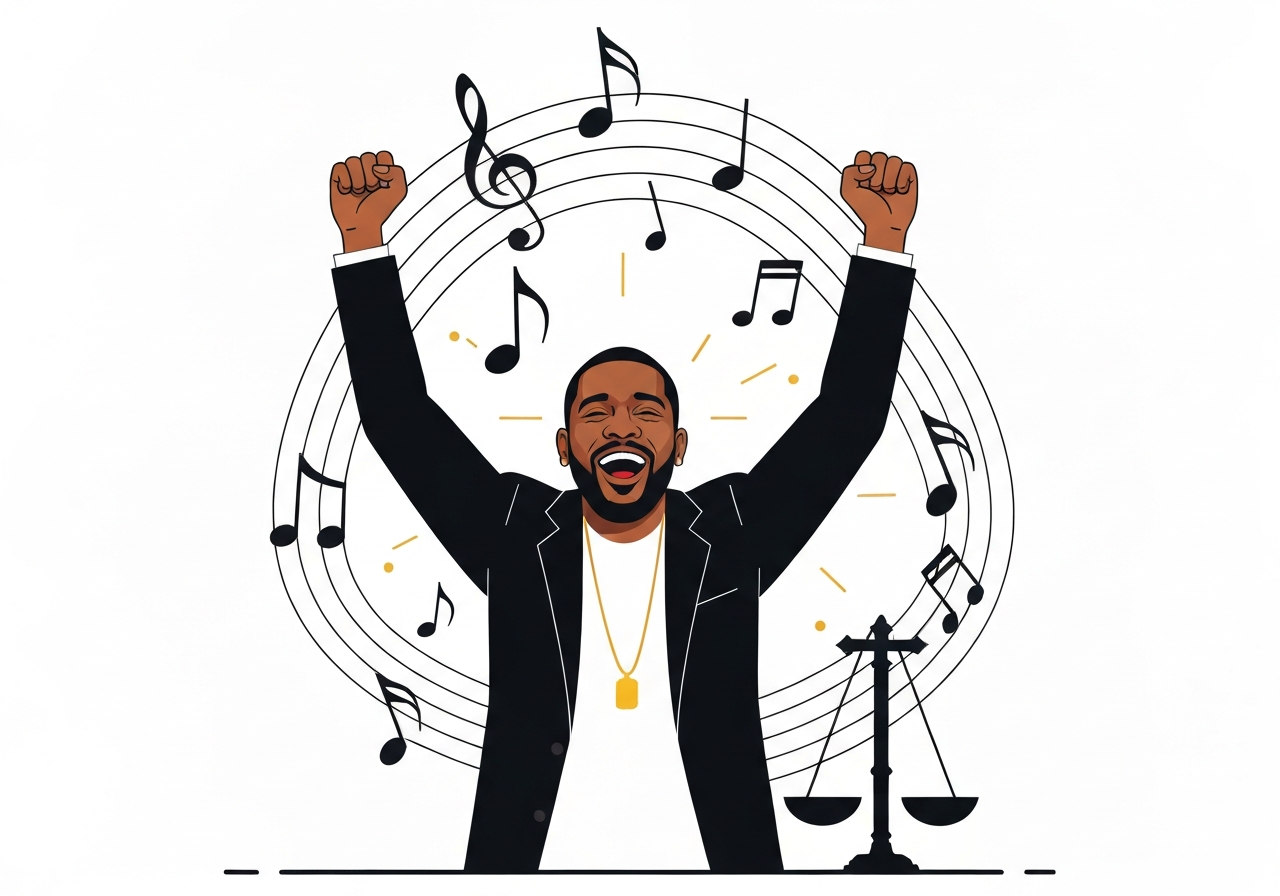
Rapper Afroman (Joseph Foreman) won a defamation suit this week after a three-day trial in Adams County, Ohio, over songs and videos he produced responding to an August 2022 police raid on his home. A jury found his music and social-media posts were protected speech even as deputies said the content damaged their reputations and livelihoods. The case drew national attention for its mix of courtroom drama, viral video clips and sharp questions about the line between satire and defamatory falsehood. The verdict ends the officers’ bid for up to $3.9 million in damages and demands to remove the material.
Key Takeaways
- The jury in Adams County, Ohio ruled for Joseph Foreman (Afroman) after a three-day trial, finding his songs and posts were protected speech.
- The underlying raid occurred in August 2022 on suspicion of drug trafficking and kidnapping; no charges were filed from that search.
- Seven deputies sued in 2023, seeking content removal and $3.9 million, saying the videos and merchandise harmed their jobs and reputations.
- Afroman used home surveillance footage in the 2023 album Lemon Pound Cake; the lead music video had about 3.8 million YouTube views at the time of reporting.
- The trial included testimony that deputies returned seized cash short by $400, a discrepancy a deputy said he caused through miscounting.
- The case highlighted tensions between artistic exaggeration in rap and alleged real-world harms to police officers and their families.
- The verdict is likely to be cited in future disputes over satire, social-media virality and defamation claims against public servants.
Background
In August 2022, Adams County Sheriff’s deputies executed a search warrant at Afroman’s Ohio home on suspicion of drug trafficking and kidnapping. The search, captured on home surveillance cameras, shows multiple officers entering forcefully, examining personal items and seizing cash; the family reports property damage and disrupted security equipment. No criminal charges followed the raid, but the incident became the spark for a prolonged public dispute.
Joseph Foreman, 51, a rapper known for early-2000s hits such as “Because I Got High” and “Crazy Rap (Colt 45 and 2 Zig-Zags),” responded by producing Lemon Pound Cake, a 2023 album whose videos and merchandise satirized the deputies involved. The recordings combined footage from the raid with lyrical attacks that ranged from comedic jabs to serious allegations. The deputies, citing invasion of privacy and reputational harm, filed suit in 2023 seeking nearly $4 million and removal of the material.
Main Event
The trial, held over three days this week, centered on whether Afroman’s lyrics and related content constituted protected opinion and artistic expression or actionable false statements. Defense attorneys argued that the music was conventional rap hyperbole and social commentary; the defense called only one witness in its case. Plaintiffs presented testimony from deputies who said the posts caused harassment, professional setbacks and emotional distress.
Testimony described both the original confrontation and the impacts afterward: officials recounted being mocked online, recognized while working in other jurisdictions, and, in at least one case, leaving the sheriff’s office. Afroman testified that his family—his wife and two children then aged 10 and 12—were frightened during the raid and that thousands in cash returned after the search were $400 short.
Attorneys for the deputies framed the central question to jurors as whether deliberate falsehoods meant to injure should be insulated as art. The defense countered that rap routinely uses exaggeration and that public employees face frequent criticism; counsel warned that a plaintiff win could chill expressive speech. After under a day of deliberations, jurors sided with the rapper.
Analysis & Implications
The verdict underscores the judiciary’s continuing struggle to balance First Amendment protections with remedies for reputational harm. Courts generally give broad leeway to artistic and political expression, especially where statements are opinion, rhetorical hyperbole or within a recognized genre like rap. This case will likely be referenced in future disputes where social-media virality turns local incidents into national controversies.
For law enforcement and other public officials, the ruling signals limits on litigation as a tool to silence critical or mocking speech. Plaintiffs must still show that statements were presented as verifiably false facts rather than opinion or artistic exaggeration. At the same time, the trial illustrated that online ridicule can carry tangible professional costs—resignations, community stigma and personal distress—so affected parties may pursue alternative accountability or reputational strategies.
Commercially and culturally, the episode shows how courtroom litigation can amplify the very content plaintiffs seek to suppress, a phenomenon often called the Streisand effect. Afroman told jurors he performed roughly 250 shows the previous year and that the viral attention grew his social following and streaming numbers, demonstrating how legal action can have countervailing promotional effects.
Comparison & Data
| Metric | Case figure | Context |
|---|---|---|
| Trial length | 3 days | Short, focused jury trial in Adams County |
| Damages sought | $3.9 million | Filed by seven deputies in 2023 |
| Music video views | 3.8 million | “Lemon Pound Cake” lead video on YouTube |
| Afroman’s shows (est.) | ~250 in prior year | Artist testimony about touring |
This compact set of numbers places the dispute in perspective: a brief court proceeding addressed millions of online views and a multi-million-dollar claim, showing how localized incidents can scale rapidly online. The data also illustrates the asymmetric costs of litigation versus viral publicity—defendants and plaintiffs face different reputational and monetary exposures.
Reactions & Quotes
The courtroom and the videos produced several widely shared moments that circulated on social platforms, amplifying public debate about policing, privacy and artistic license.
“I didn’t win, America won. America still has freedom of speech.”
Afroman (Joseph Foreman), outside courthouse
Afroman spoke to reporters immediately after the verdict, framing the outcome as a broad defense of expressive rights rather than a personal victory. His attire and demeanor outside court added to the viral imagery surrounding the case.
“A search-warrant execution that you think was unfair … doesn’t justify telling intentional lies designed to hurt people.”
Robert Klingler, attorney for the deputies
Lead counsel for the plaintiffs told jurors the case was about intentional falsehoods and the real-world harm they cause. Plaintiffs testified about community recognition, job disruption and, in one instance, a deputy leaving the office amid allegations he denied.
“Artists use exaggeration and social commentary—rap has a long history of that.”
David Osborne, defense attorney
The defense positioned the songs within a recognized artistic tradition, arguing that many listeners understand performative excess in musical genres and that penalizing that could chill broader expression.
Unconfirmed
- Allegations reported by Afroman suggesting some deputies engaged in extramarital affairs or pedophilia remain unproven in court; jurors did not find those claims to be established facts during this trial.
- Public commentary about the precise impact on each deputy’s career varies; some claims of career-ending harm are asserted by plaintiffs but the long-term professional consequences are still developing and not fully documented.
Bottom Line
The Afroman verdict reaffirms strong protections for expressive, satirical and artistic speech—especially when directed at public servants—while highlighting the gap between online ridicule and legal remedies for reputational harm. Plaintiffs face a high bar to convert perceived insults or artistic exaggeration into successful defamation claims, particularly after short, focused trials that emphasize First Amendment doctrine.
At the same time, the case demonstrates how social media can magnify local disputes into national controversies, often producing reputational damage regardless of legal outcomes. Expect similar suits to surface as artists and critics use viral formats to respond to encounters with authorities; courts will continue to refine how existing libel and privacy law applies in the era of meme culture and streaming music.
Sources
- NPR (news media — original reporting and trial coverage)