
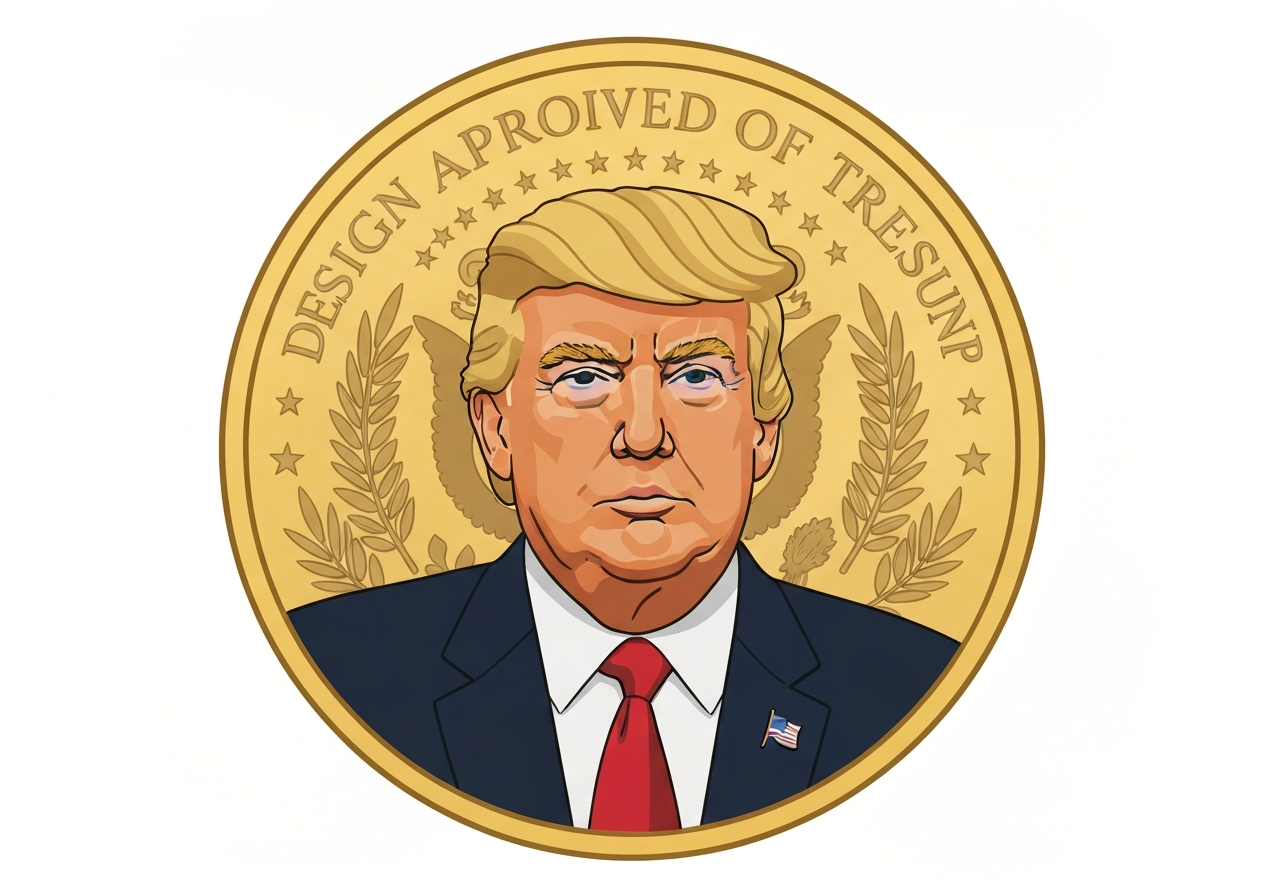
On March 19, 2026, the U.S. Commission of Fine Arts approved the general design for a 24‑karat gold commemorative coin bearing President Donald Trump’s portrait, advancing a Treasury plan that has drawn sharp objections from Democrats and design advisers. The image—sourced from a photograph taken by the White House’s chief photographer—shows Trump leaning over the Resolute Desk, on view in the Smithsonian’s National Portrait Gallery. Treasury officials say the gold coin is a noncirculating commemorative tied to the nation’s 250th anniversary; the agency has separately moved forward on a $1 Trump coin approved by the Fine Arts commission in January. Critics, including the Citizens Coinage Advisory Committee and several Democratic lawmakers, argue the proposals break long‑standing norms and may raise legal questions.
Key Takeaways
- Approval date: The U.S. Commission of Fine Arts approved the 24k gold coin design on March 19, 2026.
- Material and source image: The piece is 24‑karat gold and uses a White House chief photographer’s image of Trump at the Resolute Desk.
- Size and design notes: Commissioners suggested adding wood grain detail to the desk and recommended a roughly 3‑inch diameter, the Mint’s maximum for commemoratives.
- $1 coin status: A separate $1 Trump coin was approved by the Fine Arts commission in January 2026 but faces protests and legal scrutiny.
- Advisory opposition: The Citizens Coinage Advisory Committee (CCAC) declined to review both proposals and called them contrary to founding principles.
- Legal context: A 1935 law restricts gold currency from commerce; commemorative gold pieces do not circulate, reducing immediate legal barriers.
- Political pushback: Sen. Catherine Cortez Masto and other Democrats have formally asked the Treasury to halt the $1 coin project, alleging potential illegality.
Background
The Commission of Fine Arts is an advisory body that reviews federal design projects; the article notes its current membership was selected during the Trump administration. The U.S. Treasury and the Mint produce commemorative coins for milestone events, and the semiquincentennial (250th anniversary) has spawned a slate of special‑edition pieces and medals. Historically, the United States has treated likenesses of living presidents on currency as exceptional: George Washington refused a living portrait on money, calling it monarchical, and only Calvin Coolidge appeared on a circulating U.S. piece while alive—the controversial 1926 Sesquicentennial half dollar, many examples of which were later melted.
Congress created the Citizens Coinage Advisory Committee (CCAC) as a nonpartisan panel to review proposed designs and advise Treasury on aesthetics and precedent; the CCAC says it refused to evaluate the Trump proposals because they run counter to the country’s founding principles. The statutory framework for circulating and commemorative coins differs: commemorative gold coins are typically noncirculating, and a 1935 law bars gold currency from use as money, while congressional authorization is generally required for new circulating denominations.
Main Event
The design vote on March 19 follows a process described by Treasury and design officials in which the Secretary of the Treasury presented multiple options to President Trump; the president approved the chosen photograph, officials said. The Commission of Fine Arts voted to approve the general design and recommended minor refinements such as adding wood grain to the Resolute Desk depiction and sizing the piece at about 3 inches in diameter, the Mint’s customary maximum for commemorative medals.
Megan Sullivan, acting chief of the Office of Design Management, told the commission the coin will carry a denomination though the precise face value has not been finalized. The U.S. Mint did not provide immediate comment on production quantities or retail pricing; comparable commemorative gold pieces on the Mint’s site often sell for thousands of dollars, suggesting a premium collectible market rather than mass circulation.
Separately, the Fine Arts commission earlier approved a $1 coin design in January 2026 intended for circulation, a move the Treasury says it has authority to pursue under a 2020 law enabling celebratory 250th‑anniversary pieces. That $1 proposal has met formal resistance: CCAC declined review, and several Democratic lawmakers, led by Sen. Catherine Cortez Masto, have asked the Treasury to stop work on the circulating dollar, arguing existing statutes restrict portraits of living persons on currency.
Analysis & Implications
Legal questions will likely center on competing statutory interpretations. Supporters point to the 2020 semiquincentennial authority cited by Treasury as justification for new celebratory coinage; opponents point to older acts—cited by critics as early as an 1886 statute—intended to limit likenesses on circulating currency to deceased persons. Because the 24k gold piece is noncirculating, immediate statutory obstacles are smaller, but the $1 circulating proposal could trigger litigation or congressional intervention if lawmakers press the issue.
Politically, the decision is charged. Critics argue that placing a sitting president’s portrait on government‑backed coinage blurs republican norms and echoes monarchical symbolism; proponents say a commemorative honoring the 250th anniversary and depicting the current president is appropriate. The dispute extends beyond law to institutional credibility: the Mint and Treasury risk accusations of politicizing a traditional, technical function if the projects proceed despite advisory opposition.
Economically, the gold commemorative is aimed at collectors and could generate substantial revenue for the Mint if marketed at premium prices, as past commemoratives have. Market demand for presidential memorabilia is historically strong, but political controversy can both increase collector interest and prompt retailer or institutional refusal to carry politically charged items. Internationally, the precedent of featuring a sitting head of government on state‑issued commemorative pieces varies by country; the U.S. debate focuses more on constitutional symbolism than on international norms.
Comparison & Data
| Item | Year | Living President? | Notes |
|---|---|---|---|
| 1926 Sesquicentennial half dollar | 1926 | Yes (Calvin Coolidge) | Controversial at release; many pieces melted later |
| Proposed $1 Trump coin | 2026 | Yes (Donald Trump) | Approved by Fine Arts commission Jan 2026; legal challenges alleged |
| Proposed 24k gold Trump coin | 2026 | Yes (Donald Trump) | Approved by CFA Mar 19, 2026; noncirculating commemorative |
The table places the current proposals in historical context: living presidents on U.S. coinage are rare and have previously triggered controversy. The Mint’s maximum commemorative diameter (about 3 inches) and the noncirculating legal status for gold pieces mean the 24k coin faces different constraints than any circulating dollar would. Observers should watch whether Congress or the courts intervene on the $1 design; for the gold piece, the principal barriers are reputational and market‑based rather than statutory.
Reactions & Quotes
“It’s a very strong, very tough image of him. It’s fitting to have a current sitting president who’s presiding over the 250th year on a commemorative coin for said year.”
Chamberlain Harris, Commission member and deputy director of Oval Office operations
Harris framed the choice as appropriate for a commemorative marking the semiquincentennial and emphasized the image’s strength. His role in White House operations underscores the administration’s influence on the selection process.
“If you issue a coin with a portrait of a sitting president, it will send a message that the sitting president is a king.”
Donald Scarinci, chair, Citizens Coinage Advisory Committee
Scarinci, speaking for the CCAC, labeled both the $1 and gold proposals inconsistent with founding principles and explained why his committee declined to review them. That stance signals potential advocacy against Treasury plans and frames the disagreement as constitutional and symbolic, not merely aesthetic.
“The White House’s decision to trudge forward with a gold coin featuring President Trump is embarrassing and goes against our country’s foundational values.”
Sen. Catherine Cortez Masto (D‑Nevada)
Sen. Cortez Masto and other Democratic lawmakers have asked the Treasury to halt the $1 coin project and suggested legal action might follow. Her office said the Treasury appears intent on continuing, setting the stage for potential congressional or judicial responses.
Unconfirmed
- Final denomination and mintage figures for the 24k gold coin have not been announced; pricing and production quantities remain unconfirmed.
- The Treasury’s precise legal rationale for moving forward with a circulating $1 Trump coin may face court review; the timing and outcome of any litigation are uncertain.
- It is not yet confirmed whether Congress will take legislative action to block or endorse either coin before release.
Bottom Line
The March 19, 2026 approval by the Commission of Fine Arts moves a 24‑karat gold Trump commemorative coin closer to production while exposing deep tensions over symbolism, law and precedent. Because the gold piece is noncirculating, immediate legal barriers are limited, but political opposition from advisory groups and lawmakers raises reputational and institutional questions for the Mint and Treasury.
The separate $1 circulating proposal remains the more legally vulnerable and politically charged initiative; expect potential congressional inquiries, formal legal challenges, and continued public debate. Observers should watch for Treasury rulemakings, CCAC actions, and any court filings that could determine whether a living president’s portrait will appear on new circulating U.S. currency.