
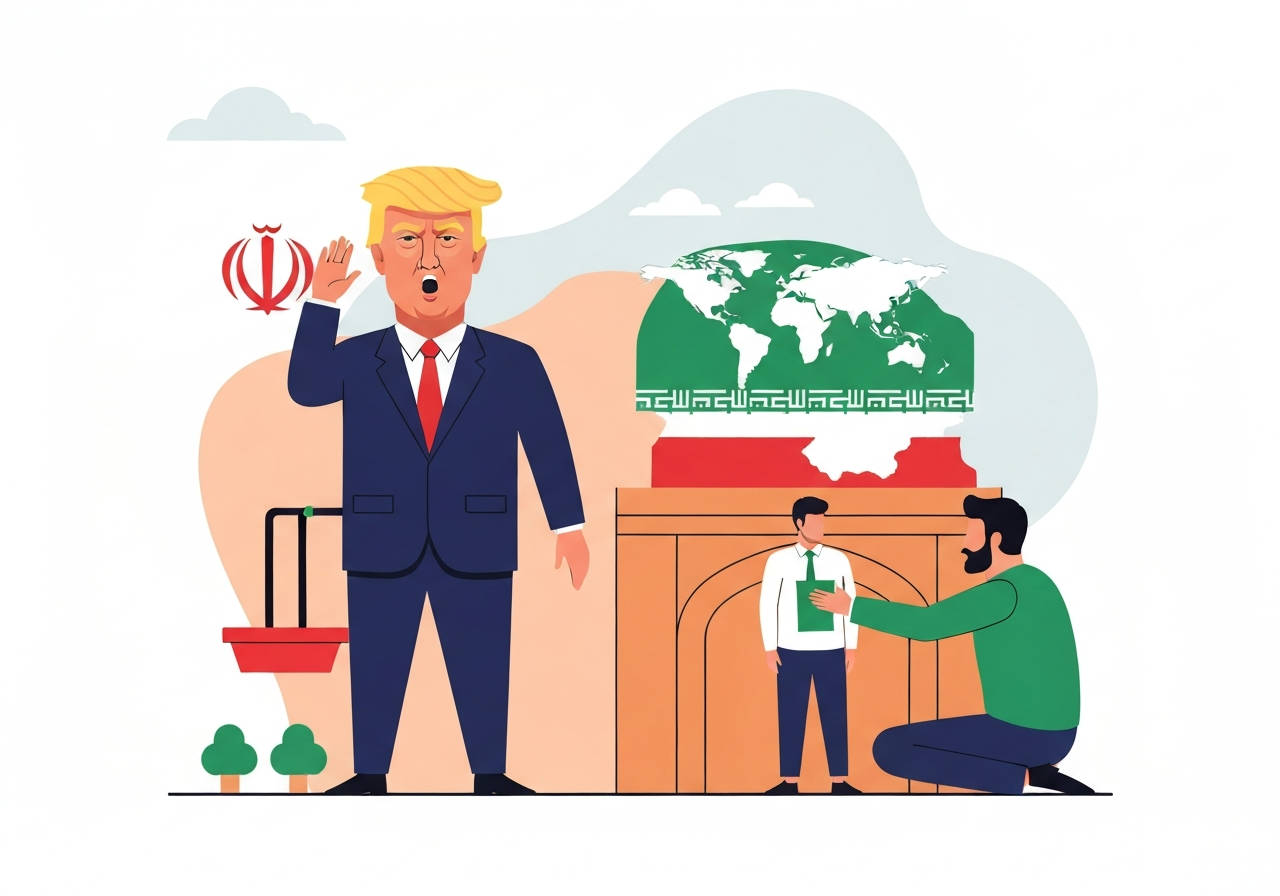
Lead: On March 19, 2026, at the White House, President Trump said he did not plan to deploy U.S. ground forces to the conflict with Iran but left room for future changes. His remarks came amid an intensifying U.S.-Israeli campaign against Iranian targets and a Pentagon request for roughly $200 billion to sustain extended operations. Overnight exchanges between Israel and Iran targeted major energy infrastructure, including a strike on the South Pars processing complex and damage near Ras Laffan, Qatar. The president’s statements were inconsistent with earlier comments that he was ‘not afraid’ to put boots on the ground, producing uncertainty about next steps.
Key Takeaways
- President Trump said on March 19, 2026 that he was not sending U.S. ground troops to Iran but declined to rule out a future reversal, signaling ambiguity about U.S. policy.
- The Pentagon has requested about $200 billion to cover sustained military operations tied to the Iran campaign; the package is expected to face resistance on Capitol Hill.
- The conflict has intensified over three weeks since the United States and Israel first struck targets in Iran; energy infrastructure has been a primary target in recent exchanges.
- Israel struck the processing complex for the South Pars natural gas field; Qatar reported missiles that damaged facilities at Ras Laffan International City.
- Two days earlier, the president publicly said he was ‘not afraid’ to put U.S. boots on the ground, a phrase that heightened concern about possible escalation.
- Congressional approval of large supplemental funding is uncertain, creating a potential political constraint on prolonged operations.
- Energy markets and regional partners are monitoring attacks on critical infrastructure for indications of wider economic and diplomatic spillovers.
Background
The confrontation between the United States, Israel and Iran escalated sharply beginning roughly three weeks before March 19, 2026, after coordinated strikes were launched on Iranian military and infrastructure targets. Washington has framed its role largely in support of Israeli operations while asserting separate U.S. objectives. The conflict has stretched regional security, drawing in Gulf states worried about spillover damage to energy hubs and shipping lanes.
Historically, U.S. decisions to introduce ground forces have followed explicit congressional authorizations or broad international coalitions; those precedents shape debates inside Washington today. The Pentagon’s large funding request — about $200 billion — reflects planning assumptions for extended air, maritime, intelligence and logistical operations, not necessarily a specific commitment to land combat. Lawmakers in both parties have signaled skepticism about open-ended funding and mission creep, setting up a likely standoff over the size and terms of any supplemental appropriations.
Main Event
On March 19, 2026, reporters pressed the president about whether U.S. ground troops would be deployed to Iran. He responded that he was not placing troops ‘anywhere’ while adding that, if he had plans, he would not disclose them publicly. The comments followed earlier presidential remarks that he was willing to put U.S. boots on the ground if necessary, creating a mixed message about administration intent.
The Pentagon has formally requested roughly $200 billion to underwrite military operations connected to the Iran campaign, according to officials briefed on the request. Defense planners say the money is intended to fund an array of activities — from munitions and fuel to intelligence and logistics — that would support a protracted effort if political leaders elect to sustain pressure. Capitol Hill is expected to scrutinize that package closely, and many lawmakers have already signaled opposition to unrestricted war funding.
On the battlefield, the conflict continued to focus on energy and industrial targets. Israel said it struck the processing complex tied to the South Pars natural gas field, a strategically important facility shared in Iran’s offshore energy system. Qatar attributed recent missile damage to Iranian launches that hit Ras Laffan International City, a major liquefied natural gas hub, underscoring the conflict’s economic stakes for Gulf producers and global energy markets.
Analysis & Implications
Strategically, the president’s public refusal to commit troops combined with opaque hedging serves two political purposes: it reassures voters and allies that Washington is avoiding a land war while retaining maximum flexibility. That ambiguity may help the administration manage domestic backlash in the near term but increases unpredictability for military planners and regional partners who must prepare for multiple contingencies.
Operationally, the Pentagon’s $200 billion request signals planning for sustained, high-intensity operations even if those do not culminate in ground invasions. Sustaining air campaigns, maritime operations and intelligence collection at scale consumes materiel and personnel; without clear political limits, the request reflects a worst-case budgeting posture. Congressional resistance could force a contraction of operational scope or a restructuring of how costs are allocated across budgets and allies.
The focus on energy infrastructure magnifies regional economic exposure. Strikes on processing plants and ports can constrict supplies, raise insurance costs for shipping, and sharpen diplomatic pressure on Gulf states to pick sides or to broker de-escalation. For Israel and the United States, targeting Iranian energy assets is a lever meant to impose costs, but it carries the risk of broad economic fallout that could push neutral countries toward hard stances or complicate access to markets.
Comparison & Data
| Item | Detail |
|---|---|
| Pentagon supplemental request | About $200 billion |
| Conflict timeline | Escalation began roughly three weeks before March 19, 2026 |
This table isolates the two most consequential data points reported by officials: the scale of the funding request and the recent timeline of military activity. Together they help explain why both operational tempo and political disputes are intensifying; a large budget request implies planners are preparing for more than brief strikes, while a short but sharp timeline indicates rapid escalation on the ground and in the air.
Reactions & Quotes
White House exchanges with reporters underscored the tension between public reassurance and private contingency planning. Journalists repeatedly asked whether U.S. ground troops would be sent; the administration offered guarded language that both declined and resisted a firm denial.
‘I’m not putting troops anywhere.’
President Donald J. Trump
The president’s succinct statement aimed to calm immediate fears of a U.S. ground invasion but stopped short of a categorical, irrevocable promise. Observers noted the follow-up remark that, if plans existed, the president would not disclose them publicly, which left strategic ambiguity intact.
‘If I were, I certainly wouldn’t tell you.’
President Donald J. Trump
That second remark reinforced a posture of operational secrecy and executive discretion familiar in national security crises. It also raised questions about how the administration balances public messaging with ongoing contingency planning.
‘I am not afraid to put U.S. boots on the ground.’
President Donald J. Trump (earlier statement)
The earlier declaration elevated concern among lawmakers and allies about the possibility of escalation to land operations, prompting immediate follow-up questions and political pushback that likely factored into the more cautious phrasing on March 19.
Unconfirmed
- Whether the president will change course and authorize a U.S. ground deployment remains unconfirmed and hinges on classified deliberations and shifting battlefield conditions.
- Details about how the requested $200 billion would be allocated across specific programs, contracts, and allied support have not been fully disclosed publicly.
- Independent verification of the full extent of damage to South Pars and Ras Laffan facilities is incomplete pending on-the-ground assessments and confirmed reporting.
Bottom Line
President Trump’s March 19 remarks attempt to balance domestic and international impulses: to reassure that the United States will avoid committing ground troops while preserving freedom of action. That posture creates short-term political cover but leaves strategic uncertainty that complicates planning for the Pentagon, allies and adversaries.
The Pentagon’s roughly $200 billion funding request and recent strikes on key energy infrastructure signal that, even without announced ground deployments, the conflict could become protracted with wide-ranging economic and diplomatic effects. Lawmakers, regional governments and markets will watch for two signals: whether Congress approves large supplemental funding and whether operational rhetoric hardens into concrete deployments.
Sources
- The New York Times — U.S. newspaper reporting on presidential remarks and Pentagon funding request