
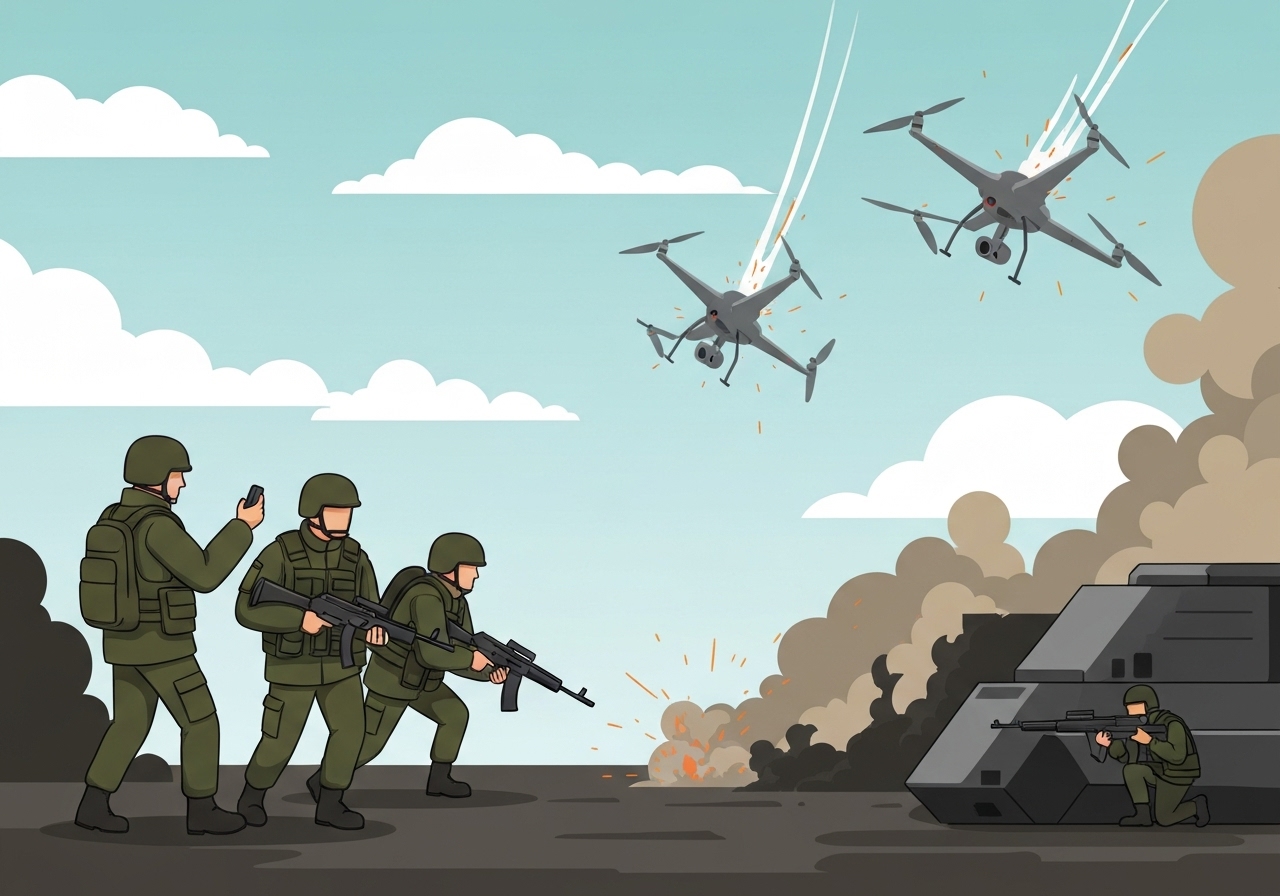
Lead: Early on the morning of the incident, Poland’s armed forces reported that multiple drone-type objects breached Polish airspace and were engaged and shot down. Prime Minister Donald Tusk said he briefed NATO leadership and that Polish forces, with allied support, remain on high alert. Several eastern regions and major airports were temporarily closed while ground searches for debris and potential crash sites began. Officials describe the incursions as linked to concurrent large-scale Russian strikes on Ukraine.
Key takeaways
- The Polish Armed Forces reported multiple drone-type objects entered Polish airspace and were shot down; operations to locate downed debris are ongoing.
- Polish Prime Minister Donald Tusk said he briefed NATO chief Mark Rutte and remained in contact with the military command.
- Authorities identified Podlaskie, Mazowieckie and Lublin voivodeships as the most affected regions near the eastern border.
- Four airports — including Warsaw Chopin and Warsaw Modlin — were temporarily suspended, and Chopin reported no flight operations at the time.
- Poland activated Territorial Defence Forces to search ground sites; the defence minister warned the public not to handle fragments.
- US and NATO elements were reported to be monitoring and supporting operations; NATO air policing was scrambled to intercept the objects.
- Ukrainian forces reported continuing large-scale Russian strikes, with recent assaults including waves of drones and missiles hitting several regions.
Background
Since Russia’s full-scale invasion of Ukraine in 2022, air incursions and cross-border flights of drones near NATO members have been a recurring security concern. Eastern Poland borders Ukraine and Belarus, placing it in closer proximity to Russian strikes that often use drone and missile corridors to reach targets inside Ukraine. Poland is a NATO member; the alliance maintains air policing and collective defence arrangements that tie US and European assets into any response over member territory.
Polish forces have previously scrambled fighters to intercept unmanned aerial vehicles that briefly entered Polish airspace, but Polish authorities say the current incident may mark a new level of engagement if the downed objects are confirmed as Russian. Airports and civilian infrastructure have been affected in past incidents, prompting temporary suspensions of flight operations and increased alert levels along the frontier.
Main event
In a sequence of updates posted on social media early in the morning, Poland’s operational command said drone-type objects repeatedly violated national airspace and posed “a real threat” to civilian safety. The command said weapons were used to neutralise the targets and that allied and Polish assets were operating to locate any crash sites. The military emphasized it had moved radar and ground-based air-defence systems to the highest readiness.
Prime Minister Donald Tusk, who the deputy defence minister said was present at the scene, posted that he had received direct reports from operational commanders and was in constant contact with defence authorities. Tusk also said he had briefed NATO leadership; his post specifically named NATO chief Mark Rutte as having been briefed. Poland’s Deputy Defence Minister Cezary Tomczyk described the mission as “neutralising” objects that exceeded the Polish border.
Poland’s Defence Minister Władysław Kosiniak-Kamysz announced the activation of Territorial Defence Forces for ground searches and warned the public not to touch any fragments. Airports including Warsaw Chopin, Warsaw Modlin, Rzeszów-Jasionka and Lublin reported suspended operations or closures for the time being while authorities assessed risks to aviation.
Reports from Ukrainian and international outlets indicated that the aerial incursion occurred amid one of the largest recent Russian assaults on Ukraine, which Ukrainian authorities said involved hundreds of drones and missiles. Kyiv reported repeated alerts and missile strikes over the past hours, amplifying regional tensions and prompting heightened NATO attention along the eastern flank.
Analysis & implications
If the downed objects are confirmed to be Russian, this episode would represent a potentially significant escalation: a NATO member directly engaging objects attributed to Russian forces. That would raise complex political and legal questions about Article 5 thresholds and the alliance’s calibrated response, as well as practical questions over identification and attribution of small aerial systems.
Former US defence officials quoted by reporters characterized multiple drone incursions across a NATO border as unlikely to be accidental, suggesting they could be deliberate probes to test alliance detection, command-and-control, and political resolve. The intelligence and diplomatic communities will be watching both the forensic findings from recovered debris and the alliance’s coordinated political response.
Operationally, the incident underscores the vulnerability of civilian infrastructure and airports near conflict zones to both direct hits and precautionary closures. Even when debris lands in sparsely populated areas, recovery, forensic analysis and security sweeps require significant manpower and time, adding friction to civil life and local economies in border regions.
Comparison & data
| Item | Current incident | Recent Ukraine strikes |
|---|---|---|
| Reported scale | Multiple drone-type objects shot down over eastern Poland | Recent Ukrainian reports cite assaults involving hundreds of drones (one recent wave reported 800) |
| Areas affected | Podlaskie, Mazowieckie, Lublin voivodeships; Warsaw airports closed | Widespread Ukrainian regions including Kyiv and Donbas; government building struck in Kyiv |
The table situates the Polish airspace incidents alongside the broader Russian aerial campaign affecting Ukraine. While Polish reports focus on interdiction and recovery within NATO territory, Ukrainian authorities are reporting sustained, large-scale attacks that have led to high numbers of incoming aerial threats and significant civilian harm in some areas.
Reactions & quotes
“As a result of the attack by the Russian Federation on Ukrainian territory, there was an unprecedented violation of Polish airspace by drone-type objects.”
Polish Armed Forces operational command (social media)
This statement framed the incursions as tied to concurrent attacks on Ukraine and emphasized the perceived threat to Polish citizens and infrastructure.
“One drone is a mistake, multiple drones is not a mistake.”
Jim Townsend, former US deputy assistant secretary of defense (interview)
Townsend warned that repeated incursions likely represent a deliberate test of NATO response mechanisms and called for measured political answers from alliance leadership.
“The Territorial Defence Forces have been activated for ground searches; do not pick up fragments, inform the police.”
Władysław Kosiniak-Kamysz, Polish Defence Minister (social post)
The defence minister’s guidance highlighted both the security and forensic priorities of the ongoing recovery operation.
Unconfirmed
- Attribution to Russian forces remains unconfirmed pending forensic analysis of recovered fragments and additional intelligence.
- The exact number and types of drone-like objects involved have not been publicly confirmed beyond the military’s description of multiple “drone-type” violations.
- Precise crash-site locations and any collateral damage reports are still being verified by Polish authorities.
Bottom line
The immediate fact is Poland’s armed forces report they engaged and downed multiple drone-type objects that violated national airspace early in the morning, prompting airport suspensions, ground searches and a high state of readiness. The incident occurred against a backdrop of intense Russian aerial operations across Ukraine, which Ukrainian authorities say have included large swarms of drones and missiles.
The principal questions now center on attribution and NATO’s political response: forensic recovery and allied intelligence will be key to establishing whether the objects originated with Russian forces and whether this incident requires a collective diplomatic or security reaction. For residents in border regions, the episode highlights continued, tangible spillover risks from the Ukraine conflict and the operational burdens on local and allied defence organizations.