
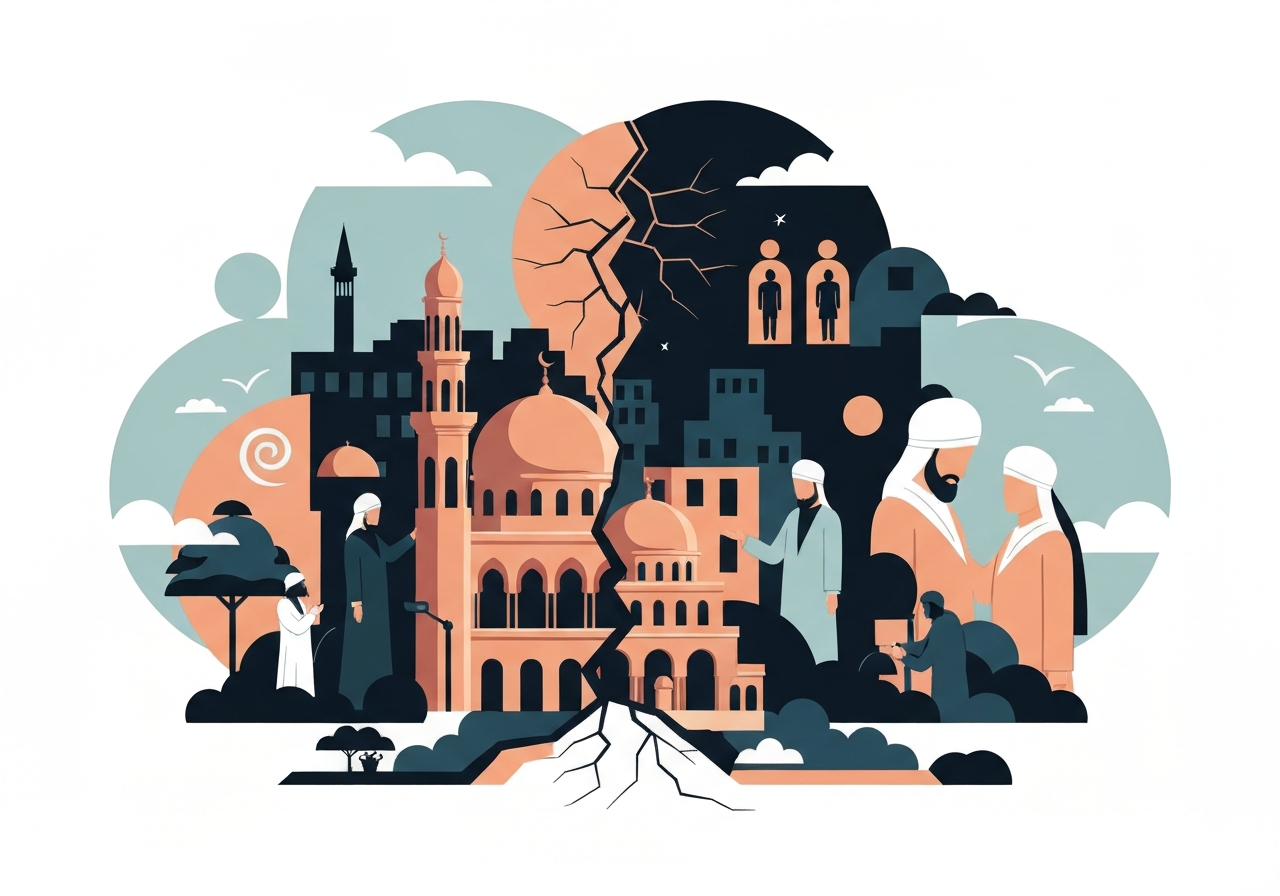
Lead: Renewed fighting between Hezbollah and Israeli forces since March 2, 2026 has intensified divisions inside Lebanon’s Shi’ite community. The exchange of rocket fire and Israel’s large-scale response — including a targeted ground operation announced on March 16 — has displaced hundreds of thousands and, according to the Lebanese Health Ministry, left more than 900 people dead in Lebanon so far. The campaign has reopened long-suppressed criticism of Hezbollah among residents who question the human and political costs of the group’s decisions. At the same time, some Shi’ites continue to view the movement as the only provider of security and services in neglected areas.
Key Takeaways
- Since Hezbollah launched rockets into Israeli territory on March 2, Israel has responded with a broad offensive; the Lebanese Health Ministry reports more than 900 killed in Lebanon to date.
- Hundreds of thousands of Lebanese have been displaced by evacuation orders covering hundreds of square kilometers, with major movement from southern Lebanon, eastern areas and Beirut’s southern suburbs.
- The Israel Defense Forces announced a targeted ground operation in southern Lebanon on March 16, with officials saying operations aim to push Hezbollah away from the border and prevent reestablishment of infrastructure.
- The 2024 campaign previously cost roughly 4,000 lives in Lebanon and left Hezbollah militarily weakened after the assassination of its longtime leader at the start of Israel’s October–November 2024 invasion, according to reporting and official claims.
- Within the Shi’ite community, attitudes now range from renewed loyalty—driven by fear and lack of state protection—to sharp criticism that Hezbollah drew Lebanon into another destructive confrontation.
- Political allies such as Speaker Nabih Berri supported a cabinet decision to ban Hezbollah’s weapons at the national level, signaling rising institutional pressure on the group.
Background
Hezbollah built its base over decades by combining armed resistance with social services in regions where central governance was often weak or absent, notably the Bekaa Valley, southern Lebanon and Dahiyeh south of Beirut. That mix of security and welfare helped sustain popular support since 1982, especially after earlier conflicts when external funding underwrote reconstruction and compensation for losses.
The group suffered major military and political setbacks during the broader 2024 campaign, which Lebanese authorities and Israeli officials present with differing casualty breakdowns; overall estimates place Lebanese deaths at about 4,000 in that period. Those losses, together with the reported killing of Hezbollah’s longtime leader at the start of Israel’s October–November 2024 invasion, are widely seen as having diminished its regional reach and battlefield capacity.
Following the 2006 Second Lebanon War, Iranian funds and reconstruction efforts helped restore housing and sustain loyalty among affected communities. In contrast, persistent insecurity in 2025–2026 and the lack of immediate reconstruction resources have exposed limits in Hezbollah’s ability to deliver the kind of statewide relief that once reinforced its political standing.
Main Event
On March 2, Hezbollah launched rockets into Israeli territory, prompting an extensive Israeli counteroffensive across multiple fronts. Israel says its objective is to halt rocket fire, move Hezbollah forces away from the border, and allow displaced northern Israeli communities to return safely. Israeli Defense Minister Israel Katz and Prime Minister Benjamin Netanyahu ordered operations aimed at destroying Hezbollah infrastructure near the border.
The offensive has included air strikes, artillery barrages and the targeted ground operation announced on March 16. Lebanese Health Ministry tallies indicate over 900 deaths in Lebanon during the renewed fighting, while Israeli officials assert that hundreds of Hezbollah fighters have been killed among the dead. Evacuation orders affecting large swathes of southern Lebanon and other areas have produced mass internal displacement.
Displaced families report starkly different reactions. Some who fled southern and eastern Lebanon or Beirut’s southern suburbs express deep resentment toward Hezbollah for dragging them back into open conflict. Others — particularly those who have long felt abandoned by state institutions — continue to rely on the movement as a protector and social provider, even amid heavy losses.
Public responses are visible in temporary shelters, on city streets and in informal camps. Many displaced residents are uncertain if and when they can return, a reality that fuels both anger and political debate within the Shi’ite community and beyond. Analysts note that exhaustion and loss could change political loyalties if Hezbollah is perceived to have overreached.
Analysis & Implications
The current confrontation is reshaping political incentives inside Lebanon. For some Shi’ites, repeated cycles of fighting and displacement have exposed the limits of armed patronage as a substitute for state services. If Hezbollah cannot translate battlefield action into tangible protection and reconstruction, its traditional social contract with parts of the Shi’ite community may weaken further.
Conversely, the absence of a credible state alternative in many neighborhoods means that displacement and societal rejection can also entrench dependence on nonstate actors. Where residents feel targeted or excluded by other Lebanese factions, Hezbollah’s role as a provider and defender can deepen even after costly conflicts.
Regionally, the renewed fighting risks widening proxy tensions and complicating diplomatic efforts to contain escalation. Israel frames its operations as preventing future attacks and reclaiming border security; Hezbollah and its supporters see resistance as deterrence and protection against perceived territorial threats. That divergence limits common ground for immediate de-escalation.
Economically, extended fighting and restrictions on reconstruction funding will worsen humanitarian needs and delay recovery. Unlike after 2006, observers note a lack of available external reconstruction financing and the impracticality of rebuilding while hostilities continue—factors that could prolong displacement and fuel social unrest.
Comparison & Data
| Period | Reported Lebanese Deaths | Reported Israeli Deaths | Notes |
|---|---|---|---|
| 2024 campaign | ~4,000 | 100+ (≈70 soldiers, 45 civilians) | Broader conflict with disputed combatant/civilian breakdowns |
| Renewed fighting from March 2, 2026 | 900+ (Lebanese Health Ministry) | Ongoing; hundreds of Israeli displaced | Casualty reporting continues; Israeli officials report many Hezbollah fighters among the dead |
The table above compares headline casualty figures for the two consecutive waves of conflict. Numbers remain politically contested: Lebanese authorities emphasize civilian tolls, while Israeli officials highlight militia losses. Accurate combatant versus civilian breakdowns are not yet fully available and will require independent verification.
Reactions & Quotes
Public and official responses have been stark and varied. Some displaced residents blame Hezbollah for renewed displacement, while others continue to support the group as a bulwark against Israeli action.
“This war was destined to happen…they want to take all of Lebanon,” said a nurse from Tyre describing why she felt compelled to defend the confrontation despite misgivings about Hezbollah.
Noor Shukur / Resident, Tyre (as reported to The Media Line)
The nurse’s comment reflects a narrative among some that external threats justify armed resistance even amid heavy civilian suffering. But other voices inside temporary camps are more critical.
“Why were we dragged into this?” asked a Lebanese analyst summarizing widespread fatigue and anger within parts of the Shi’ite community.
Abdallah Khoury / Lebanese analyst (as reported to The Media Line)
Official Israeli statements frame operations as calibrated to restore security along the border and permit the return of displaced Israeli communities.
Israeli officials said forces would focus on destroying Hezbollah infrastructure near the border to prevent reestablishment of a threat.
Israeli Defense Ministry / Official statement
Unconfirmed
- Specific breakdowns between civilian and combatant deaths in the latest fighting remain incomplete and unverified by independent observers.
- Claims about the exact number of Hezbollah fighters killed are reported by Israeli officials but lack full external confirmation.
- Attributions of strategic motives—such as stated links to foreign leadership directives—are reported in interviews but are not independently corroborated.
Bottom Line
The renewed conflict since March 2, 2026 has intensified humanitarian suffering and sharpened political fault lines within Lebanon’s Shi’ite community. Casualty figures and mass displacement are concrete realities; interpretations of responsibility and legitimacy are now contested in public forums that were previously quieter.
How the community ultimately responds will depend on the duration of the fighting, the availability of reconstruction assistance, and whether alternative political and social institutions can credibly offer security and services. If Hezbollah cannot convert military action into improved protection or tangible reconstruction, its political standing among some constituencies may weaken—yet the absence of a reliable state alternative could also consolidate support among those who feel marginalized.
Sources
- The Jerusalem Post (press) — original report summarizing field interviews and events.
- The Media Line (news organization) — on-the-ground interviews cited in reporting.
- Lebanese Health Ministry (official) — reported casualty figures cited by authorities.
- Israel Defense Forces / Israeli Defense Ministry (official) — public statements on operations and objectives.
- AFP via Getty Images (international news agency/photography) — imagery and field reporting credits.