
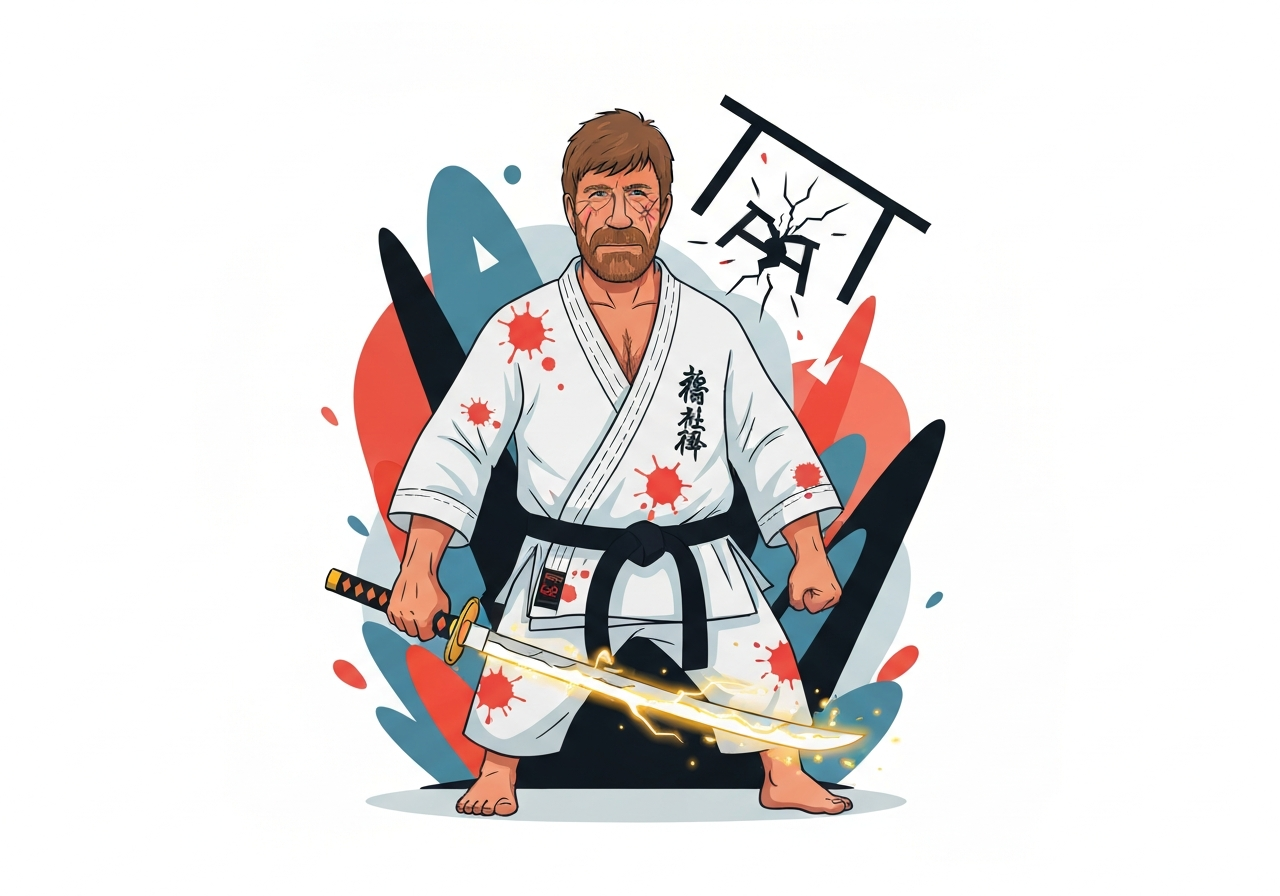
Chuck Norris, the martial-arts icon who became a fixture of American action cinema and television, died on March 20, 2026. His family announced his death via his official Instagram account after he was hospitalized earlier that day in Hawaii following a medical emergency; he was 86. Norris built a decades-long career turning black-belt technique into screen persona, headlining films in the 1980s and the TV series Walker, Texas Ranger, which ran from 1993 to 2001. News organizations reported the family statement and hospital admission, while details about the precise medical cause have not been released.
Key Takeaways
- Chuck Norris died on March 20, 2026; the family announced his passing on his official Instagram account and said he had been hospitalized earlier that day in Hawaii.
- He was 86 years old and rose to prominence as a martial-arts black belt who parlayed combat skills into leading roles on screen from the late 1970s through the early 2000s.
- His notable films include Good Guys Wear Black (1978), An Eye for an Eye (1981), Lone Wolf McQuade (1983), Code of Silence (1985), Invasion U.S.A. (1985), The Delta Force (1986), Delta Force 2 (1990) and three Missing in Action films in the 1980s.
- On television he starred as Cordell Walker in Walker, Texas Ranger, a series that aired from 1993 to 2001 and reinforced his tough-but-righteous persona with millions of viewers.
- Critics were often lukewarm about his performances, but Norris cultivated a devoted popular following and a cultural footprint that extended beyond film into jokes, endorsements and public appearances.
- At the time of death, immediate medical details were limited and some aspects of the final hours remain unreported by officials.
Background
Chuck Norris emerged from a martial-arts background into the American entertainment landscape at a time when action stars with combat training were in demand. He trained extensively in multiple disciplines, earning a reputation as a high-level practitioner that lent authenticity to his early screen work. The late 1970s and 1980s offered a steady market for straightforward action films, and Norris became one of the recognizable faces of that era. While film critics often judged his acting as serviceable rather than subtle, his physicality and persona resonated with audiences who wanted clear-cut heroes and decisive retribution on screen.
Beyond movies, Norris cultivated a public image that mixed toughness with aphoristic one-liners and conservative-leaning commentary in later years, helping keep him in the cultural conversation. Television amplified that reach: Walker, Texas Ranger turned Norris into a weekly visiting card for viewers who favored moral clarity and kinetic fight choreography. His career also intersected with the rise of home video and later streaming, which kept his films accessible to new generations. As a result, his name became shorthand for a certain kind of action-hero credibility even as cinema tastes evolved around him.
Main Event
According to media reports, the family of Chuck Norris posted the news of his death on his official Instagram page on March 20, 2026, and said he had been taken to a hospital in Hawaii earlier that day after a medical emergency. The family did not provide immediate details about the cause of that emergency, and newsroom reporting has focused on confirming the timeline and his age, 86. News outlets republished the family announcement and have sought statements from close collaborators and representatives.
Norris’s filmography shows a steady string of action-led vehicles that leaned on his martial-arts credentials. Titles cited by multiple outlets include Good Guys Wear Black (1978), An Eye for an Eye (1981), Lone Wolf McQuade (1983), Code of Silence (1985), Invasion U.S.A. (1985), The Delta Force (1986) and Delta Force 2: The Colombian Connection (1990). In the 1980s he headlined three Missing in Action films that played to audiences interested in rescue-and-revenge narratives tied to American memory of the Vietnam War era.
On television, his most enduring role was Cordell Walker on Walker, Texas Ranger, a CBS series that ran from 1993 through 2001 and which brought his physical style into millions of living rooms. The show blended crime drama with moral-of-the-week storytelling, and it helped cement Norris’s screen identity as a principled enforcer who resolved conflict largely through action. Even in films where he softened—such as Hero and the Terror (1988), in which a personal vulnerability shows through—his public image remained anchored to the resolute action hero archetype.
Analysis & Implications
Chuck Norris’s death marks the passing of a figure who straddled several eras of American popular culture: the boom in martial-arts cinema, the action-movie heyday of the 1980s, and the television-driven celebrity of the 1990s. His career illustrates how specialized physical skill can be transformed into a long-running screen persona that outlives critical fashions. For media companies and streaming platforms, his catalog remains a reliable asset: catalogue action films and syndicated episodes of Walker, Texas Ranger continue to draw niche but steady audiences.
From a cultural perspective, Norris occupied a space where toughness and plainspoken moralizing met the public’s appetite for uncomplicated protagonists. That combination produced both loyal fandom and folkloric treatments of his reputation—memorably through the so-called “Chuck Norris facts” internet phenomenon that played up mythical invulnerability. Such mythmaking complicates a straightforward appraisal of his legacy; scholars of media and fandom will likely study the interplay between celebrity, parody and political branding in his public life.
Economically, the immediate implications are modest but concrete: distributors and television networks often see short-term spikes in viewership and searches after the death of a prominent performer, and estate managers typically revisit licensing, retrospectives and archival releases. For practitioners of martial arts and for stunt and action performers, Norris’s career offers a blueprint of how technical credibility and a distinct public persona can create career longevity in screen entertainment. Internationally, his films contributed to the global spread of American action motifs and helped normalize martial-arts choreography in mainstream North American productions.
Comparison & Data
| Title | Release Year |
|---|---|
| Good Guys Wear Black | 1978 |
| An Eye for an Eye | 1981 |
| Lone Wolf McQuade | 1983 |
| Code of Silence | 1985 |
| Invasion U.S.A. | 1985 |
| The Delta Force | 1986 |
| Delta Force 2: The Colombian Connection | 1990 |
| Walker, Texas Ranger (TV) | 1993–2001 |
The table above highlights the concentration of Norris’s most visible work between 1978 and 2001, with a dense cluster in the 1980s during which he headlined multiple action films per decade. That period aligns with the commercial peak for American action cinema and the expansion of home-video markets that extended the commercial life of genre titles. The television run in the 1990s broadened his visibility and created a recurring revenue stream through syndication and later streaming deals.
Reactions & Quotes
“I play the man in the arena who’s pushed to the wall and forced to blast his way out.”
Chuck Norris, interview with The San Francisco Chronicle (quoted historically)
“His family announced his death on his official Instagram account and said he had been hospitalized earlier that day in Hawaii.”
Family statement (as reported)
“Norris’s mix of martial-skill authenticity and populist storytelling made him a durable television and film presence across decades.”
Media analyst (reported commentary)
Unconfirmed
- No official cause of the medical emergency that led to Chuck Norris’s hospitalization has been disclosed by family or medical authorities.
- Timelines around when he was admitted in Hawaii and the precise sequence of events that day have not been independently verified by medical records as of this report.
- Any planned public memorials or private funeral arrangements had not been announced publicly at the time of reporting.
Bottom Line
Chuck Norris’s death closes a chapter on a particular strain of American action stardom defined by martial-arts skill, durable screen persona and broad popular recognition. While critics and scholars may debate the artistic merits of his films, his influence on action choreography, television syndication economics and popular cultural mythmaking is clear and likely to be examined in obituaries, retrospectives and academic work alike. In the short term, expect renewed audience interest in his films and television work, and in the longer term, a sustained place for Norris as a figure of late-20th-century popular culture.
As reporting continues, the most salient open questions concern medical details and the family’s plans for public remembrances. For readers and researchers, his body of work provides ample material to assess how performance skill, media distribution and audience taste combine to produce a lasting celebrity.
Sources
- The New York Times — (news report)
- Chuck Norris official Instagram — (family announcement / social account)
- The San Francisco Chronicle — (historical interview cited)