
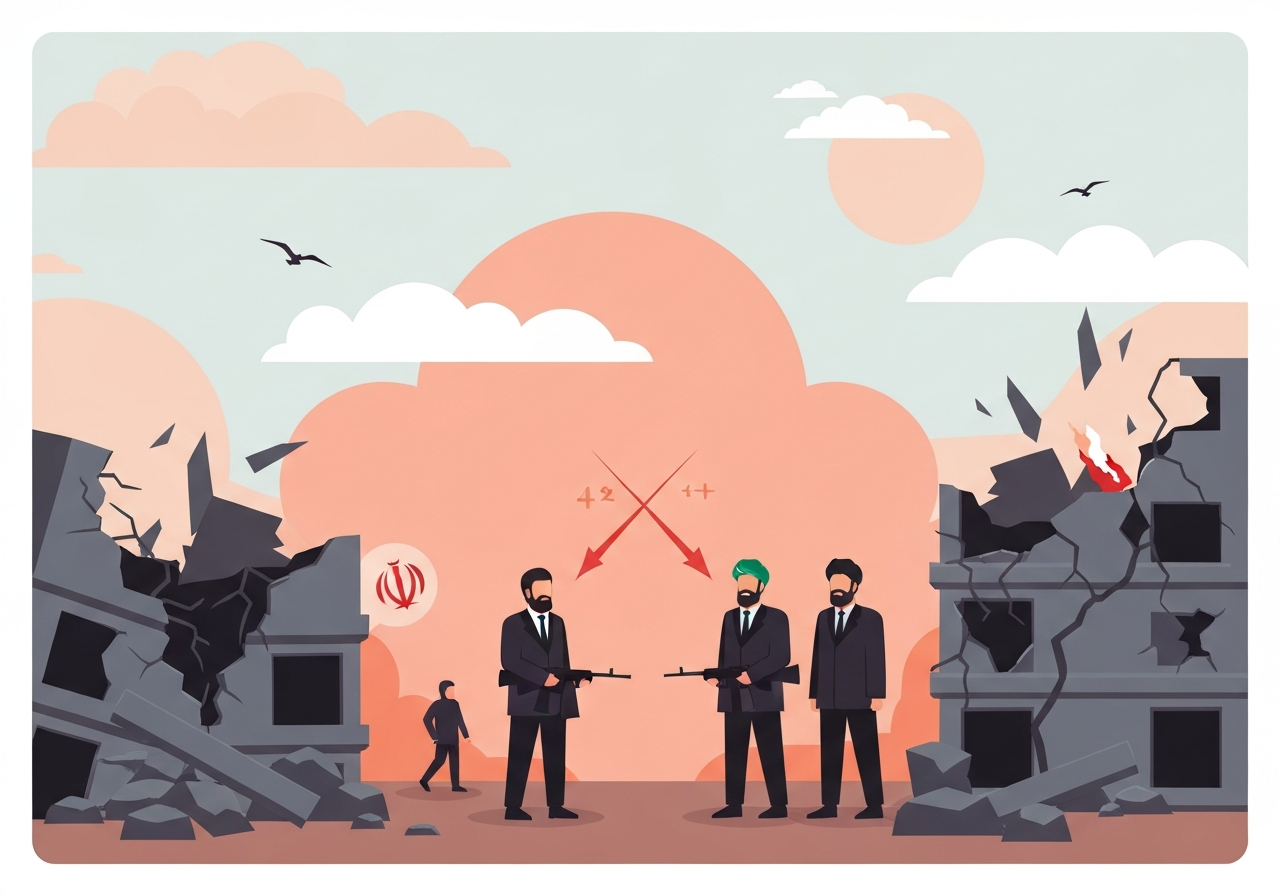
Lead: The Israel–U.S. military campaign against Iran entered its fourth week on March 21, 2026, with no immediate resolution. U.S. and Israeli officials say their forces now largely control the skies above Iran while the Pentagon reports Iranian missile and drone strikes are down about 90% from the conflict’s opening days. The Trump administration announced a temporary lift of sanctions on some Iranian oil loaded at sea, and the International Maritime Organization reports roughly 3,000 vessels remain stranded in the region as traffic through the Strait of Hormuz is near halted.
Key Takeaways
- The conflict has reached week four (started Feb. 28, 2026) with sustained U.S.–Israeli operations and reciprocal Iranian strikes.
- The U.S. Department of Defense says Iranian missile and drone attacks are down roughly 90% compared with the opening days of the war.
- Treasury Secretary Scott Bessent said the temporary sanction relief will free about 140 million barrels now on ships; global daily oil use is about 100 million barrels.
- The temporary sanction suspension applies to oil already loaded and runs until April 19, 2026, according to the administration.
- Crude prices have risen roughly 45% since the fighting began, pushing benchmarks above $110 per barrel and lifting downstream gasoline prices.
- Maritime traffic is severely disrupted: the International Maritime Organization estimates about 3,000 vessels are stranded in the broader Middle East/Gulf region.
- U.S. forces have increased use of Apache helicopters and A-10 aircraft and are targeting Iran-linked small, fast boats in the Persian Gulf.
- Additional U.S. Marines are en route: the USS Boxer group (11th MEU) left California and the USS Tripoli group (more than 2,000 Marines) is expected from Japan.
Background
The confrontation escalated after coordinated U.S.–Israeli strikes began on Feb. 28, 2026, and Iran replied with repeated missile and drone barrages directed at Israeli territory and regional partners. Longstanding tensions over Iran’s regional footprint, its missile programs and nuclear ambitions set the strategic stage for the campaign. The Strait of Hormuz, through which roughly one-fifth of the world’s oil and LNG typically transits, quickly became the focal point for maritime disruption.
Before the war, global oil markets were relatively oversupplied in February 2026; the rapid stoppage of traffic through Hormuz reversed that balance and sent prices sharply higher. Sanctions have been a central lever: the U.S. had maintained strict restrictions on Iranian crude for years and has previously adjusted penalties — notably easing some Russian crude sanctions to get barrels to market. The current temporary exemption targets oil already on ships to help relieve an acute supply bottleneck.
Main Event
U.S. and Israeli forces report sustained strikes on Iranian military and air-defense sites, with Israeli statements indicating operations extended into areas near Tehran. The Pentagon says the combined campaign has degraded many Iranian aerial and missile assets; U.S. officials point to a steep drop in Iranian drone and missile launch activity as evidence. On the tactical side, the U.S. military has shifted to using Apache attack helicopters and A-10 aircraft in strikes and patrols, signaling confidence that the immediate airborne threat has been reduced.
Naval operations have also intensified. U.S. forces say they are hunting the small, fast boats Iran deploys in the Persian Gulf and have taken steps to protect commercial shipping through convoying and increased patrols. Despite these efforts, the near halt of normal traffic through the Strait of Hormuz has left thousands of vessels delayed or diverted, compounding global logistics headaches.
Israel separately reported strikes inside Syria this week against a command center and weapons depots in Sweida province, citing threats to the Druze minority and linking the strikes to a broader campaign that, according to Israeli officials, stretches back to the fall of the Assad regime in December 2024. Turkey publicly condemned recent Israeli actions in Syria as a “dangerous escalation,” reflecting the conflict’s widening regional reverberations.
Analysis & Implications
Oil markets are the immediate economic casualty. Freeing roughly 140 million barrels already at sea provides temporary relief but does not solve the structural risk that flows through Hormuz remain vulnerable to renewed attacks or interdiction. With world consumption near 100 million barrels per day, the added volume helps blunt shortages, yet high prices above $110 per barrel suggest markets expect continued supply strain or further escalation.
Operationally, the sharp decline in Iranian aerial launches suggests U.S. and Israeli strikes have achieved some tactical objectives, but battlefield metrics do not equate to strategic resolution. Iran’s capacity for irregular, asymmetric attacks — including via proxies or maritime harassment — remains an enduring risk. The U.S. move to deploy more Marines and carrier strike assets underscores a hedging posture rather than a full-scale ground commitment.
Politically, President Trump’s public suggestion of “winding down” military efforts signals an interest in an off-ramp that could reduce direct U.S. engagement while preserving deterrent posture for allies. That posture, however, depends on coalition cohesion and whether regional partners will accept expanded security roles, including patrolling the Strait of Hormuz as Trump proposed.
Finally, the humanitarian and diplomatic fallout could widen if strikes in Syria and cross-border incidents continue. Turkey’s strong reaction to Israeli operations highlights how national responses may complicate efforts to de-escalate and could draw additional actors into diplomatic or security disputes.
Comparison & Data
| Metric | Before war (Feb 2026) | Now (Mar 21, 2026) |
|---|---|---|
| Global oil demand | ~100 million barrels/day | ~100 million barrels/day |
| Barrels at sea freed by sanction relief | — | ~140 million barrels (loaded) |
| Change in crude price | Baseline (Feb) | ~+45%; >$110/barrel |
| Stranded vessels per IMO | Normal transit | ~3,000 vessels stranded |
The table highlights how a short-term policy shift (the temporary sanction lift) is meant to address immediate supply gaps while broader market and security dynamics remain highly volatile. Even with the added barrels, shipping delays and insurance costs raise the effective price of moving crude and finished fuels.
Reactions & Quotes
Officials and public voices offered immediate and divergent responses to the unfolding situation.
“We are getting very close to meeting our objectives as we consider winding down our great Military efforts in the Middle East with respect to the Terrorist Regime of Iran.”
President Donald J. Trump (Truth Social)
The president framed U.S. operations as meeting objectives while signaling a potential drawdown; that remark has been read as both political positioning and a cue to allies. Pentagon representatives, speaking on operational posture, emphasized that forces remain ready and have shifted tactics to lower-risk platforms such as Apaches and A-10s.
“We have seen a dramatic reduction in the frequency of missile and drone launches against coalition forces and partners.”
U.S. Department of Defense (official statement)
The Pentagon’s assessment underpins current tactics but does not equate to formal conflict termination. Regional governments and commercial shippers continue to press for secure transit arrangements through the Gulf.
Unconfirmed
- The full extent of damage to Iranian air-defense and nuclear-related sites claimed by U.S. and Israeli statements has not been independently verified.
- Casualty figures inside Iran, Syria or other affected areas remain incomplete and have not been centrally confirmed.
- Reports that Iran’s nuclear capability has been “destroyed” are assertions by officials and lack publicly available corroborating evidence.
Bottom Line
After four weeks of fighting, the immediate tactical picture suggests U.S. and Israeli forces have reduced the tempo of Iranian missile and drone launches, but that reduction has not produced a diplomatic settlement. The temporary sanction relief for oil already at sea provides short-term market relief, yet higher prices and stranded shipping show the global economy remains exposed to continued instability.
Moving forward, the conflict’s trajectory will depend on whether diplomatic channels can produce an off-ramp acceptable to the main parties and whether regional actors step into security roles such as policing the Strait of Hormuz. Watch for changes in maritime traffic, insurance and freight costs, official casualty reports, and statements from coalition partners as near-term indicators of escalation or de-escalation.