
Lead
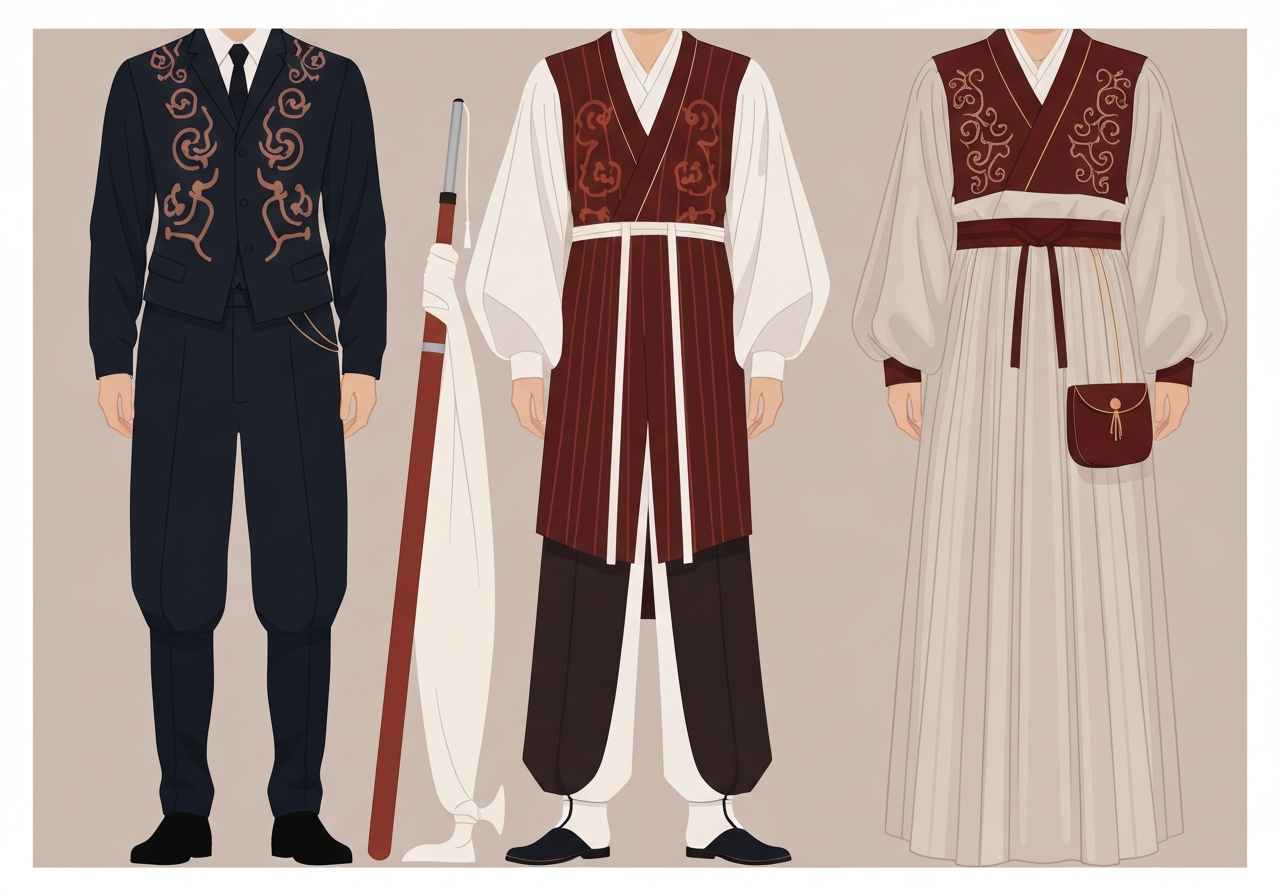
PARIS — At 8 p.m. Korean time on Saturday, millions watched BTS reunite on a special stage in Seoul’s Gwanghwamun Square for the first major performance tied to their new album Arirang. The seven members — RM, Jin, Suga, J‑Hope, Jimin, V and Jungkook — wore a bespoke collection by Korean designer Jay Songzio that the label Songzio created specifically for the comeback show. Titled “Lyrical Armor,” the wardrobe referenced traditional Korean dress and Joseon‑era armor while being tailored to stage movement and storytelling. The looks were designed to function as narrative devices, assigning archetypes to each member and amplifying the concert’s cultural framing.
Key Takeaways
- Performance timing and place: BTS performed at 8 p.m. KST on Saturday on an outdoor stage set in Gwanghwamun Square, a site with historical resonance in Seoul.
- Designer and collection: Jay Songzio of Songzio created a capsule called “Lyrical Armor,” blending hanbok silhouettes with armor‑inspired details and a primarily monochrome palette.
- Scale of the project: The Songzio team dressed roughly 80 people for the production, including the seven members, dancers, instrumentalists and traditional singers.
- Collaboration window: Hybe approached Songzio about the project approximately two months before the performance, and the design process involved continual back‑and‑forth with members.
- Construct and staging: Several performance looks incorporate up to five layers so changes onstage are achieved by removing elements rather than full outfit swaps.
- Material and craft: A custom handwoven cotton‑linen fabric with cascading threads was developed for the collection; decorative details include added metallics and black onyx on some pieces.
- Character assignments: Each member was given a visual archetype (e.g., RM as the hero, Jin the artist, Suga the architect, J‑Hope “sorigun,” Jimin the poet, V the seonbi, Jungkook the vanguard).
Background
BTS’s Arirang era carried an explicitly Korean premise: the album title references one of Korea’s oldest folk songs, and the comeback was framed as a cultural moment as much as a musical one. That positioning made costume choices central to the production—Hybe sought a Korean brand not only by nationality but by aesthetic sensibility. Songzio, a label known for foregrounding Korean references, was approached roughly two months before the performance and tasked with creating a coherent visual story that worked for broadcast and a live, outdoor setting.
The designer explained that the brief was broad—Hybe wanted a theme and story across individual members—so Songzio returned initial sketches and iterated in collaboration with the company and the performers. The project expanded beyond the seven stars: traditional dancers, instrumentalists and singers required complementary designs, making the effort a comprehensive stage costume program rather than a small capsule. Practical constraints—an outdoor palace setting where quick backstage changes are limited—shaped the technical demands and informed layering and transformable details.
Main Event
The creative concept, which Songzio titled “Lyrical Armor,” began with two linked impulses: the emotional register of Korean “han” (sorrow and longing born of historical hardship) and the formal impulse to represent members as heroic figures. Armor became a visual motif, but the team balanced rigidity with the fluidity of hanbok drape to preserve movement for performance. Songzio described designing pieces that read as protective yet lyrical, using sculptural silhouettes layered with soft, flowing elements to achieve a stage‑friendly effect.
Design work proceeded in close consultation with members. Songzio said the artists were unusually involved, providing feedback down to color and accessory choices; that collaboration shaped individual archetypes and small details. To accommodate the outdoor venue and lack of wardrobe rooms, garments were engineered with removable layers—some looks contain up to five parts so performers can reveal different shapes onstage without full costume swaps. The ensemble for supporting performers used vertical organza‑like layers to emphasize motion, drawing inspiration from traditional folding doors and windows in Korean architecture.
Textile choices included a specially developed distressed handwoven fabric made from cotton and linen with cascading threads to evoke an organic texture; patchworking and asymmetrical cuts provided contrast for dancers and instrumentalists. Last‑minute additions were notable: Jimin’s frills were reworked with jewelry‑like black onyx and metal accents, and Jungkook’s white shirt received a rough, landscape‑painting inspired distressing the night before the show. Songzio’s team reported extensive overnight work to finalize ornamental studs and metallic details that reinforce the armor motif.
Analysis & Implications
The collaboration operates at the intersection of cultural diplomacy, commercial entertainment and high fashion. Visually foregrounding hanbok and Joseon‑era references on a global broadcast transforms customary dress into a contemporary narrative device, amplifying Korean cultural heritage to a massive international audience. For Songzio, the assignment offered a rare public stage for overtly Korean aesthetics without commercial dilution, which the designer said was a deliberate choice: “Everything had to be Korean.”
There are commercial and brand implications as well. High‑profile collaborations between K‑pop acts and domestic designers can accelerate designer recognition abroad and feed back into luxury and ready‑to‑wear demand. For Songzio, the project may expand retail and editorial interest in subsequent Paris season offerings that lean more visibly into Korean references. Conversely, such collaborations also carry reputational risk: overt national framing must be handled carefully to avoid caricature or reduction of complex traditions.
Technically, the project showcases how performance costume now demands hybrid skills—textile innovation, rapid prototyping, modular construction and theatrical engineering. Designing multilayered pieces that survive live wear, television lighting and international scrutiny requires greater logistical depth than typical runway work. Brands that can combine cultural authenticity with this technical capacity stand to become first‑call collaborators for future global entertainment events.
Comparison & Data
| Metric | Songzio x BTS (Arirang) |
|---|---|
| Principal performers dressed | 7 members + ~73 supporting performers (total ~80) |
| Design development window | ~2 months from approach to show |
| Max garment layering | Up to 5 removable layers |
| Signature materials | Custom handwoven cotton‑linen, organza‑like vertical layers |
The table distills the concrete production facts Songzio provided: the initiative was fast‑moving (about two months), large in scale (~80 people outfitted) and technically complex (multi‑layer garments). These parameters distinguish this project from a standard seasonal collection, which typically has longer lead times and fewer moving parts tied to live performance logistics.
Reactions & Quotes
Songzio framed the work as a cultural and emotional exercise: he emphasized the imperative to translate a uniquely Korean emotional sensibility into wearable forms and to portray the band as heroic figures within that story. Observers in fashion and K‑pop communities noted the balance between tradition and stage functionality.
“We titled it ‘Lyrical Armor’ because I wanted armor‑like clothing that still moves like hanbok,”
Jay Songzio, designer (interview)
Songzio also highlighted the members’ unexpected level of input, which affected small but visible details across the collection.
“They participated a lot—even down to colors and accessories,”
Jay Songzio, designer (interview)
Fan and industry responses were immediate on social platforms and in fashion commentary, praising the synergy of historical references with contemporary staging. Critics and cultural commentators will watch whether this overtly Korean aesthetic becomes a recurring feature in future global K‑pop presentations.
Unconfirmed
- Whether Songzio will serve as the primary costume house for BTS’s full upcoming world tour remains unconfirmed; the designer said concepts are being developed but no final agreement was announced.
- Financial or contractual terms of the collaboration, including licensing or capsule merch arrangements tied to the looks, were not disclosed and remain unverified.
Bottom Line
The Songzio collaboration for BTS’s Arirang comeback show exemplifies how contemporary pop spectacles are now platforms for national cultural expression and fashion diplomacy. By combining hanbok references, armor motifs and performance‑friendly construction, the collection aimed to make each member a visual protagonist in a story about sorrow, resilience and renewal.
For Songzio and similar Korean designers, the project is both an opportunity and a test: it raises brand visibility internationally while demanding technical scale and fidelity to cultural sources. Observers should watch whether this approach—explicitly Korean aesthetics applied to mass entertainment—becomes a recurring model for how designers and K‑pop acts co‑produce global cultural moments.
Sources
- WWD — fashion trade press (interview with Jay Songzio)