
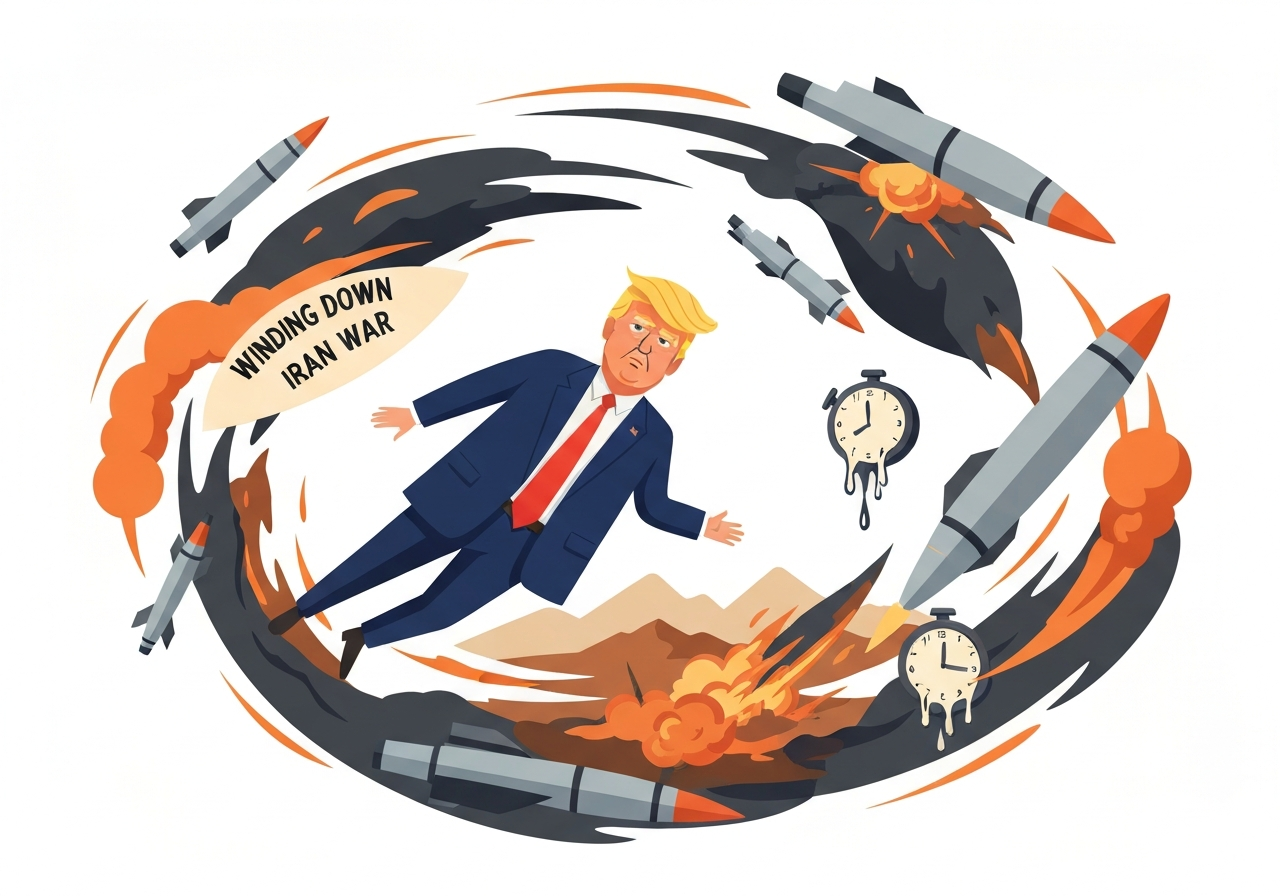
On March 21, 2026, as the US-Israeli bombing campaign in Iran entered its fourth week, President Donald Trump signaled that military activity might be ‘winding down’ while also ruling out a ceasefire. The same day, the US Treasury allowed sales of Iranian oil and petrochemical cargoes already loaded on tankers to help relieve sharp crude-price pressure. Mr. Trump’s remarks followed public statements that left open the possibility of deploying ground forces even as he sought tools to calm markets. The moves and mixed messaging have intensified market volatility and diplomatic uncertainty.
Key takeaways
- The strike campaign entered its fourth week on March 21, 2026, with continued air operations by US and Israeli forces inside Iran.
- President Trump said military operations could be ‘winding down’ but explicitly ruled out a ceasefire the same day.
- The US Treasury authorized the sale of Iranian crude and petrochemical cargoes already loaded on tankers to curb surging crude prices.
- Market reactions included heightened energy price volatility and broader financial-market disruption in the days following the announcement.
- Officials left the door open to possible ground deployments, creating divergent signals about long-term US objectives.
- Diplomatic channels remain active but strained as allies and regional actors assess shifting US policy signals.
Background
The conflict began in early March 2026 after a rapid escalation of attacks between Iran-aligned forces and Israel, with the United States providing operational support to Israeli strikes. Over the subsequent weeks, air campaigns extended to multiple sites within Iran, prompting international concern over civilian harm and wider regional escalation. Energy markets reacted quickly because Iran is a major oil producer, and the strikes disrupted shipping and raised the risk premium embedded in crude prices. Washington has balanced military cooperation with Israel against economic pressures at home, including rising fuel costs for consumers and businesses.
The US Treasury’s decision to permit sales of Iranian cargoes already on tankers is an unusual, targeted step intended to remove immediate supply-side bottlenecks without fully lifting broader sanctions. That measure aims to ease acute price spikes rather than restore normal trade ties. At the same time, political debates in Washington and among allied capitals have intensified over the scale and duration of US involvement. Domestic political considerations, allied assurances, and the operational tempo on the ground are all influencing the administration’s public posture.
Main event
On March 21, President Trump addressed reporters and policy advisers, offering a mix of restraint and firmness: he suggested a potential ‘winding down’ of military efforts even as he rejected a formal ceasefire. Administration officials clarified that while immediate de-escalation might be pursued, certain military options, including ground forces, were not categorically removed from consideration. The combination of rhetorical de-escalation and retained military options created ambiguity about short- and medium-term objectives.
Separately, the Treasury published guidance allowing the sale of Iranian oil and petrochemical products that were already loaded onto tankers. The guidance was framed as a narrow, emergency measure to stabilize markets, not a broad sanction lift. Market participants noted the move was procedural—the cargoes were in transit—yet the authorization helped ease some near-term price spikes by making additional barrels available to buyers previously deterred by sanction uncertainty.
On the ground, airstrikes continued in multiple Iranian provinces, according to open-source reporting and official statements, prolonging damage to infrastructure and sustaining humanitarian and logistical strains. Diplomatic contacts between US, Israeli, and key regional partners remained active, focusing on de-escalation channels and protections for civilians. The juxtaposition of sustained kinetic operations and Treasury market interventions underscored the administration’s dual-track approach: manage military objectives while dampening economic fallout.
Analysis & implications
The president’s mixed messages—publicly advertising a possible ‘winding down’ while ruling out a ceasefire and leaving force options open—complicate alliance management. Allies may be unsure whether the United States intends a limited campaign or a sustained conflict with wider commitments, which affects their willingness to align resources and diplomatic posture. That ambiguity can slow coordinated de-escalation and welfare measures for affected civilians in the region.
Economically, Treasury permission to sell loaded Iranian cargoes is a tactical intervention aimed at immediate price relief rather than structural market rebalancing. If hostilities persist, the premium on oil linked to supply-disruption risk could reassert itself, diminishing the long-term effect of the Treasury measure. Energy markets often respond to perceived policy coherence; inconsistent signals about the conflict’s duration may therefore sustain volatility.
Militarily, keeping ground forces ‘on the table’ while suggesting a drawdown risks prolonging contingency planning and force posture that are costly politically and logistically. A credible pathway to de-escalation typically requires synchronized diplomatic, economic, and military signals; absent that, adversaries and partners may prepare for protracted competition, raising the odds of unintended escalation. Domestically, public and Congressional scrutiny is likely to intensify if the administration’s posture appears indecisive or open-ended.
Comparison & data
| Week | Operational trend | Policy response |
|---|---|---|
| Week 1 | Initial strikes, rapid escalation | Heightened diplomatic engagement |
| Week 2 | Expansion of targeting, regional disruptions | Economic assessments and market warnings |
| Week 3 | Continued air operations, shipping impacts | Sanctions enforcement maintained |
| Week 4 (Mar 21) | Ongoing strikes; mixed messaging | Treasury allows sales of loaded Iranian cargoes |
The table above summarizes the operational and policy arc through the fourth week. The Treasury action in week four stands out as a market-focused intervention amid sustained kinetic activity. Analysts caution that without a clear de-escalation pathway, such stopgap economic measures may have limited durability against renewed supply shocks.
Reactions & quotes
‘Winding down’ military activity is a phrase the president used to describe a possible shift in posture.
President Donald Trump (remarks, March 21, 2026)
‘We have authorized sales of Iranian oil and petrochemical cargoes already loaded on tankers to reduce immediate price pressure,’ Treasury guidance said.
US Treasury (notice)
‘Divergent public signals about objectives and timelines are complicating market and allied responses,’ reported Bloomberg Terminal analysis.
Bloomberg Terminal (market analysis)
Unconfirmed
- Whether the administration has finalized any plan for deploying US ground troops remains unverified in public documentation.
- The precise scale of Iranian military damage and its effect on longer-term oil output capacity is not fully confirmed and requires on-the-ground assessments.
Bottom line
On March 21, 2026, the administration undertook a calculated, two-track approach: maintain military pressure while using narrow economic authorizations to blunt immediate market fallout. That approach reflects an attempt to reconcile strategic objectives with domestic economic concerns, but it produces ambiguous signals that complicate allied coordination and market stability. Policymakers face a choice between clearer, synchronized de-escalation measures and a risk of continued volatility and incremental escalation.
For observers and markets, the key variables to watch are (1) whether diplomatic channels yield a durable de-escalation, (2) any formal policy shifts on troop deployments, and (3) subsequent Treasury or market interventions if price pressures return. The coming days will reveal whether ‘winding down’ is a transitional posture or a rhetorical hedge amid open-ended operations.