
Lead
On March 21, 2026, a New York Times investigation reported that Cesar Chavez, the co-founder of the United Farm Workers, sexually abused women and girls, including the union’s co-founder Dolores Huerta. In the days that followed, municipalities, universities and event organizers moved quickly to distance themselves from Chavez: statues were covered, festivals canceled and local governments opened processes to rename parks and buildings. The actions have reached campuses such as Fresno State and cities including San Fernando, where officials said immediate steps were necessary to prioritize survivors. The debate now centers on how institutions will balance historical memory of the labor movement with the harms alleged in the investigation.
Key Takeaways
- The New York Times published an investigation on March 21, 2026, reporting that Cesar Chavez sexually abused women and girls, including Dolores Huerta (The New York Times, investigative reporting).
- Statues and memorials have been immediately covered or removed in several places; Fresno State University covered a Chavez statue and San Fernando moved to remove a park statue and seek new names.
- San Fernando’s City Council voted to remove the statue at Cesar E. Chavez Memorial Park; Mayor Joel Fajardo framed the action as supporting survivors.
- Multiple festivals and public events tied to Chavez have been canceled in the immediate aftermath, and dozens of buildings, parks and schools bearing his name face potential review.
- The unfolding responses reflect a larger institutional reckoning over how to handle commemoration when foundational figures are accused of serious misconduct.
Background
Cesar Chavez (1927–1993) co-founded the United Farm Workers (UFW) and became a prominent figure in the U.S. labor and civil-rights movements, especially for Latino farmworkers. Over decades, his leadership in strikes, boycotts and organizing earned him widespread recognition: streets, schools and monuments across the United States were dedicated in his honor. Those memorials have long served both as community signifiers and teaching tools about labor rights in California and beyond.
In recent years, public debates about monuments and historical memory have accelerated, with institutions reexamining commemorations tied to problematic conduct or contested legacies. The New York Times investigation released on March 21, 2026, introduces new, grave allegations that intersect with those broader debates, prompting civic leaders and institutions to act swiftly. Stakeholders include local governments, universities, labor organizations, survivors and community members who disagree on the appropriate response.
Main Event
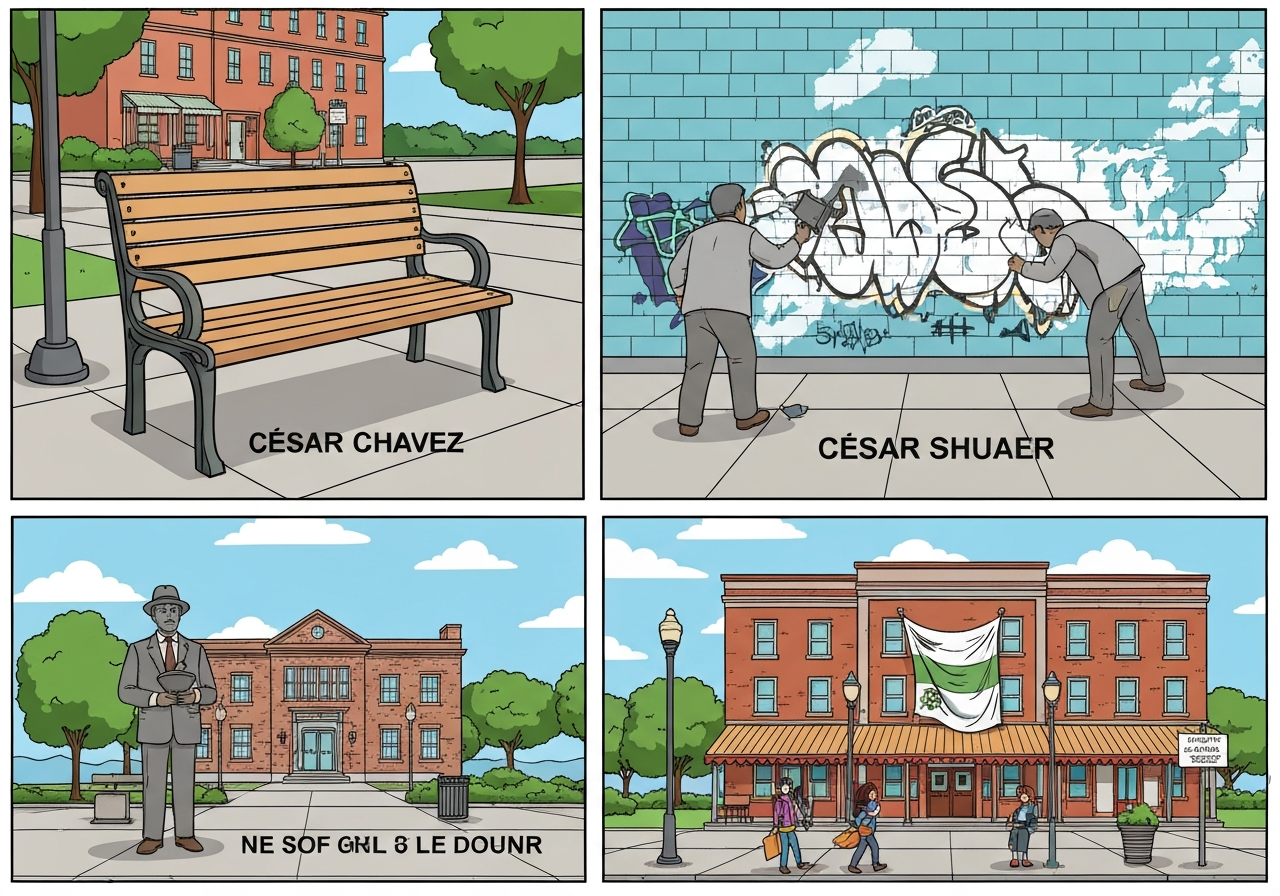
The New York Times published a report on March 21, 2026, alleging that Chavez sexually abused women and girls, including members of the movement he led. Within days, municipal officials and campus administrators began taking visible steps. At Fresno State University, a statue of Chavez was covered by a wooden box while university officials reviewed the situation and consulted stakeholders.
San Fernando’s City Council was among the first local governments to move decisively: it voted to remove the statue at Cesar E. Chavez Memorial Park and initiated a process to rename public spaces and schools that bear Chavez’s name. Mayor Joel Fajardo said the city’s response was urgent and aimed at supporting survivors and signaling civic values of safety and trust.
Elsewhere, organizers canceled festivals and events tied to Chavez’s legacy; administrators in other cities and districts announced reviews of building and program names. Many of those institutions said they would form committees or pause decisions until they could consult survivors, community groups and legal counsel about next steps. Those interim measures often focused on reducing public display while deliberations continued.
Analysis & Implications
The immediate removals and cancellations raise complex questions about how to separate an individual’s actions from a broader social movement. Cesar Chavez’s name has functioned as shorthand for farmworker rights and Latino political mobilization; removing his name from public spaces does not erase the labor movement itself, but it does shift how the movement is publicly framed and taught. Institutions now face the challenge of honoring the movement’s achievements while acknowledging harm alleged against one of its founders.
Practical implications include logistical and legal hurdles for renaming public properties, potential costs for changing signage and records, and political pushback from constituents who view such changes as erasure. School boards and city councils typically follow formal renaming procedures—public hearings, advisory committees and votes—which can stretch the timeline from weeks into months. That process may also involve legal challenges or political campaigns to retain or restore names.
For labor organizations and Latino civic groups, the situation may prompt internal reckonings: some leaders will argue for preserving the movement’s symbols while disavowing an individual’s conduct; others will press for clearer separations between memorials and movement history. Internationally, the episode fits into a broader pattern of reassessing public commemoration when new evidence emerges about prominent figures, affecting how museums, curricula and monuments present complex histories.
Comparison & Data
| Location | Action | Date (reported) |
|---|---|---|
| Fresno State University | Chavez statue covered pending review | March 2026 |
| San Fernando, California | City Council voted to remove statue and seek renaming | March 2026 |
| Multiple municipalities | Festivals/events canceled; reviews of named sites announced | March 2026 |
The table captures the earliest public actions reported in the days after the New York Times investigation. These immediate steps are provisional: many institutions have described their measures as temporary while they complete reviews or consult affected communities. The volume and geographic spread of future renamings remain uncertain and will depend on local processes and public input.
Reactions & Quotes
Officials and community leaders framed the swift responses as necessary signals about institutional priorities. Municipal leaders emphasized support for survivors and the importance of trust in public institutions.
“to let our children know that we took this seriously, to make sure that we have a society that values the victims, that trusts the survivors.”
Joel Fajardo, Mayor of San Fernando (city official)
The New York Times investigation itself was cited as the catalyst for many of the actions, and its findings have been described by officials as the factual basis for initiating reviews.
“The New York Times reported that Chavez sexually abused women and girls, including the union’s co‑founder.”
The New York Times (investigative reporting)
Unconfirmed
- The full extent and final tally of institutions that will remove or rename Chavez-linked memorials is not yet known; many reviews remain in progress.
- Any claims about criminal charges or ongoing law‑enforcement investigations tied to the allegations reported by The New York Times are not established in this article and should be treated as unconfirmed unless confirmed by official statements.
Bottom Line
The New York Times investigation published on March 21, 2026, has prompted a rapid and widespread institutional response: statues covered, events canceled and local governments initiating renaming processes. These actions reflect a broader tension about how societies remember leaders who played important public roles but face serious allegations of misconduct. Deciding whether to remove memorials involves ethical, legal and practical questions and typically follows formal, often contested, local procedures.
Readers and communities should expect a prolonged period of review, public debate and piecemeal outcomes rather than a single nationwide resolution. Institutions that move forward with changes will need clear processes that center survivors, allow community input and preserve the historical record of the labor movement even as they reassess whom they choose to honor with public monuments and place names.
Sources
- The New York Times (investigative reporting)
- Fresno State University (institutional website)
- City of San Fernando (municipal official site)
- Reuters (newswire/photo agency)