
Lead
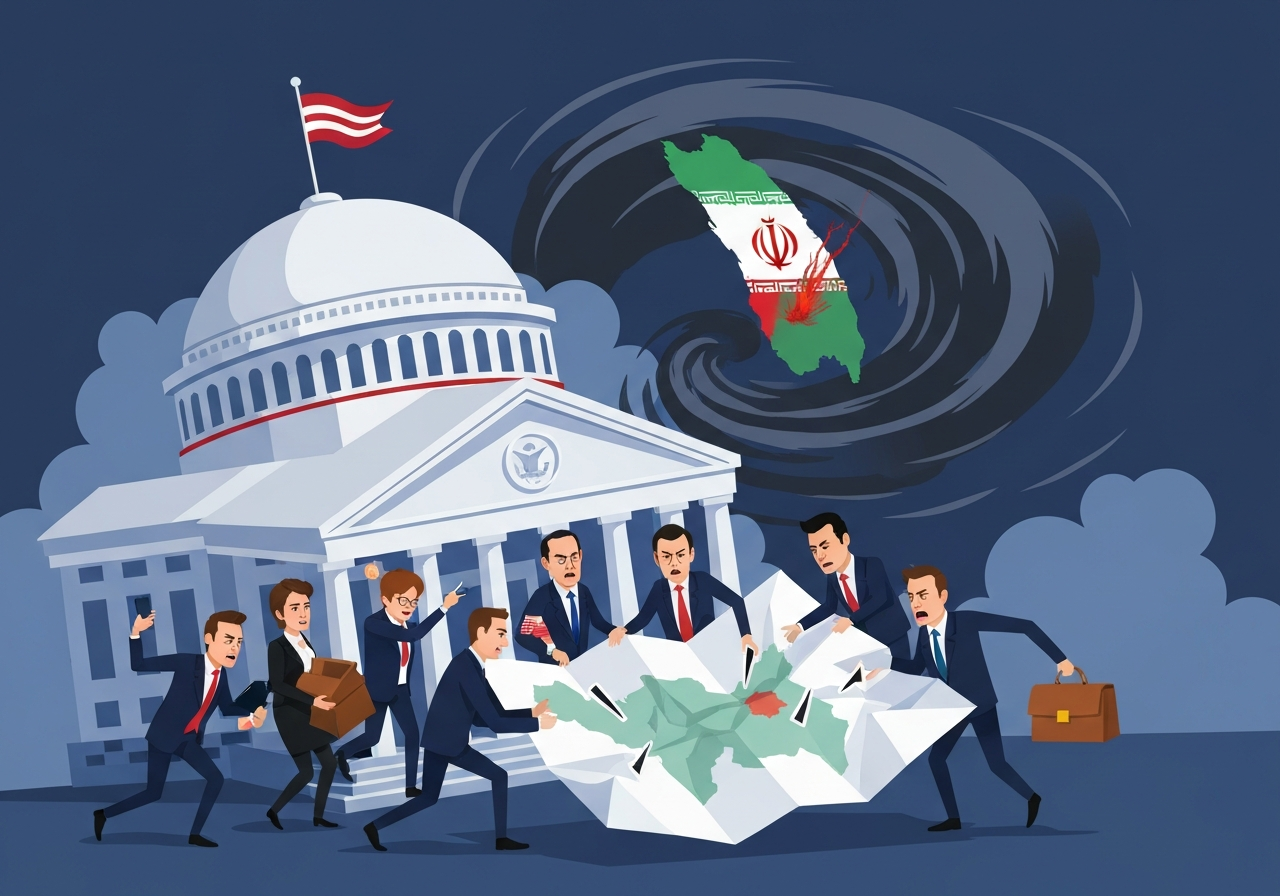
Three weeks into the U.S.-led campaign against Iran, lawmakers on Capitol Hill are pressing President Donald Trump for a clear exit strategy and for details on costs and objectives. At least 13 U.S. service members have been killed and more than 230 wounded, while the Pentagon has reportedly asked the White House for an additional $200 billion. Republicans who control Congress have so far given the administration room to operate, but members from both parties say they need a defined plan or they will exercise oversight and budget authority. With oil prices rising and thousands of additional troops headed to the region, pressure is building for a near-term explanation of aims and endgame.
Key Takeaways
- Casualties: At least 13 U.S. military personnel killed and more than 230 wounded in the first three weeks of the campaign.
- Funding request: The Pentagon has requested an extraordinary $200 billion in additional war funds now pending at the White House.
- Legal timeline: Under the War Powers Act, the president can conduct hostilities for 60 days without explicit congressional authorization; lawmakers note a critical 45-day decision window.
- Political posture: Congressional Republicans have largely backed the president so far, but several members demand a clearer strategy and metrics for success.
- Domestic trade-offs: Some senators, including Sen. Mazie Hirono, argue billions for war conflict with funding for domestic programs cut by recent tax legislation.
- Allied involvement and costs: Allies have been reluctant to provide broad support, oil prices are rising, and thousands of additional U.S. troops are deploying to the Middle East.
Background
The president ordered military operations that have expanded into direct confrontation with Iran and affiliated forces; Congress was not asked for a prior authorization vote. The War Powers Resolution, enacted in 1973, allows a president to begin hostilities and continue them for up to 60 days absent congressional approval, a framework lawmakers now cite as the clock governing near-term decisions.
Past precedents shape debate on the Hill. After the Sept. 11, 2001, attacks, President George W. Bush sought congressional authorization for military action in Afghanistan and later Iraq—an example some senators and representatives point to as a model for securing public and legislative buy-in for major campaigns. Lawmakers also recall that sustained funding and strategy arguments were central to those post-9/11 deliberations.
Main Event
Three weeks into the conflict, the human and financial toll is becoming clearer: at least 13 U.S. deaths, more than 230 wounded, thousands more troops deploying to the region, and a Pentagon request for roughly $200 billion. The White House has the supplemental request on its desk while members of Congress seek a fuller explanation of what success would look like and how long operations will continue.
Sen. Thom Tillis (R-N.C.) told reporters the central issue is defining objectives: he said he supports actions that degrade Iran’s regional capabilities but emphasized that leadership must articulate a strategy and an exit path. Other lawmakers echoed that sentiment, warning that vague or shifting aims will erode support over time.
President Trump has offered mixed signals. He said Friday he was contemplating “winding down” operations even as he described continuing goals such as denying Iran a nuclear weapon and degrading ballistic-missile supplies. His remark that the war would end “when I feel it in my bones” drew alarm from critics and prompted calls for a less personal, more institutional approach to termination criteria.
House Speaker Mike Johnson (R-La.) has publicly suggested the initial mission is largely complete, pointing to strikes on missile and naval capabilities. But he and others acknowledged remaining threats—such as attacks on shipping in the Strait of Hormuz—that could prolong operations and complicate any declaration that the campaign is over.
Analysis & Implications
Legally and politically, the current phase places Congress in a bind: party loyalty to a Republican president has so far muted direct challenges, but the constitutional power of the purse gives lawmakers leverage if the administration seeks sustained, large-scale funding. An unexamined $200 billion supplemental would be extraordinary relative to annual defense appropriations.
Economically, continued hostilities and attacks on shipping corridors risk keeping oil prices elevated, adding pressure to inflation and household budgets. The prospect of prolonged deployment for thousands of troops also raises long-term personnel and readiness costs that go beyond a single supplemental request.
Strategically, lawmakers note a mismatch between some stated administration goals—like eliminating Iran’s enriched uranium stockpiles—and the tools committed so far. Removing nuclear materials or achieving regime change would likely require different forces and a longer campaign, raising questions about feasibility without ground operations or broader allied participation.
Politically, the administration must weigh domestic trade-offs. Several senators highlighted cuts to domestic programs after recent tax legislation and asked whether the nation should prioritize spending for hospitals, Medicaid, and food assistance over a large war supplemental. If public support shifts, Congress could face pressure to condition or limit funding.
Comparison & Data
| Metric | Reported Number |
|---|---|
| U.S. military fatalities | 13 |
| U.S. wounded | More than 230 |
| Pentagon supplemental request | $200 billion |
| FY appropriations already approved for Defense | Over $800 billion |
| Additional Pentagon funding from tax bill | About $150 billion (multi-year) |
The table above places the new $200 billion request in context: it would be a substantial addition to this year’s appropriations and to multi-year increases already legislated. That scale helps explain why Senate leaders called the figure “preposterous” and why some lawmakers insist on strict oversight.
Reactions & Quotes
Voices on Capitol Hill illustrate the divide between conditional support and calls for accountability. Below are representative remarks placed in context.
“The real question is: What ultimately are we trying to accomplish?”
Sen. Thom Tillis (R-N.C.)
Sen. Tillis frames the central policy demand—clear objectives and measurable outcomes—urging the administration to present either an authorization request or a clear exit plan as the War Powers clock advances.
“When he feels it in his bones? That’s crazy.”
Sen. Mark Warner (D-Va.)
Sen. Warner criticized the president’s personalistic language and used it to argue for institutional decision-making and public justification of the campaign’s goals.
“I do think the original mission is virtually accomplished now… As soon as we bring some calm to the situation, I think it’s all but done.”
House Speaker Mike Johnson (R-La.)
Speaker Johnson expressed the view that initial tactical goals have been met, while acknowledging residual threats—comments that highlight the gap between operational claims and enduring security challenges.
Unconfirmed
- No independent confirmation that requested $200 billion will be the final supplemental—administration details on composition and timeline remain pending.
- Claims that the original mission is completely achieved are contested; operational commanders and allied governments have not issued a joint assessment declaring completion.
- Reports of imminent large-scale allied military contributions remain unverified; several U.S. partners have publicly rebuffed broad participation so far.
Bottom Line
Congress is signaling that support for the administration’s campaign is contingent on clarity: lawmakers want explicit objectives, exit criteria, and a fiscal accounting before endorsing large new appropriations. The 60-day War Powers window and a key 45-day decision point mean the administration must either seek congressional authorization or present a clear withdrawal pathway soon.
Absent a credible, detailed strategy that reconciles political aims, military resources, and fiscal costs, congressional patience could erode—potentially resulting in funding limits or legislative conditions that reshape the campaign. For the public and markets, continued uncertainty means higher energy prices and prolonged troop deployments, making a timely, transparent plan a priority for both national security and domestic policy considerations.
Sources
- Associated Press — (news)