
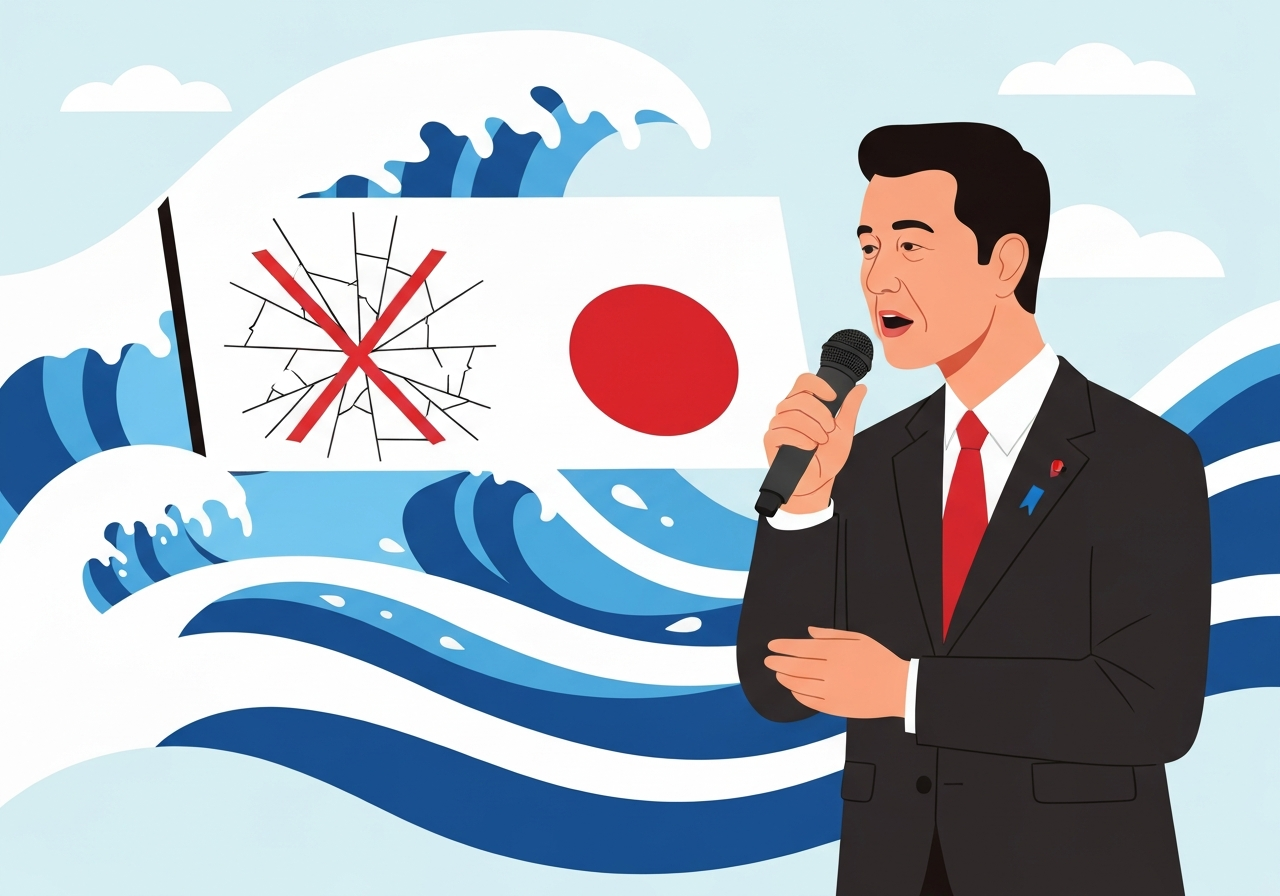
Japan’s foreign minister, Toshimitsu Motegi, said on March 22, 2026 that Tokyo is not pursuing one-on-one negotiations with Iran to secure transit for Japanese vessels through the Strait of Hormuz. Motegi made the remarks on a Fuji Television program after reports that Tehran may be prepared to grant access. He emphasized Japan’s priority is to preserve broad freedom of navigation and ensure conditions in which all ships can pass safely. The statement underlines Tokyo’s preference for multilateral approaches rather than bilateral deals with Iran.
Key Takeaways
- On March 22, 2026, Foreign Minister Toshimitsu Motegi said Japan is not considering unilateral talks with Iran over the Strait of Hormuz.
- Motegi spoke on a Fuji Television program, responding to reports that Tehran might allow passage for Japanese vessels.
- Japan is prioritizing arrangements that preserve freedom of navigation for all shipping through the strait.
- The comments signal Tokyo’s reluctance to pursue bilateral security deals that could affect relationships with allies.
- Tokyo framed its stance around collective measures and international law, rather than direct negotiation with Tehran.
Background
The Strait of Hormuz is one of the world’s most strategically sensitive waterways, linking the Persian Gulf to the Gulf of Oman and wider seas. Regional tensions involving Iran, Gulf states and extra-regional powers have periodically threatened commercial transit and drawn diplomatic attention. Japan, as a major energy importer and trading nation, has long sought secure sea lanes and typically favors international frameworks and coalition-based responses for maritime security. Historically, Tokyo has balanced energy ties with Gulf suppliers against security relationships with partners, including the United States and other allies.
Reports in international media suggested Tehran may be open to granting passage to some Japanese vessels, a development that prompted Tokyo to clarify its policy. Any direct talks between Tokyo and Tehran on navigation would represent a sensitive diplomatic move with potential implications for Japan’s broader foreign policy. Domestic stakeholders—from shipping companies to policymakers—follow such developments closely because of the potential economic and security consequences. Japan’s public messaging emphasizes rules-based navigation and coordination with partners rather than ad hoc bilateral arrangements.
Main Event
On March 22, 2026, Motegi addressed the issue directly on television, stating, “It’s not something we’re considering at this point.” He reiterated that Japan’s objective is to secure “conditions where everyone can pass,” framing the problem as one of collective access rather than preferential treatment. The remarks came after reporting that Iran might be prepared to allow access for Japanese-flagged vessels through the Strait of Hormuz, a claim Tokyo did not confirm independently at the time of Motegi’s statement.
Motegi’s comments reflect Tokyo’s caution about negotiating alone with Tehran on security matters that have broad international ramifications. Japan has emphasized adherence to international law, including the principle of freedom of navigation, as the guiding standard for maritime transit. The foreign minister’s stance also signals to regional and allied partners that Tokyo intends to consult and coordinate rather than seek unilateral shortcuts. Government officials framed the response to media reports as a reaffirmation of established policy rather than a new diplomatic initiative.
In practical terms, Japan’s approach leaves open a range of multilateral options—diplomatic engagement within international forums, coordination with partners on naval escorts or information-sharing, and reliance on established legal mechanisms. Tokyo’s public posture aims to avoid actions that could be interpreted as granting special privileges or undermining the regional balance. The episode also illustrates how media accounts of possible state-to-state arrangements can prompt swift clarifications from governments that wish to manage strategic perceptions.
Analysis & Implications
Japan’s refusal to pursue unilateral talks with Iran signals a preference for collective security solutions and reflects sensitivities in its alliance relationships. A bilateral agreement with Iran on passage could complicate Tokyo’s ties with the United States and other partners that maintain a critical stance toward Tehran, particularly on security and sanctions-related matters. By stressing freedom of navigation for all, Japan positions itself to avoid taking sides in a manner that might limit diplomatic flexibility.
Economically, Japan has a strong interest in keeping sea lanes open because disruptions to maritime traffic would have repercussions for energy imports and trade. While Tokyo did not announce concrete new measures, its language keeps multilateral options available—ranging from convening diplomatic talks with Gulf states and partners to participating in cooperative maritime security initiatives. Any shift toward exclusive bilateral arrangements could set a precedent other states might pursue, with unpredictable effects on regional norms.
For Iran, offers to negotiate separately with individual importing countries could be attractive as a way to break isolation or gain concessions, but such moves risk international backlash or the erosion of coordinated policy responses. For Japan, the calculus includes domestic political constraints and a desire to appear even-handed while protecting national economic interests. The episode underscores how commercial and strategic imperatives intersect in maritime diplomacy, and how Tokyo must navigate between practical needs and alliance politics.
Comparison & Data
| Approach | Advantages | Risks |
|---|---|---|
| Unilateral talks with Iran | Potentially faster access agreements; direct bilateral channel | Could strain ties with allies; undermine multilateral norms |
| Multilateral/coalition measures | Shared burden, stronger legitimacy, preserves freedom of navigation | Slower to organize; requires consensus among partners |
The table outlines a qualitative comparison between single-country negotiations and multilateral approaches. Japan’s stated preference for arrangements that allow “everyone” to pass aligns with multilateral strategies that emphasize shared rules and legitimacy. Policymakers must weigh speed and practicality against the diplomatic costs of departing from coalition-based responses. The comparison clarifies why Tokyo opted publicly to reject unilateral talks in favor of broader measures.
Reactions & Quotes
Japan’s top diplomat framed the decision as part of a commitment to collective navigation rights rather than an assessment of Iran’s reported offer. Senior officials and observers are watching how partners and regional states respond to Tokyo’s public posture.
“It’s not something we’re considering at this point.”
Toshimitsu Motegi, Foreign Minister of Japan (Fuji Television program)
Motegi used clear language to rule out a one-on-one approach, signaling continuity in Japan’s policy and a preference for multilateral mechanisms.
“[We seek] conditions where everyone can pass.”
Toshimitsu Motegi, Foreign Minister of Japan (Fuji Television program)
The second remark reiterates the focus on open navigation and equal treatment of shipping, a phrase intended to reassure partners and commercial actors reliant on unimpeded maritime transit.
Unconfirmed
- The report that Tehran is prepared to grant passage to Japanese vessels has not been independently confirmed by the Japanese government in the March 22, 2026 statement.
- No public evidence was provided at the time of Motegi’s remarks to indicate specific terms or conditions under which Iran would allow passage.
Bottom Line
Japan’s public rejection of unilateral talks with Iran on March 22, 2026 reinforces a cautious, multilateral approach to maritime security in a strategically sensitive region. Tokyo is signaling that it will prioritize frameworks that preserve freedom of navigation for all, avoid special bilateral deals that could complicate allied relations, and seek solutions with broader legitimacy. The immediate effect is a reaffirmation of existing policy rather than the launch of a new diplomatic initiative.
Going forward, stakeholders should watch for follow-up diplomatic consultations among Japan, its partners and Gulf states, and any operational measures to enhance safety in the Strait of Hormuz. The episode highlights the delicate balance Japan must maintain between safeguarding commercial interests and managing complex regional and alliance dynamics.
Sources
- Bloomberg (news media) — original report and coverage of Motegi’s March 22, 2026 remarks.