
Lead
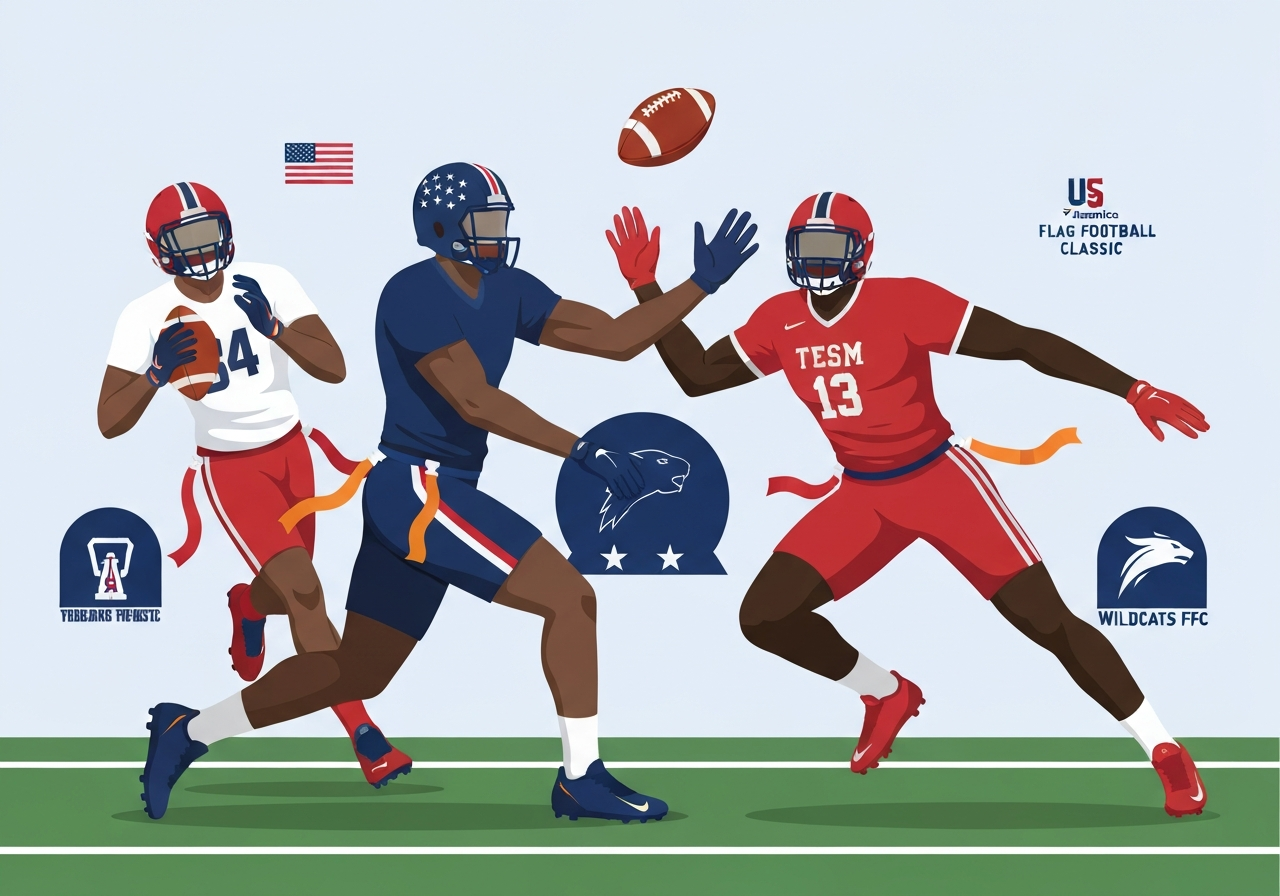
Team USA defeated the Wildcats FFC and cruised through the Fanatics Flag Football Classic at BMO Stadium in Los Angeles, leaving the tournament’s collection of NFL stars behind. The national squad scored on nearly every possession across three games and beat Brady’s Founders FFC 43-16 in a decisive meeting after earlier dismantling the Wildcats 39-16. Tom Brady, 48, opened with a perfect touchdown throw to Stefon Diggs and later connected on high-profile plays, but his Founders team could not match Team USA’s speed and cohesion. The event was relocated from Riyadh to Los Angeles amid regional security concerns tied to the Iran war.
Key Takeaways
- Team USA won the Fanatics Flag Football Classic title game, defeating the Founders FFC 24-14 while having earlier beaten the Wildcats 39-16 and the Founders 43-16; they scored on every possession except a late kneel-down in one game.
- Tom Brady, 48 and a seven-time Super Bowl champion, opened competitively with a touchdown to Stefon Diggs and a 2-point conversion to Rob Gronkowski but finished on the losing side in the championship run.
- The Founders (coached by Sean Payton) and the Wildcats (coached by Kyle Shanahan) featured a mix of current and former NFL stars, including Joe Burrow, Jalen Hurts, Saquon Barkley, Davante Adams and Odell Beckham Jr.
- In round-robin play the Wildcats eliminated the Founders with a 34-26 win, keeping the tournament competitive before Team USA’s final victory.
- Injuries and rule errors affected outcomes: Rob Gronkowski suffered a hamstring issue and Brady was penalized for mishandling his flag during a hurry-up series; officials and coaches disputed at least one down call.
- Flag football’s profile is rising ahead of its Olympic debut in Los Angeles in 2028, with numerous NFL players expressing interest in competing for national teams.
- The tournament location moved from Kingdom Arena in Riyadh to BMO Stadium in Los Angeles because of the Iran war, altering logistics and local fan access.
Background
Fanatics organized the 5-on-5 exhibition tournament to showcase the faster-paced, non-contact variant of American football and to highlight flag football ahead of its inclusion in the 2028 Olympics. The event assembled teams branded around NFL stars—Founders FFC (Tom Brady, coached by Sean Payton) and Wildcats FFC (Joe Burrow, coached by Kyle Shanahan)—alongside an established Team USA squad with specialists in the format. Flag football rules and player roles differ significantly from traditional tackle football: there are fewer players, no tackling, and play speed and route precision are decisive factors.
The tournament was originally scheduled for Kingdom Arena in Riyadh but was moved to Los Angeles’s BMO Stadium; organizers cited regional security issues tied to the Iran war as the reason for relocation. Many NFL athletes have trained primarily in tackle football and had only limited practice sessions under flag rules before the event, leaving teams with varied familiarity and limited cohesion. That gap in preparation helped established Team USA, whose roster included practice-hardened flag specialists, to dominate.
Main Event
The opening competitive snap featuring Tom Brady drew immediate attention: on his first play in a competitive football game in more than 1,000 days, Brady threw a corner-endzone touchdown to Stefon Diggs after replacing Jalen Hurts on fourth-and-goal during the opening drive. He then connected with Rob Gronkowski for a 2-point conversion, giving the Founders an early 8-0 advantage. The sequence demonstrated Brady’s timing and the players’ chemistry despite long absences from competitive snaps.
Team USA, however, quickly asserted offensive control. The national squad moved with consistent tempo, converting possessions into scores and exploiting mismatches in space and route discipline. Team USA’s offense scored at a near-perfect clip across three games; in one match they scored on every drive except for a final kneel. Their balance of quick passing, precise route-running and defensive flag pulls overwhelmed rosters assembled from disparate NFL talents who had practiced together only a handful of times.
Injuries and officiating influenced momentum. Rob Gronkowski exited with a hamstring injury that limited the Founders’ red-zone options. Brady was flagged late in a hurry-up situation after tossing his flag to the ground when he could not reseat it quickly, creating a turnover of field-position advantage. Coaches also disputed at least one down call; Sean Payton expressed visible frustration after an official initially signaled third down then switched to fourth down before a snap.
Analysis & Implications
Team USA’s dominance highlights the importance of format-specific experience. Flag football rewards spacing, rapid decision-making and consistent team practice; the national side’s cohesion—built by players who focus on the format—was decisive against celebrity and NFL-star-studded squads that had limited joint preparation. The outcomes suggest that short-term star power cannot substitute for practiced scheme execution in this variant.
For NFL-affiliated participants, the tournament was a learning exercise in rules, tempo and officiating. Several penalties reflected unfamiliarity with procedural differences—how to start plays, how flags are handled, and clock-management nuances. Those procedural missteps cost teams yardage or possession and underline a steeper learning curve for tackle-football athletes transitioning to elite-level flag competition.
The results carry implications for the 2028 Los Angeles Olympics. With flag football’s Olympic debut on the horizon, national programs that cultivate specialist rosters and playbooks now have a measurable advantage. If countries invest in domestic flag leagues and talent pipelines, Olympic rosters will likely favor players who develop specifically within the flag ecosystem rather than converted tackle players with limited practice time.
Comparison & Data
| Match | Score |
|---|---|
| Team USA vs Wildcats FFC | 39–16 |
| Founders FFC (Brady) vs Team USA | 16–43 |
| Wildcats FFC vs Founders FFC | 34–26 |
| Championship: Team USA vs Founders | 24–14 |
The table above summarizes the key results. Team USA outscored opponents by large margins in earlier rounds (39–16, 43–16) and then managed a more controlled 24–14 championship win over the Founders. By contrast, the Founders’ two losses and a mid-tournament elimination by the Wildcats (34–26) reflect inconsistencies in execution and the impact of injuries and penalties on short-format outcomes.
Reactions & Quotes
Players and coaches offered immediate reactions that mixed admiration for the spectacle with frustration over execution and officiating.
My heart is really hurting right now.
Tom Brady
Brady spoke briefly between games, expressing disappointment after consecutive losses despite early individual highlights. The comment captured the emotional contrast between Brady’s successful opening play and the tournament’s ultimate results for his squad.
They proved they’re the kings of flag football.
The Associated Press
The Associated Press’s assessment framed Team USA’s performance as a demonstration of format mastery, noting the national team’s consistent scoring and technical command across possessions. Observers said the result underscored how specialized experience and preparation matter in flag football.
Unconfirmed
- Depth of injury to Rob Gronkowski’s hamstring has not been publicly confirmed; team medical updates were not released at the time of reporting.
- Specific commitments from NFL players to compete for Olympic medals in 2028 remain undecided; several players have expressed interest but no formal Olympic roster announcements have been made.
- Details of any financial or logistical adjustments from the Riyadh-to-Los Angeles relocation have not been fully disclosed by organizers.
Bottom Line
Team USA’s sweep through the Fanatics Flag Football Classic illustrates that format-specific skill and team cohesion are decisive in elite flag competition. Even highly decorated tackle-football players—exemplified by Tom Brady’s momentary brilliance—struggled to match a practiced national unit that converted possessions into points consistently.
As flag football moves toward broader international competition and an Olympic debut in 2028, national programs and professional organizations should treat this event as a signal: investment in specialist coaching, player development and rule familiarity will shape future outcomes more than celebrity rosters. Fans and federations alike should expect the sport to professionalize rapidly between now and Los Angeles 2028.