
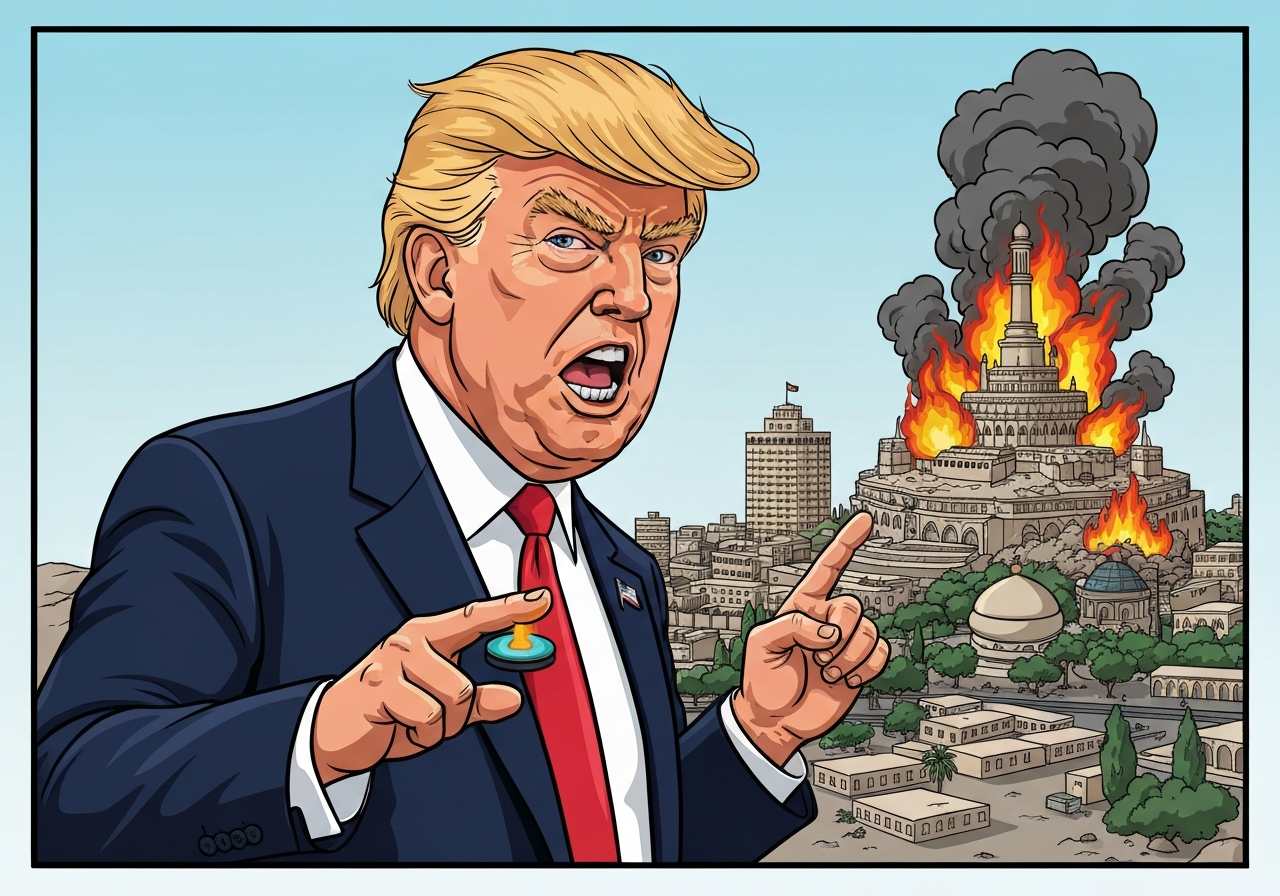
On the night of March 21–22, 2026, Iran launched missiles at the southern Israeli cities of Dimona and Arad, in strikes Iranian media said targeted Israel’s main nuclear research complex. Israeli authorities reported about 180 people wounded, some seriously, and showed sites with large craters and damaged buildings. The exchange came amid a widening regional confrontation: U.S. and Israeli forces have continued strikes on Iranian targets while Tehran has attacked shipping in the Strait of Hormuz and launched retaliatory strikes on neighboring states. In a sharply worded public message, U.S. President Donald Trump gave Iran 48 hours to reopen the strait and threatened forceful strikes on Iranian power infrastructure if the waterway remained closed.
Key takeaways
- Iran launched missiles at Dimona and Arad overnight on March 21–22, 2026; Israeli health authorities reported about 116 wounded in Arad and 64 in Dimona, totaling roughly 180 injured.
- The International Atomic Energy Agency said it had not received indications of damage at the Negev nuclear research site in Dimona but urged military restraint near nuclear facilities.
- President Trump ordered Iran to reopen the Strait of Hormuz within 48 hours and warned of strikes on Iranian power plants if the strait remained closed.
- U.S. Central Command reported more than 8,000 military targets struck by coalition forces and cited 130 Iranian vessels hit since the start of the campaign; Iranian authorities say over 1,300 civilians have died in Iran during the conflict.
- Maritime traffic through the Strait of Hormuz is effectively halted after repeated attacks on tankers; oil markets have seen price pressure as a result.
- Gulf states have reacted with diplomatic measures, expulsions of Iranian diplomats, and defensive interceptions of missiles or drones; direct military intervention by Gulf states remains limited.
Background
The current exchanges are part of a broader confrontation that began weeks earlier with strikes and counterstrikes between Israel, the United States and Iran. Last week’s reported Israeli attack on Iran’s Natanz nuclear site was cited by Iranian state outlets as a primary reason for the retaliatory strikes on Israeli territory. The conflict has rapidly expanded beyond direct Iran–Israel exchanges to involve maritime attacks in the Strait of Hormuz and strikes on targets across the Gulf region.
Strategic stakes are high: roughly one-fifth of global oil transited the Strait of Hormuz in the year prior to the crisis, and repeated attacks on shipping threaten global supply chains and energy markets. Western and allied navies have been asked to redeploy for convoy protection, but several governments have declined broad participation in escort operations, complicating efforts to secure the route. At the same time, Iran’s internal communications are constrained by prolonged internet outages, making independent verification of conditions inside Iran more difficult.
Main event
Shortly after midnight local time on March 22, Iranian missiles struck areas near Dimona and Arad in southern Israel. Footage from the strike sites showed deep craters and collapsed structures. Israeli emergency services treated roughly 180 wounded across the two cities, with hospitals reporting a number of severe injuries. Officials have not publicly confirmed the presence of nuclear weapons in Israel and the IAEA reported no indication of damage to the Dimona research complex as of its latest statement.
Iranian state-affiliated media framed the attacks as reprisals for the reported Israeli strike at Natanz days earlier. Tehran’s parliament speaker warned that if U.S. or Israeli forces target Iranian power plants, Iran would treat vital infrastructure across the Gulf as legitimate targets. Iran also reiterated its position that the Strait of Hormuz remains open to non-enemy shipping while denying transit to countries it labels hostile.
U.S. and Israeli forces continued strikes on Iranian territory overnight, and CENTCOM officials said coalition operations have been extensive in recent weeks. In parallel, several Gulf states reported missile or drone attacks attributed to Iran, and Saudi Arabia said it intercepted one of three missiles fired at the kingdom overnight. Qatar confirmed a military helicopter crash in territorial waters that killed six of seven people on board; authorities have not publicly determined a cause.
Analysis & implications
The strikes on Dimona and Arad raise immediate safety and escalation concerns because of the proximity to sensitive nuclear infrastructure and the risk of miscalculation. Even without confirmed damage to the Dimona research site, the presence of heavy ordinance and the scale of strikes increase the chance of unintended consequences. The IAEA’s call for military restraint near nuclear facilities underscores the heightened hazards when conventional conflict intersects with nuclear-related sites.
President Trump’s public ultimatum over the Strait of Hormuz — giving Iran 48 hours to reopen the waterway and threatening strikes on power plants — escalates the crisis in a direct, time-bound fashion. Targeting electricity infrastructure would have broad civilian and regional economic consequences, including power outages, disruptions to water systems and further pressure on energy markets. Such action would also complicate coalition cohesion and legal justifications for strikes under international law.
Maritime security is a central pressure point: with tankers and commercial vessels under attack, insurers and ship owners face greater risk and costs, and any prolonged closure will sustain elevated oil prices. Diplomatic options remain limited while kinetic operations continue; however, some international actors have signaled willingness to contribute specialized resources — for example, demining teams for the strait if a ceasefire can be negotiated.
Comparison & data
| Location/Metric | Reported figure |
|---|---|
| Arad — injuries | 116 |
| Dimona — injuries | 64 |
| Total wounded in two cities | ~180 |
| Civilian deaths in Iran since war began (Iranian authorities) | >1,300 |
| CENTCOM-reported military targets struck | >8,000 |
| Iranian vessels reportedly struck | 130 |
The table summarizes figures reported by Israeli health authorities, Iranian statements, and U.S. Central Command briefings. Numbers come from multiple sources with differing verification methods: casualty counts in conflict zones commonly change as hospitals update records, and state figures should be read in the context of the reporting organization’s access and methodology.
Reactions & quotes
Israeli leadership characterized the strikes as a severe escalation and emphasized emergency response measures and medical assistance for the wounded. Prime Minister Benjamin Netanyahu called the night “very difficult” and pledged continued defense measures while coordinating with partners.
We are confronting a very difficult evening, and our priority is the wounded and ensuring the safety of citizens.
Prime Minister Benjamin Netanyahu (statement posted online)
U.S. military officials framed coalition strikes as extensive and intended to degrade Iranian capabilities, while warning that operations will continue as assessed necessary. CENTCOM leadership described the scale of maritime and ground operations conducted to date.
Our assessment is that Iran’s combat capability is under pressure after sustained strikes; operations will continue as required to protect regional partners and U.S. forces.
Admiral Brad Cooper, U.S. Central Command
Iranic officials and state media presented the missile strikes as retaliation for attacks on Iranian nuclear-related sites and urged restraint from further attacks on civilian infrastructure. Gulf governments have reacted with a mix of diplomatic expulsions and defensive military actions while stopping short of broad offensive intervention.
Diplomacy remains a priority, but aggression and unilateral attacks are at the root of the current maritime and regional crisis.
Ali Mousavi, Iran representative to the International Maritime Organization (reported)
Unconfirmed
- Precise damage to the Negev nuclear research center in Dimona: the IAEA reported no indication of damage as of its latest statement, but independent on-site verification remains limited.
- Attribution of every maritime attack: while Iran has been linked to many strikes on shipping, some individual incidents remain under investigation and formal attribution processes are ongoing.
- Whether a full closure of the Strait of Hormuz is intended as permanent policy: Iranian officials say the strait is closed only to perceived enemies, but long-term intentions remain unclear.
Bottom line
The March 21–22 strikes illustrate how quickly a localized strike can escalate into a broader regional crisis when strikes, reprisals and maritime interdictions interlock. The proximity of attacks to nuclear-related sites raises the stakes for unintended escalation and international involvement. Economic fallout from disrupted shipping and higher oil prices will compound humanitarian and security pressures across the region.
Near-term prospects hinge on whether diplomatic channels can be reopened and whether major powers can agree on coordinated security measures for shipping without further kinetic escalation. For now, military and civilian authorities in the region remain on heightened alert, and the situation is liable to change rapidly as both sides posture and respond.
Sources
- NPR — (international news organization; primary report used)
- International Atomic Energy Agency (IAEA) — (international nuclear watchdog; official statements)
- NetBlocks — (digital rights monitor reporting on internet outages)
- Tasnim News Agency — (Iran state-affiliated media; reporting on Iranian government statements)
- U.S. Central Command (CENTCOM) — (official military briefings)
- Mehr News Agency — (semi-official Iranian news outlet reporting diplomatic statements)