
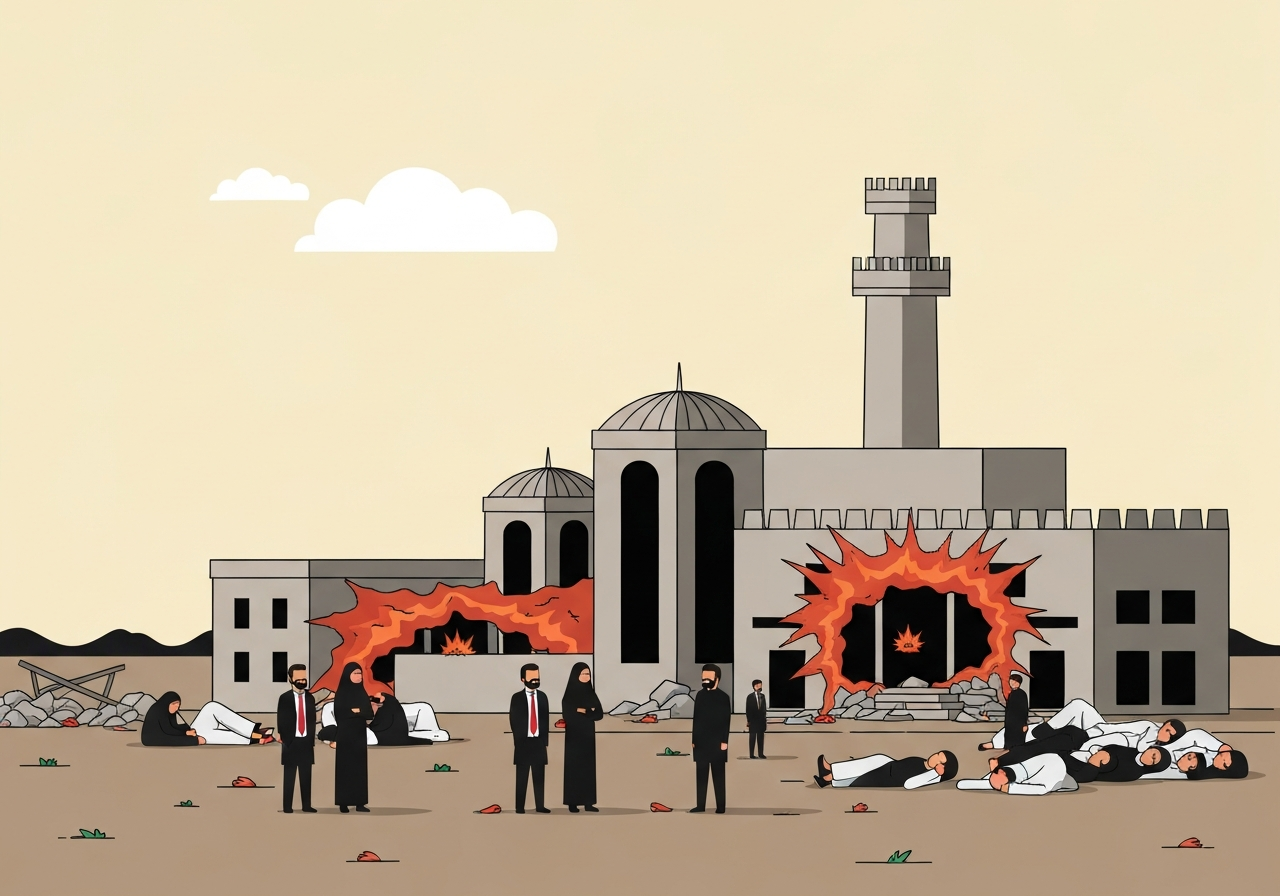
Lead: A drone strike struck El Daein Teaching Hospital in East Darfur on Friday night during Eid celebrations, killing 64 people and wounding 89, the World Health Organization (WHO) said. The facility — a primary referral centre serving thousands in El Daein and nearby villages — has been rendered non-functional, depriving the region of critical care. The Rapid Support Forces (RSF) and Sudanese army have exchanged blame for the attack, and international health officials called for an immediate end to strikes on medical facilities.
Key takeaways
- 64 people were killed in the strike on El Daein Teaching Hospital, including 13 children, two nurses and one doctor, WHO reported.
- 89 people were wounded in the same attack and local staff report the hospital can no longer operate its emergency services.
- WHO says it has confirmed 2,036 deaths in 213 attacks on health care during nearly three years of conflict in Sudan.
- The RSF attributed the strike to an army drone; the army denied responsibility and said it follows international norms.
- Sudan’s conflict, which began in April 2023, has killed more than 150,000 people and displaced about 12 million — nearly a third of the population, according to UN estimates.
- Humanitarian and legal groups have called for an independent investigation and accountability for those responsible for attacks on health infrastructure.
Background
The fighting in Sudan began in April 2023 when a power struggle erupted between the Sudanese Armed Forces and the paramilitary Rapid Support Forces, who had been allies after the 2021 coup. The rivalry quickly escalated into nationwide conflict, fragmenting control across states and creating new front lines, including in Kordofan and Darfur. Medical facilities and humanitarian convoys have repeatedly been caught in or deliberately targeted during operations, compounding the country’s already dire health crisis.
East Darfur, where El Daein sits, has become strategically significant: it links western Darfur to Khartoum and has seen near-daily drone and artillery strikes as the war widened. The El Daein Teaching Hospital was one of the key regional referral centres; its loss affects thousands who relied on it for emergency surgery, maternal care and pediatric services. International organizations and local rights groups have documented attacks on clinics, ambulances and health workers, framing them as a major barrier to delivering life-saving aid.
Main event
On Friday evening, during Eid celebrations, a strike hit El Daein Teaching Hospital. WHO officials quickly reported 64 fatalities — including children and medical staff — and 89 injured. Local hospital workers described severe structural damage: reports say the top floor and the accident and emergency department were extensively damaged and that vital equipment was destroyed or rendered unusable.
The RSF issued a statement saying an army-operated drone struck the facility. The Sudanese military rejected that claim, saying it was surprised by the accusation and affirmed its adherence to international norms and the laws of war. Both sides offered brief public comments, leaving investigators and humanitarian organisations calling for a transparent, independent inquiry.
WHO Director-General Tedros Adhanom Ghebreyesus condemned the attack and reiterated that health-care facilities must be protected. He highlighted WHO data showing the cumulative toll on health services during the nearly three-year conflict. Local civil society groups and the Emergency Lawyers network urged an impartial investigation and warned that the loss of the hospital will intensify the region’s humanitarian needs.
Analysis & implications
The immediate humanitarian consequence is clear: the destruction of a major referral hospital sharply reduces emergency care capacity in East Darfur. With El Daein hospital out of service, patients requiring surgery, neonatal care and trauma treatment must travel further — often across insecure corridors — increasing morbidity and mortality. Humanitarian actors report that transport and security constraints already limit referrals and medical evacuations in the area.
Strategically, attacks on health infrastructure have both military and political effects. Degrading hospitals can displace civilians and strain opposition-held areas; it also heightens pressure on international actors to intervene diplomatically. Repeated strikes erode trust in warring parties’ compliance with international humanitarian law and undermine any ceasefire negotiations by hardening civilian suffering and outrage.
Economically, the removal of a functioning hospital imposes long-term costs: rebuilding infrastructure, replacing equipment and retraining or replacing health staff are expensive and time-consuming, diverting scarce resources from other needs. The cumulative effect of more than 200 confirmed health attacks — with over 2,000 deaths recorded by WHO — reduces the health system’s resilience and jeopardises vaccination, maternal health and chronic disease programs across Sudan.
Internationally, the strike increases calls for monitoring and accountability. Donors and multilateral agencies may condition assistance or demand independent investigations, complicating humanitarian access. The attack also raises concerns about the proliferation and use of armed drones in internal conflicts, a trend that can make civilian infrastructure more vulnerable and harder to protect.
Comparison & data
| Metric | Figure |
|---|---|
| Deaths in El Daein hospital strike | 64 (includes 13 children) |
| People wounded in strike | 89 |
| WHO-confirmed deaths in health attacks (since 2023) | 2,036 |
| Total conflict deaths (UN estimate) | More than 150,000 |
| People displaced | About 12 million |
The table above summarises immediate and cumulative figures cited by WHO and UN sources. These data show how a single, high-casualty event compounds an already severe humanitarian crisis: the hospital strike accounts for a concentrated loss of life and further degrades emergency health capacity in a context where millions are displaced and medical services are strained.
Reactions & quotes
International health officials and rights groups responded within hours, demanding protection for medical sites and independent probes into the incident.
“Enough blood has been spilled.”
Dr Tedros Adhanom Ghebreyesus, WHO Director-General (posted on X)
The WHO chief used the platform to call for de-escalation and respect for health facilities, framing the attack as part of a broader pattern of assaults on health care during the conflict.
“An army drone hit the hospital,”
Rapid Support Forces (RSF) statement
The RSF attributed the strike to the Sudanese military and described heavy damage to the hospital’s top floor and emergency department. Their statement underscores the competing narratives on responsibility.
“We were surprised by the accusation and abide by international norms and laws,”
Sudanese Armed Forces (military statement)
The military denied involvement and reiterated a claim of compliance with international humanitarian law, while calling for investigations to clarify events on the ground.
Unconfirmed
- Attribution of the strike to the Sudanese army remains contested; independent verification of the weapon’s origin and chain of command is pending.
- Exact casualty breakdowns by age and role may change as additional victim identification and hospital records are reviewed.
- Details on the munition type, flight path, and whether the strike was deliberate or misidentified remain unverified pending an impartial investigation.
Bottom line
The attack on El Daein Teaching Hospital is both a human tragedy and a setback for health provision across East Darfur. Beyond the immediate death and injury toll, the loss of a major referral hospital will increase preventable deaths and strain an already fragile humanitarian response.
Accountability and an independent investigation are critical to establish facts, deter future attacks, and restore some measure of protection for civilians and health workers. For now, humanitarian agencies face an intensified emergency: patients need alternative care pathways and donors must prepare for the higher costs of compensating lost infrastructure and services.
Sources
- BBC News — media report summarising the incident and local statements (news)
- World Health Organization (WHO) — international health agency providing casualty figures and comments (official)
- United Nations Office for the Coordination of Humanitarian Affairs (OCHA) — UN humanitarian data and displacement estimates (official)