
Lead
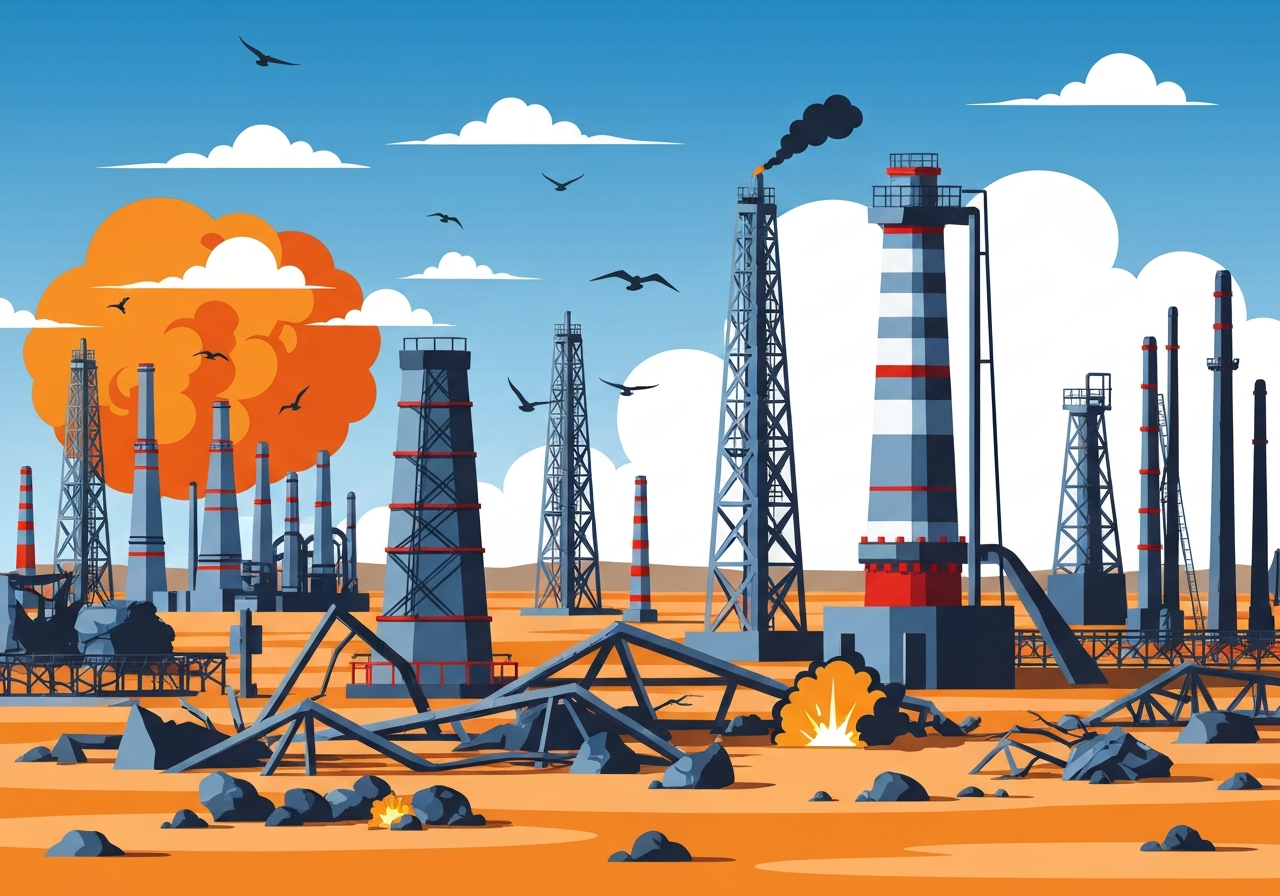
On March 23, 2026, International Energy Agency Executive Director Fatih Birol told Australia’s National Press Club in Canberra that more than 40 energy assets across nine Middle East countries have been “severely or very severely” damaged by the war. Birol warned the physical destruction — spanning oil fields, refineries and pipelines — will slow the return of production and could extend disruptions to global energy supply chains even after active hostilities end. His remarks underline immediate repair needs and signal months of logistical and technical work before affected facilities can come back online. Markets and policymakers should prepare for a protracted recovery window rather than a swift normalization.
Key Takeaways
- IEA assessment: More than 40 energy assets in nine Middle East countries were reported as “severely or very severely” damaged, according to IEA Executive Director Fatih Birol on March 23, 2026.
- Types of damage: Reported losses include oil fields, refineries and pipelines, each requiring different repair timelines and specialist crews to restore safe operations.
- Supply impact: The physical damage implies production cannot be rapidly resumed, increasing the risk of prolonged disruptions to regional and global oil and gas flows.
- Time horizon: Birol indicated repairs will take time; exact restoration schedules depend on access, security, spare parts and specialist labor availability.
- Market sensitivity: Global markets may remain vulnerable to price volatility as spare capacity and logistical bottlenecks constrain the speed of recovery.
- Policy implications: Governments and multilateral bodies face near-term coordination needs on emergency fuel stocks, logistical support and reconstruction finance.
Background
The Middle East remains central to global liquid fuel and gas supplies, supplying a sizable share of demand in Asia, Europe and beyond. Infrastructure in the region has long been a strategic target in conflicts because damage to fields, refineries and pipelines can ripple quickly through international markets. Past episodes of infrastructure disruption, including attacks and blockades in the last decade, have shown that repairs often take weeks to months and occasionally longer when access or security is constrained.
International bodies such as the IEA monitor damage because restoration timelines determine how quickly physical output and trade flows can be re-established. Producers, traders and consuming countries maintain contingency tools — strategic petroleum reserves, alternative shipping routes and spare refining margins — but those buffers are finite. The scale and geographic spread of the latest damage complicate a coordinated response, since repair efforts must be sequenced across multiple sovereign territories with differing security and logistical conditions.
Main Event
Speaking in Canberra on March 23, 2026, Fatih Birol summarized an IEA assessment that catalogued more than 40 energy assets across nine countries as severely or very severely damaged. He emphasized that damage was not limited to a single category of infrastructure: oil fields, processing plants and export pipelines were all affected, creating layered restoration challenges. Birol framed the assessment as a technical warning about recovery timelines rather than a geopolitical judgment about responsibility for the strikes and attacks that caused the destruction.
The IEA noted that bringing facilities back online requires site safety assessments, clearing debris, repairing or replacing critical rotating equipment and, in some cases, rebuilding entire processing units. That work depends on access for engineers and heavy equipment, plus secure supply chains for spare parts that may themselves be subject to export controls or limited global availability. Even when physical repairs are completed, operators must conduct phased recommissioning and testing to avoid safety incidents, further extending the time before full output resumes.
Energy firms and host governments will need to coordinate closely on permitting, contracting and security arrangements to accelerate reconstruction. Insurance and indemnity issues can also slow progress: claims processing and coverage disputes may delay payments for repairs, while sanctions regimes could complicate procurement of specialized components. All of these administrative factors, added to the physical complexity of repairs, point to a recovery measured in months rather than weeks in many cases.
Analysis & Implications
From a market perspective, the immediate implication is heightened uncertainty. Physical shortages raise the premium for available cargoes and can tighten refining margins where product flows are curtailed. Traders may respond by rerouting shipments, drawing down strategic stocks or bidding up forward prices to secure supply, amplifying volatility in the near term. For import-dependent regions, higher energy costs can feed inflationary pressures and create fiscal stress for governments subsidizing domestic fuel prices.
Politically, the scale of infrastructure damage increases the stakes for ceasefire and reconstruction diplomacy. Countries hosting damaged facilities will press for both security guarantees and external financing to rebuild, while major consumers and lenders will seek assurances that funds and materials will not be misapplied. Multilateral institutions and energy companies could play coordinating roles, but progress depends on a stable security environment and clear legal frameworks for reconstruction contracts.
Longer term, the event could shift corporate and policy calculus on resilience. Firms may accelerate diversification of supply sources, expand insurance and contingency planning, or invest more in distributed energy and storage to reduce single-point vulnerabilities. Governments could also revisit infrastructure siting, hardening investments and regional pipeline security arrangements. While such shifts may improve resilience, they also require capital and time — constraints that will shape recovery and future risk profiles.
Comparison & Data
| Metric | Reported Value |
|---|---|
| Number of assets reported severely/very severely damaged | More than 40 |
| Countries affected | 9 |
| Types of infrastructure | Oil fields, refineries, pipelines |
These high-level figures show a multi-country, multi-asset disruption rather than isolated localized damage. That breadth matters because it reduces the effectiveness of simple localized fixes or single-country stock releases; instead, coordinated regional and international responses will be required to stabilize supplies. Exact per-asset damage classifications and operational status remain the critical data points for planning restoration and will determine how quickly trade flows can be normalized.
Reactions & Quotes
“More than 40 energy assets across nine countries have been severely or very severely damaged, and it will take time before these fields, refineries and pipelines return to service,”
Fatih Birol, IEA Executive Director (speech at Australia’s National Press Club)
“Markets should assume a protracted recovery rather than an immediate rebound; logistical bottlenecks and specialist equipment shortages are likely to be binding constraints,”
Market analysts (collective assessment)
“Repair plans must balance speed and safety; rushed recommissioning risks further incidents that would prolong outages,”
Industry safety advisor (comment on reconstruction sequencing)
Unconfirmed
- Precise asset-level breakdown: Public reporting has not released a full itemized list showing which specific oil fields, refineries or pipeline segments are included in the IEA assessment.
- Restoration timelines: Exact repair schedules for individual facilities remain undetermined and will depend on security access, spare-parts delivery and contracting timelines.
- Attribution of attacks: Public sources have not provided a comprehensive, independently verified attribution for all damaging incidents referenced by the IEA.
Bottom Line
Fatih Birol’s March 23, 2026 assessment that more than 40 energy assets across nine Middle East countries are severely or very severely damaged signals a recovery that is likely to be measured in months and perhaps longer for the most affected facilities. The combination of physical destruction, security constraints and logistical bottlenecks reduces the prospect of a rapid normalization of output and increases the risk of sustained price volatility and regional supply tightness.
Policymakers, producers and market participants should prepare for a protracted period of coordination on reconstruction financing, spare parts procurement and security arrangements. Transparent, verified reporting of asset-level damage and clear restoration timelines will be essential to calibrate market responses and to prioritize international assistance where it can most quickly restore physically and commercially meaningful flows.
Sources
- Bloomberg — news outlet reporting on IEA remarks at Australia’s National Press Club (March 23, 2026)