
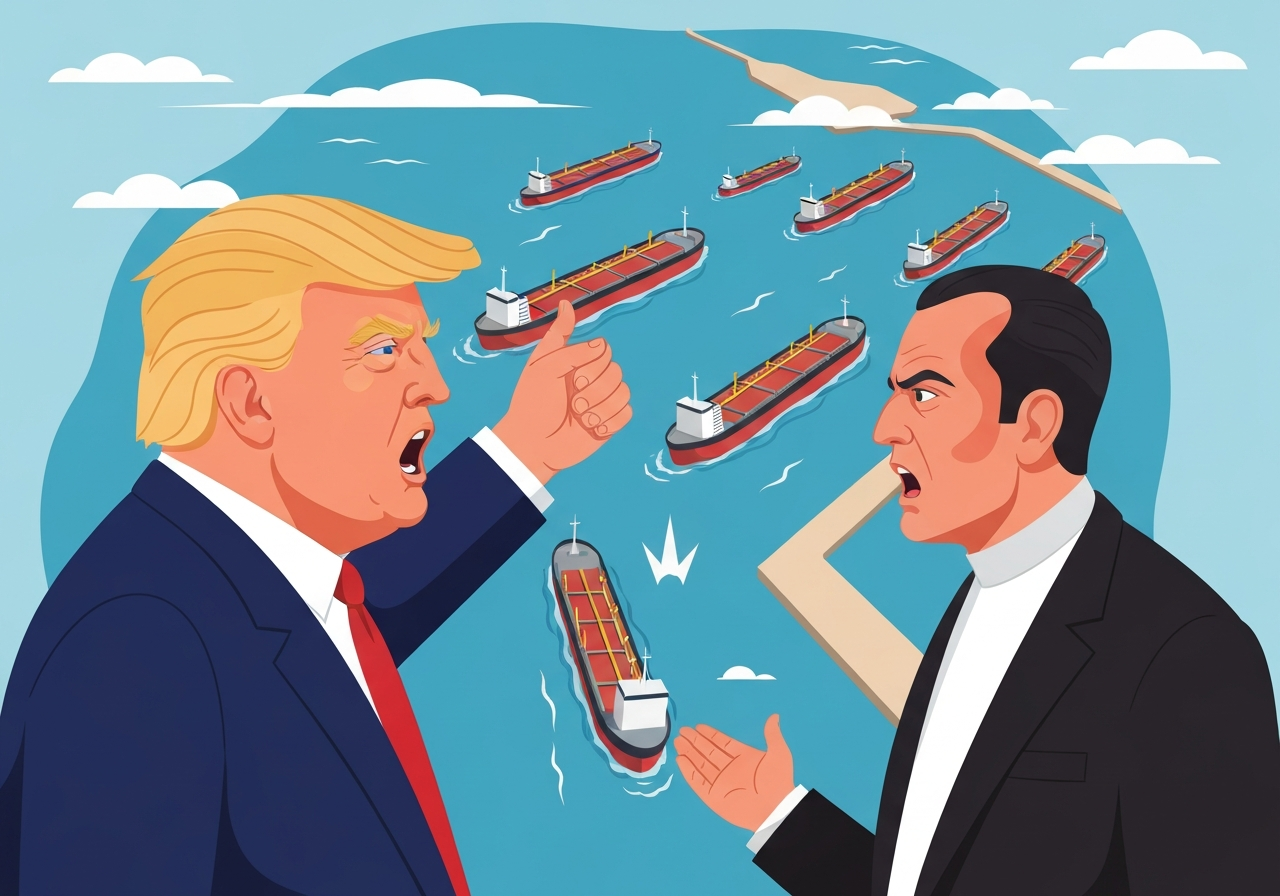
U.S. President Donald Trump on March 22, 2026 issued a blunt 48-hour ultimatum for Iran to reopen the Strait of Hormuz, warning he would strike the country’s power plants if the vital waterway remained obstructed. The post, published on Truth Social at 7:44 p.m. New York time, came as the conflict entered its fourth week with no clear sign of de-escalation. Trump framed the order as a response to soaring oil prices and a need to secure energy flows; Tehran responded with an immediate warning that it would not accept foreign coercion. The exchange intensified fears that regional hostilities could expand and further disrupt global energy markets.
Key Takeaways
- On March 22, 2026, President Trump issued a 48-hour ultimatum via Truth Social, requiring Iran to fully reopen the Strait of Hormuz or face strikes on power plants.
- The post was timestamped at 7:44 p.m. New York time and was updated in public timelines on March 23, 2026.
- The confrontational message arrived in the fourth week of the conflict, which has already strained regional stability and global energy supplies.
- U.S. officials framed the order as an attempt to bring down sharply higher oil prices by reopening a critical shipping chokepoint for hydrocarbon exports.
- Iran publicly warned against external coercion; most independent verification about specific military plans remained limited at publication.
- Analysts warn the ultimatum increases the risk of kinetic strikes on infrastructure with broad civilian and economic consequences.
Background
The Strait of Hormuz is one of the world’s most important maritime chokepoints for oil and liquefied natural gas shipments; any disruption quickly ripples through global energy markets. Tensions between the United States and Iran have escalated over several years, with periodic maritime confrontations, cyber incidents and proxy clashes that occasionally threatened international shipping. In early 2026 the situation escalated into open hostilities; by late March the conflict had entered its fourth week, marked by increasingly public threats and reciprocal actions.
U.S. policy makers have long linked regional stability to secure energy flows, and recent surges in oil prices heightened domestic political pressure for decisive action. Tehran has framed restrictions on transit as a legitimate response to what it describes as hostile U.S. measures and regional interference. Both capitals face domestic audiences that constrain flexibility: Washington seeks to blunt the economic pain of higher energy costs, while Iranian leaders must weigh retaliation against the risks to civilian infrastructure and national resilience.
Main Event
On the evening of March 22, President Trump posted an explicit timeline demanding Iran reopen the Strait of Hormuz “fully open, without threat” within 48 hours or face strikes on its power plants. The message was distributed on Truth Social at 7:44 p.m. New York time and was rapidly amplified by international media. White House officials emphasized the aim of restoring safe commercial navigation and lowering energy prices, while framing the option of attacking energy infrastructure as a calibrated instrument of pressure.
Iran’s official channels responded with a sharp warning rejecting ultimatums and asserting Tehran’s right to defend its territory and interests. State media underscored the strategic leverage Iran holds over Hormuz access and suggested that any attack on Iranian infrastructure would be met with proportionate measures. On the ground, regional militaries and commercial shipping operators reported heightened alert levels and altered routing plans, though independent verification of specific maneuvers remained limited.
Diplomatic interlocutors in Europe and the Middle East rushed to assess paths for de-escalation, urging restraint from both sides. Regional governments and maritime insurers signaled concerns about insurance premiums and rerouting costs if the strait stayed contested. Energy markets reacted swiftly to the rhetoric and risk assessments, reinforcing the political urgency in Washington to show a tangible response to rising fuel prices.
Analysis & Implications
The ultimatum marks a significant escalation in public signaling: naming infrastructure targets and a hard, short deadline raises the likelihood of miscalculation. Military planners on both sides now operate within compressed timelines, increasing the risks that tactical incidents could cascade into wider exchanges. Targeting power plants—civilian electrical infrastructure—carries both legal and humanitarian implications and could invite international condemnation, complicating U.S. diplomatic aims even if it achieved short-term tactical goals.
Economically, any kinetic action that disrupts exports through the Strait of Hormuz would likely produce further spikes in oil and gas prices, harming global markets and domestic consumers. Even without direct strikes, the heightened risk environment drives up shipping insurance and forces rerouting, imposing measurable costs on trade and supply chains. Policymakers balancing immediate price relief against long-term strategic stability face a fraught trade-off: forceful action may offer quick signals but also risk widening the conflict and prolonging market uncertainty.
Regionally, neighboring Gulf states and maritime actors are vulnerable to spillover effects. Escalation could trigger wider military alignments or proxy responses, drawing in actors with competing interests. International institutions and allied states may be called upon to mediate or to coordinate commercial protections, but their leverage is limited if the principal belligerents remain in maximalist postures. The episode underscores how energy dependency and strategic chokepoints amplify local disputes into global crises.
Comparison & Data
| Date | Event |
|---|---|
| March 22, 2026 | Trump issues 48-hour ultimatum on Truth Social demanding Strait of Hormuz reopen or Iran’s power plants be struck. |
| March 23, 2026 | Public updates and international responses increase; conflict in its fourth week. |
The table summarizes the immediate timeline tied to the ultimatum and the broader status of the conflict as of March 23, 2026. Because the situation is mobile, daily developments alter the risk calculus for shipping, insurance and national decision-making; analysts track both on-the-record statements and observable changes in military posture and commercial traffic.
Reactions & Quotes
“Fully open, without threat”
Donald Trump (Truth Social post, March 22, 2026)
“We will not accept ultimatums and we retain the right to defend our interests”
Iranian official statement (state media, paraphrase)
“Naming infrastructure as targets raises the risk of civilian impact and international fallout”
Regional security analyst (paraphrase)
Each reaction above was accompanied by contextual commentary: U.S. officials framed the language as leverage to compel reopening of the shipping lane; Iranian channels emphasized national sovereignty; analysts pointed to the legal and humanitarian complexities of striking civilian power systems.
Unconfirmed
- Precise operational plans for strikes on Iranian power plants have not been independently verified and remain unconfirmed.
- Whether Iran will close the Strait of Hormuz for commercial traffic within the ultimatum window is not corroborated by open-source maritime traffic data at the time of writing.
- Any immediate changes in allied military deployments or binding coalition decisions in response to the ultimatum are still under negotiation and unconfirmed.
Bottom Line
The March 22 ultimatum represents a public intensification of pressure tactics by the United States aimed at reopening a critical energy corridor amid sharply higher oil prices. By naming civilian infrastructure and imposing a tight deadline, the administration increased the short-term political costs of inaction but also heightened the danger of rapid escalation and unintended civilian harm.
For readers and markets alike, the crucial variables to watch are observable changes in maritime traffic through the Strait of Hormuz, credible evidence of military preparations on either side, and responses from regional governments and international partners. Absent rapid, verifiable de-escalation, the episode is likely to keep energy prices and geopolitical risk premiums elevated for the near term.
Sources
- Bloomberg — news report
- Truth Social — social media platform, source of the president’s posted ultimatum
- Ministry of Foreign Affairs of the Islamic Republic of Iran — official government site