
Lead
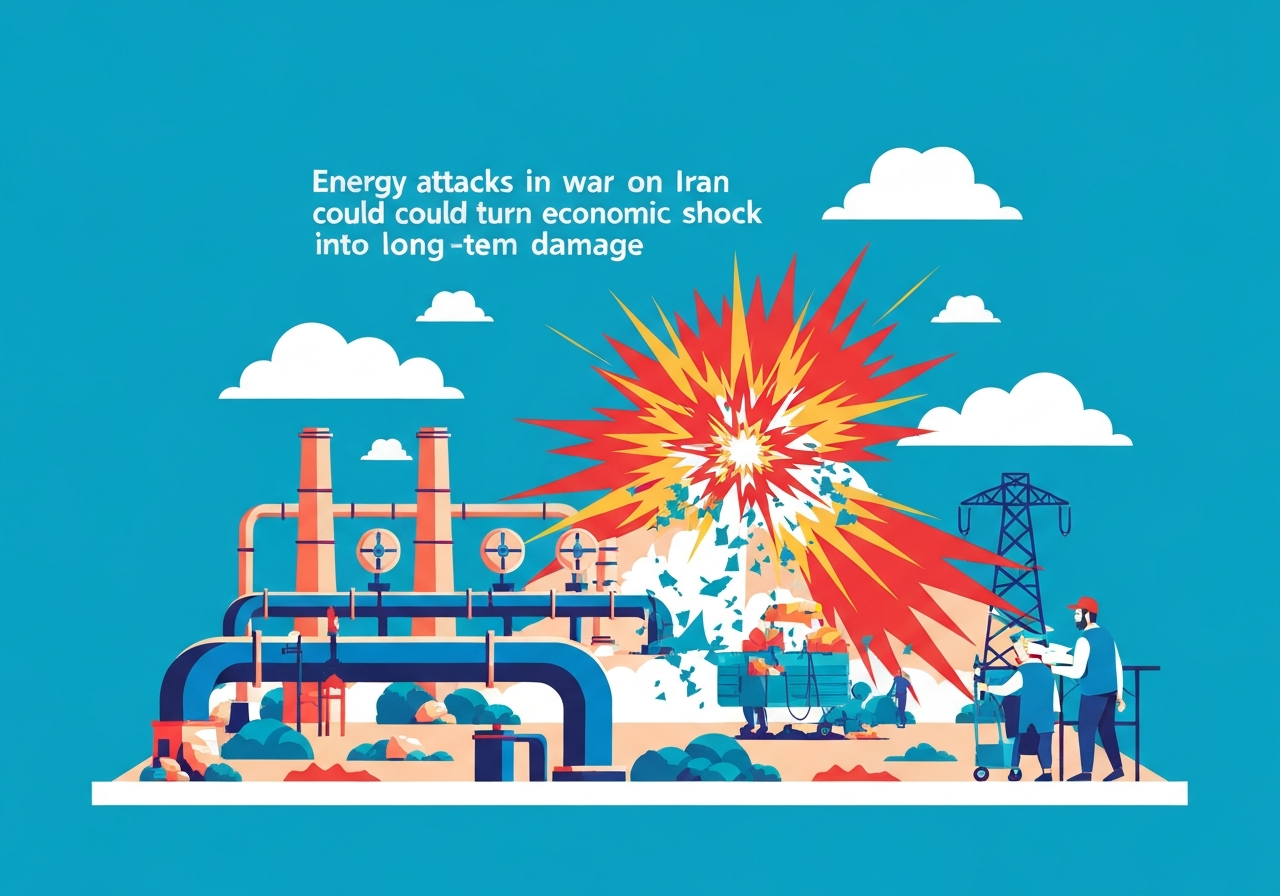
On March 23, 2026, new strikes on Persian Gulf energy facilities shifted the war’s economic risk from short-lived transit disruption to protracted infrastructure damage. Iran’s retaliatory missile attack on Ras Laffan, Qatar’s major liquefied natural gas (LNG) hub, was followed by strikes on refineries and gas installations in Kuwait, Qatar and Saudi Arabia. Ras Laffan alone supplies roughly a fifth of the world’s LNG, making damage there a global concern for fuel supplies, industry operation and consumer prices. Officials warn the effects could last months or even years if repair and replacement of complex facilities is required.
Key Takeaways
- On March 23, 2026, Iran launched a missile strike on Ras Laffan in Qatar, a complex that produces roughly 20% of global LNG supply.
- Subsequent strikes affected energy facilities in Kuwait, Qatar and Saudi Arabia, following an Israeli strike on Iran’s South Pars gas field earlier in the week.
- Experts say attacks on fixed infrastructure pose longer-term economic risk than temporary chokepoint closures like the Strait of Hormuz.
- Damage to liquefaction trains, pipelines or export terminals can require months to years to repair and carry costs in the millions to billions of dollars.
- Short- to medium-term impacts could include higher regional gas prices, supply re-routing, tightened LNG cargo availability and stress on electricity generation in importing countries.
- Global markets are monitoring ship insurance costs, regional shipping routes and the pace of damage assessments to price risk into energy and broader commodity markets.
Background
For decades the Persian Gulf has been central to global energy flows: oil and natural gas produced there feed markets across Asia and Europe. Security planners historically feared disruption at the Strait of Hormuz, a narrow maritime chokepoint through which a significant share of seaborne oil transits. That scenario typically implied a temporary spike in prices while shipments were rerouted or held back.
The current escalation differs because it targets fixed production and processing assets rather than shipping lanes. Facilities such as Ras Laffan and South Pars are engineering-intensive complexes: liquefaction trains, compressors, pipelines and export terminals are highly specialized and costly to repair. The relevant stakeholders include Gulf producers, global LNG buyers, energy traders, insurers and governments that depend on steady gas flows for power and industry.
Main Event
The new phase began on Wednesday when Iran struck Ras Laffan, a sprawling Qatari complex that accounts for roughly one-fifth of global LNG output. The assault followed an Israeli strike on Iran’s South Pars gas field earlier in the week, a sequence officials describe as reciprocal targeting of energy infrastructure. Iranian strikes reportedly also hit facilities in Kuwait and Saudi Arabia on Thursday.
Initial assessments on the ground are still being compiled, but analysts emphasize the difference between damage to shipping routes and damage to processing plants. A disabled liquefaction train cannot be restarted quickly: parts may be scarce, safety recertification is required, and complex project management is necessary to restore capacity. Even limited physical damage to a key export terminal can ripple through supply chains that depend on scheduled cargoes.
Governments and companies are mobilizing teams for damage inspections and contingency planning. Energy firms are reviewing spare-part inventories and alternative routing of cargoes, while importers in Asia and Europe are evaluating winter demand exposure. Insurance markets and chartering desks are updating risk premiums for vessels operating in the Gulf and adjacent sea lanes.
Analysis & Implications
Attacks on infrastructure convert a short-term supply scare into a protracted economic shock because facilities are not fungible like cargoes at sea. Repair times for damaged liquefaction equipment are measured in months to years, depending on the scope of damage and the availability of specialized contractors and parts. That means a gap in capacity could persist beyond the immediate conflict, sustaining higher prices and supply uncertainty.
Higher LNG prices would affect heating and power costs in importing countries and could prompt fuel switching where possible, increasing demand for alternatives like coal or pipeline gas. For energy-exporting Gulf states, prolonged outages can reduce revenue and complicate budgets that assume steady hydrocarbon receipts. The damage may also accelerate investment decisions: buyers could seek diversified supply and governments may increase stockpiling or strategic reserves.
Financial markets will price in both physical risk and geopolitical insurance costs. Shipowners face higher premiums and potential re-routing expenses, while traders factor in volatility and potential contract shortfalls. Over time, persistent infrastructure vulnerability could reshape long-term contracting, with buyers favoring shorter terms or including war-risk clauses and sellers accelerating onshore liquefaction projects in other regions.
Comparison & Data
| Item | Characteristic |
|---|---|
| Ras Laffan (Qatar) | Produces roughly 20% of global LNG; large-scale liquefaction and export terminal |
| Strait of Hormuz (transit) | Primary chokepoint for seaborne oil; prior focus was transit disruption rather than facility damage |
The table highlights the qualitative contrast: transit disruption tends to be episodic and reversible, while damage to liquefaction infrastructure imposes more persistent capacity loss. Restoration of complex plants requires engineering assessments, replacement of custom components and regulatory safety approvals, which extend recovery timelines beyond those for disrupted shipping routes.
Reactions & Quotes
We have moved from stopping transit, which is a temporary measure, to attacking infrastructure, which has long-term effects.
David Goldwyn, former U.S. diplomat and Energy Department official (quoted in reporting)
Damage at key LNG hubs will force buyers and traders to reassess delivery schedules and insurance costs, raising near-term price volatility.
Energy market analyst (industry reporting)
Qatari authorities are conducting technical inspections and coordinating with partners to determine the extent of operational impacts.
Official statement summarized from reporting
Unconfirmed
- The full extent and cost of physical damage to specific liquefaction trains and export terminals remain under assessment and are not yet publicly verified.
- Precise timelines for restoration of damaged facilities and the resulting duration of supply shortfalls are uncertain and depend on inspections and spare-part availability.
- Whether the attacks will prompt prolonged closure of shipping lanes or broader regional escalation with additional infrastructure targets is unconfirmed.
Bottom Line
The March 23, 2026 strikes mark a strategic escalation by shifting the target set from maritime chokepoints to the fixed assets that produce and process LNG. That shift raises the risk that economic impacts will extend well beyond the immediate conflict window, with potential months- or years-long implications for supply, prices and energy security in importing regions.
Policymakers and market participants should prepare for an extended period of elevated risk: accelerate damage assessments, review contractual and insurance exposures, and explore alternative supply and demand-management measures. Rapid, transparent reporting on facility damage and repair timelines will be essential to limit market uncertainty and to guide pragmatic mitigation steps.
Sources
- The New York Times — media reporting and initial field reporting (March 23, 2026)