
Lead
On March 23, 2026, President Donald Trump announced a five‑day postponement of planned strikes on Iranian energy infrastructure as U.S. envoys engaged in talks with Iranian counterparts. The pause followed two days of reported negotiations and came amid volatile oil markets and rising domestic fuel prices. The administration said the delay aims to press for a negotiated end to hostilities, while critics warned that lifting sanctions on oil at sea could yield Iran a multibillion‑dollar windfall. U.S. and allied military operations and political fallout continue to shape regional security and global markets.
Key Takeaways
- President Trump announced a five‑day hold on strikes against Iranian energy facilities on March 23, 2026, citing ongoing talks between U.S. envoys and Iranian interlocutors.
- U.S. Treasury Secretary Scott Bessent lifted sanctions on stranded Iranian oil on March 20 to ease fuel shortages; Democrats estimate about 140 million barrels could net Iran roughly $14 billion.
- U.S. Central Command reported hitting more than 9,000 targets in Iran and destroying at least 140 vessels as of March 23, 2026; U.S. forces have flown roughly 9,000 combat sorties since Feb. 28.
- Brent crude slipped more than 10% on March 23 after Trump’s announcement, trading near $100 per barrel after topping $110; major U.S. indices rallied that day.
- The national average retail gasoline price is about $3.94 per gallon, reflecting supply shocks and recent oil volatility; analysts expect pump relief to lag crude price moves by several days.
- Iranian officials and state media deny formal negotiations with the U.S.; Iran’s parliament speaker warned financial institutions holding U.S. Treasuries could become targets.
- International Energy Agency called the crisis “very severe,” noting member nations are consulting on strategic stock releases after a record 400 million‑barrel coordinated release earlier this month.
Background
The hostilities began on Feb. 28, 2026, when U.S. and Israeli strikes targeted Iranian leadership and assets, killing Iran’s supreme leader Ayatollah Ali Khamenei and prompting his son Mojtaba Khamenei’s contested succession. The strikes escalated into wider exchanges across the region, with Iran‑linked forces and Israel striking back and the U.S. conducting sustained operations. The conflict has disrupted shipping through the Strait of Hormuz, a chokepoint for about 20% of global oil flows, and prompted emergency coordination among energy consumers and producers.
Economic measures have paralleled kinetic action: the IEA and member states authorized large strategic stock releases earlier in March to blunt crude price spikes, and the U.S. Treasury moved on March 20 to lift sanctions on certain Iranian cargoes at sea to keep fuel flowing. Domestic U.S. political dynamics are also in play—lawmakers from both parties have questioned the administration’s strategy and messaging, while markets rapidly price in both military and diplomatic outcomes.
Main Event
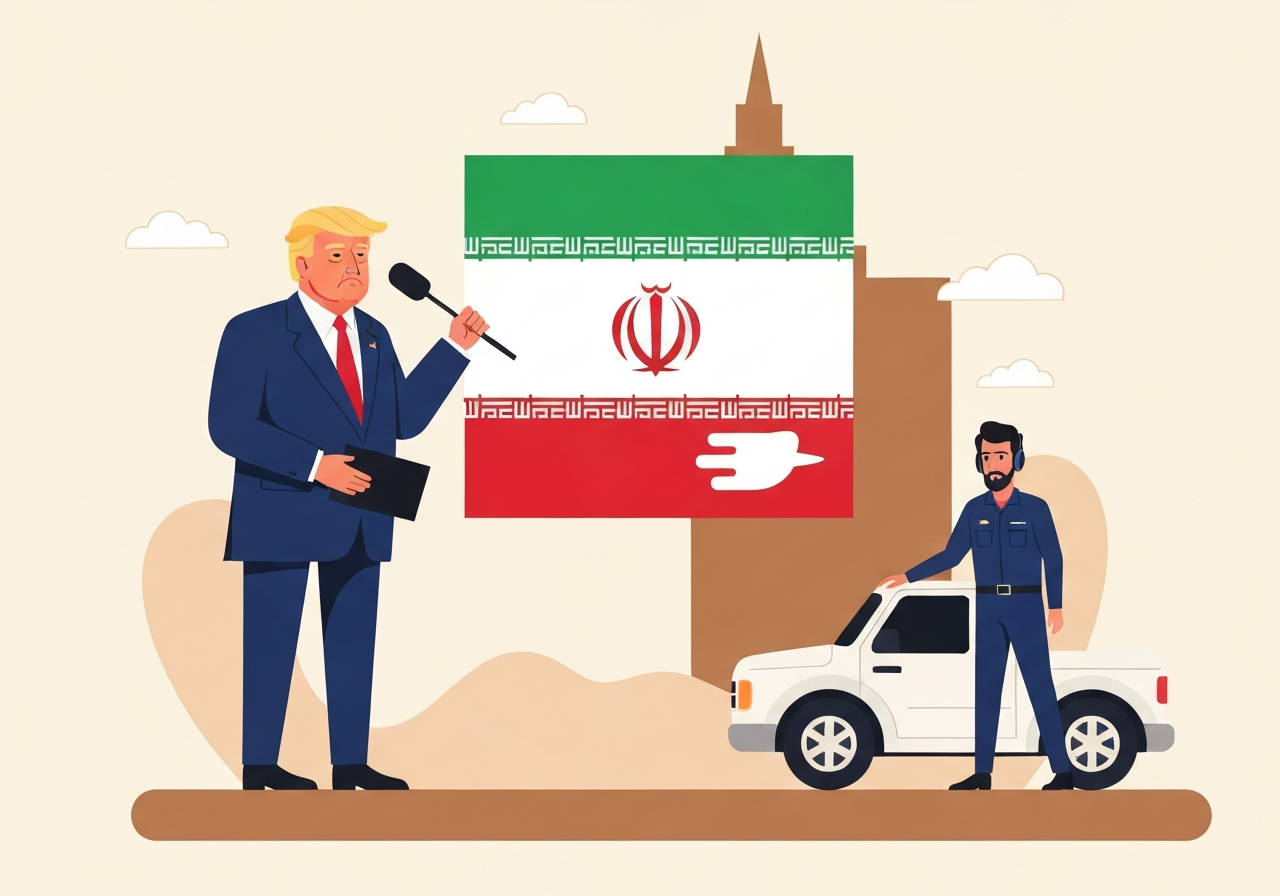
On the morning of March 23, President Trump posted that strikes on Iran’s power plants and energy infrastructure would be postponed for five days while talks continued. He said U.S. envoys Jared Kushner and Steve Witkoff held “very strong talks” with Iranian counterparts and suggested a settlement could reopen the Strait of Hormuz and sharply reduce oil prices. Trump characterized the interlocutors as reasonable while declining to identify them, citing safety concerns.
Iranian state media and senior officials, including Parliament Speaker Mohammad Bagher Ghalibaf and Foreign Minister Seyed Abbas Araghchi, publicly denied that formal negotiations with the U.S. were ongoing. Tehran also warned that measures by foreign financial institutions could make them targets, and state outlets framed the postponement as U.S. backtracking. The differing accounts underscore the opacity around interlocutors and the negotiators’ authority.
Meanwhile, U.S. military updates reported substantial operational activity: U.S. Central Command said more than 9,000 targets had been struck and at least 140 Iranian vessels destroyed since the campaign intensified. The Pentagon confirmed dozens of U.S. casualties and several hundred service members wounded, while humanitarian and civilian casualty reports across the region have varied by source and remain contested.
Analysis & Implications
Diplomacy conditioned by kinetic pressure is a high‑risk, high‑reward strategy. A negotiated pause could de‑escalate immediate threats to regional energy chokepoints and relieve short‑term price spikes, but without clear, enforceable verification mechanisms the risk of resumed hostilities remains. Trump’s public comments about jointly overseeing the Strait of Hormuz or retrieving Iranian enriched uranium signal a willingness to press for durably restrictive outcomes, which Tehran may reject.
Economically, markets are reacting to both the prospect of diplomacy and the underlying supply shock. Brent’s intra‑day drop after the announcement reflects short‑term relief, while retail gasoline prices—currently averaging about $3.94 per gallon—are slower to reflect changes because downstream inventories and refining margins introduce lags. If a durable settlement stalls, analysts expect renewed upward pressure on crude and consumer prices, which could damp U.S. growth and complicate central bank plans.
Politically, the administration’s decision to lift certain sanctions on Iranian cargoes to ease fuel shortages has immediate humanitarian and market rationales, but critics argue it may bankroll Iran’s war effort. Senator Jack Reed publicly warned on March 23 that roughly 140 million barrels could generate an estimated $14 billion for Iran, intensifying congressional scrutiny and potential legislative responses. The split in narratives between Washington and Tehran—each seeking leverage in public statements—makes third‑party verification and independent monitoring more salient.
Comparison & Data
| Date (Mar 2026) | Brent crude ($/bbl) | U.S. gas avg ($/gal) | Note |
|---|---|---|---|
| Early Mar (pre‑war) | ~$98 | $2.98 (two days before war) | Baseline before Feb. 28 strikes |
| Mar 22 | >$110 | ~$3.94 | Peak spike amid Strait of Hormuz closures |
| Mar 23 (after pause) | ~$100 | $3.94 (national avg) | Intra‑day retreat after postponement |
The table shows the gap between crude benchmarks and pump prices; retail gasoline typically trails crude by several days due to refining and distribution timelines. Even if Brent stabilizes, models from market strategists forecast modest relief at the pump only after downstream inventory adjustments and refinery throughput normalize.
Reactions & Quotes
“I just want to have as much oil in the system as possible. I don’t think they’re getting the money.”
President Donald Trump
Trump framed the sanction relief as a practical move to keep markets functioning and denied that Iran would fully benefit from the sales. His remarks aimed to reassure markets while maintaining leverage in the talks.
“The most predictable part of this conflict is that the price of oil would skyrocket… President Trump looks flustered and unprepared.”
Sen. Jack Reed (D‑RI)
Senator Reed criticized the administration’s sanction relief and warned of a potential $14 billion windfall for Iran, signaling growing congressional impatience and the potential for oversight or corrective measures.
“The crisis in the Middle East is very severe,”
Fatih Birol, IEA Executive Director
IEA leadership emphasized the scale of the disruption and confirmed consultations with member governments about further releases from strategic reserves to stabilize markets.
Unconfirmed
- Identity of the Iranian interlocutor(s) negotiating with U.S. envoys remains unclear; the U.S. declined to name them and Iran denies talks.
- Claims that Iran will not receive proceeds from lifted sanctions on oil at sea are not independently verified and depend on inspection and escrow mechanisms not publicly detailed.
- Reports of Mojtaba Khamenei’s condition and whereabouts are inconsistent; U.S. statements about uncertainty have not been corroborated by public Iranian confirmations.
Bottom Line
The five‑day postponement of strikes signals a window for diplomacy but not a guarantee of a lasting settlement. Markets responded with relief, yet structural supply risks and political mistrust mean volatility is likely to persist until clear verification and enforcement measures are agreed.
Domestically, the administration faces a difficult balancing act: easing fuel shortages and calming markets while avoiding policies that critics say might finance Tehran’s military capacity. For observers, the most important near‑term indicators to watch are oil flows through the Strait of Hormuz, independently verifiable financial settlement mechanisms for any released cargo, and concrete, public terms that demonstrate mutual steps to de‑escalate.