
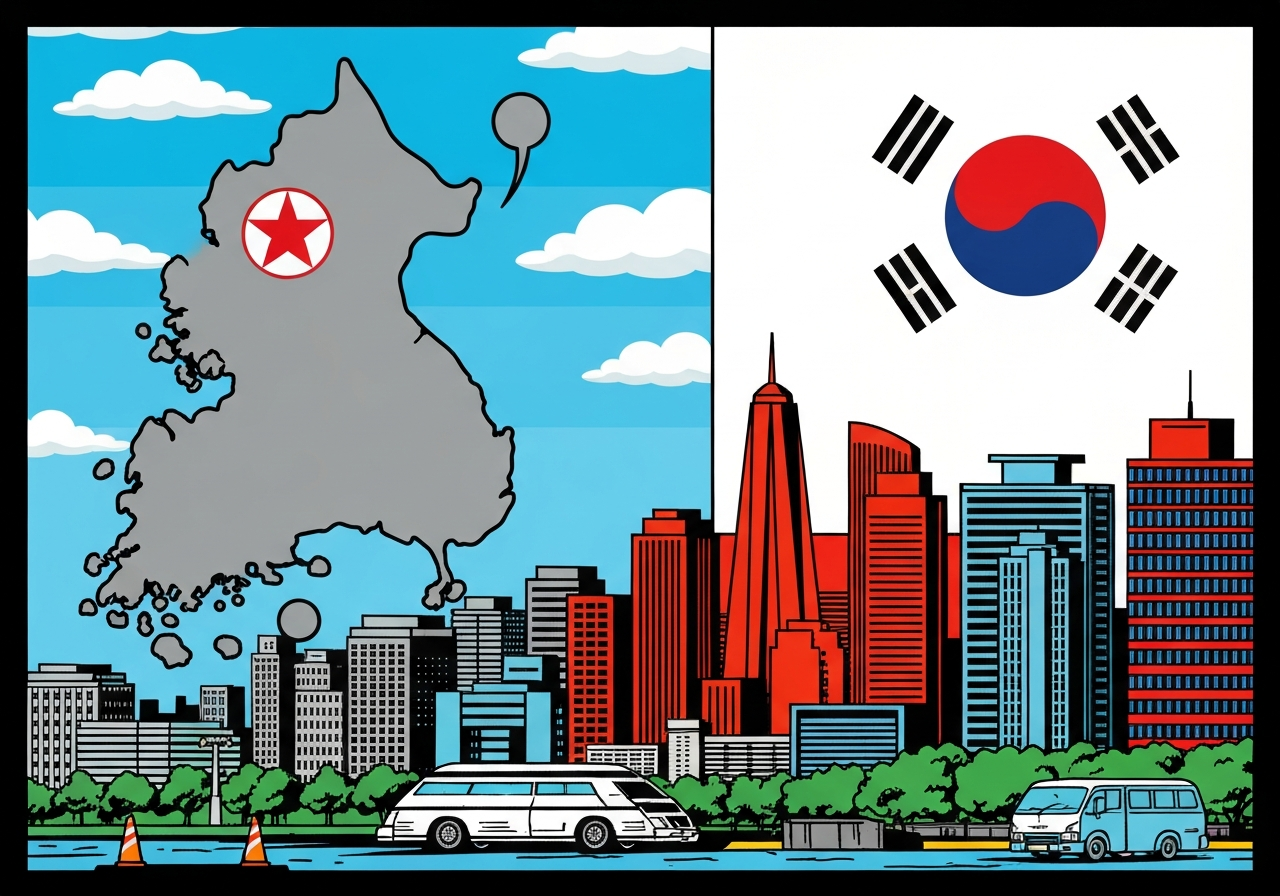
North Korean leader Kim Jong Un told Pyongyang’s rubber‑stamp parliament on Monday that his country will permanently entrench its status as a nuclear power and described South Korea as the “most hostile” state, state media reported. Speaking to the Supreme People’s Assembly, Kim framed the move as necessary to deter perceived threats and accused the United States of global “state terrorism and aggression,” an apparent reference to recent conflict in the Middle East. The assembly concluded a two‑day session on Monday and approved a revised constitution, although official reports did not specify the exact amendments. While Kim delivered a hard‑line message toward Seoul, he again left open the broad choice of confrontation or peaceful coexistence for adversaries, without naming U.S. President Donald Trump directly.
Key Takeaways
- Kim Jong Un pledged on Monday to make North Korea’s nuclear status “absolutely irreversible,” reaffirming a sharpened nuclear posture announced at the 2024 Workers’ Party Congress.
- The Supreme People’s Assembly wrapped up a two‑day session on Monday and approved revisions to the constitution; state media did not detail what was changed.
- Kim labeled South Korea the “most hostile” country and criticized Seoul’s role as an intermediary with Washington, signaling reduced trust in Seoul’s influence.
- He accused the United States of “state terrorism and aggression,” framing North Korea’s buildup as a counter to what it calls hegemonic threats amid regional tensions.
- Kim did not name President Donald Trump but repeated that North Korea will respond whether rivals opt for confrontation or coexistence.
- Analysts note Kim has prioritized ties with Russia—reporting says Pyongyang sent thousands of troops and military equipment to support Moscow’s campaign in Ukraine—while keeping a tactical openness to future U.S. talks.
- Expectations that constitutional changes would formally codify South Korea as a permanent enemy or strip references to shared nationhood were not confirmed by state reports.
Background
Kim’s remarks build on themes he emphasized at the October 2024 Workers’ Party Congress, where he rejected long‑standing language about peaceful reunification and set a firmer security posture. From 2018 to 2019, Seoul played a crucial role brokering Kim’s summit meetings with then‑U.S. President Donald Trump, but those ties cooled after the 2019 Hanoi summit collapsed over sanctions and disarmament demands. Since that breakdown, Pyongyang has largely frozen substantive diplomacy with Washington and curtailed direct engagement with Seoul, citing what it describes as hostile policies and persistent sanctions.
North Korea’s nuclear and missile programs expanded rapidly in recent years, according to monitoring organizations and intelligence assessments, shifting Pyongyang’s strategy from potential gradual bargaining to deterrence through accumulated capabilities. The regime frames its buildup as defensive against perceived U.S. and allied coercion, while South Korea and the United States view the programs as destabilizing for Northeast Asia. At the same time, Pyongyang’s outreach to Moscow—highlighted in reports of troop deployments and material transfers to Ukraine—appears aimed at diversifying strategic partners and acquiring technology or resources to mitigate the effects of sanctions.
Main Event
Delivering a tightly scripted address to the Supreme People’s Assembly on Monday, Kim presented the nuclear buildup as both a matter of national dignity and an operational necessity. State media quoted him saying the country must possess the strongest power to guarantee national interest and security, and he vowed to “consolidate our absolutely irreversible status as a nuclear power.” That language closely mirrors the party platform set last year and signals an institutionalization of nuclear deterrence into North Korea’s governing doctrine.
State outlets also reported that the legislature approved constitutional revisions before adjourning the two‑day session, but they provided no explanatory text on what was altered. External analysts had expected changes that could further enshrine hostility toward South Korea or remove earlier references to reunification, but the lack of published amendments leaves the specifics unclear. North Korea’s controlled media environment and the opaque legal process make independent confirmation difficult.
Kim’s speech criticized the United States broadly—using terms North Korea routinely applies to describe Washington and its allies—while stopping short of personalized rhetoric aimed at the U.S. president. He framed the United States as responsible for global aggression and cast the North’s arsenal as a necessary response. Simultaneously, he reiterated that the regime is prepared for either confrontation or peaceful coexistence depending on how rivals act, language that preserves tactical flexibility without signaling immediate diplomatic outreach.
Analysis & Implications
Institutionalizing an “irreversible” nuclear status raises the political cost of denuclearization talks for Washington and its partners. If Pyongyang embeds nuclear deterrence in constitutional or legal terms, any future negotiation would require complex political accommodations—potentially including sanctions relief or security guarantees. That prospect complicates U.S. strategy, which has long sought complete, verifiable, and irreversible denuclearization as a precondition for normalization.
Regionally, Seoul faces a dual challenge: countering a more assertive North while managing diplomatic channels that were valuable in 2018–2019. Analysts argue Kim now sees South Korea less as a bridge to Washington and more as an impediment to his geopolitical maneuvering, in part because Seoul’s earlier mediating role did not deliver sanctions relief or security concessions he deemed sufficient. Reduced trust in Seoul could harden inter‑Korean ties and limit low‑level contacts that previously helped de‑escalate crises.
Pyongyang’s reported deepening ties with Moscow—if sustained—could provide Pyongyang with access to equipment, training, or political backing that weakens the leverage of sanctions. However, reliance on Moscow also exposes North Korea to the strategic fortunes of Russia’s campaign in Ukraine; a drawdown in hostilities or shifting global alignments could leave Pyongyang with fewer external options. For Washington and its allies, the calculus will likely involve calibrating deterrence, alliance cohesion, and selective engagement to keep diplomatic openings while maintaining pressure.
Comparison & Data
| Year | Event |
|---|---|
| 2018 | Seoul helps arrange first Trump–Kim summit |
| 2019 | Second Trump–Kim summit collapses in Hanoi; dialogue stalls |
| 2024 | Kim declares abandonment of long‑term peaceful reunification goal; Workers’ Party Congress sets tougher posture |
| 2025 (speech) | Supreme People’s Assembly session; Kim vows irreversible nuclear status |
The table places Monday’s speech in a five‑year arc that moved from high‑profile diplomacy (2018) to stalled summits (2019) and a recalibrated strategy by 2024–2025. That trajectory underscores how episodic engagement and failed bargains have contributed to Pyongyang’s present emphasis on deterrence and legal reinforcement of nuclear capabilities.
Reactions & Quotes
North Korean state outlets framed Kim’s remarks as a sovereign decision to safeguard national dignity and security, presenting the constitutional action as a legislative endorsement of that path.
“The government of our republic will continue to consolidate our absolutely irreversible status as a nuclear power.”
North Korean state media
Outside observers pointed to strategic signaling: by elevating nuclear status and slamming Seoul, Kim appears to be reshaping the bargaining table while keeping a rhetorical door open to future negotiations.
“The vilification of Seoul suggests Pyongyang no longer views South Korea as an effective intermediary with Washington.”
Regional analysts
Diplomats and policy experts in Washington and Seoul have not issued detailed official responses to the legislative revisions; both capitals routinely call for verification and transparency if Pyongyang expresses willingness to talk.
“Any change in doctrine or law will need to be evaluated on the basis of concrete text and verifiable actions.”
Policy analysts (commentary)
Unconfirmed
- Details of the constitution revisions passed by the Supreme People’s Assembly have not been published and remain unverified.
- Reports that North Korea sent thousands of troops and large quantities of military equipment to Russia are cited in analyses but lack full independent corroboration in open sources.
- Claims linking recent U.S. and Israeli actions in the Middle East to a raised bar in Kim’s calculus—including references to the killing of a Tehran leader—are cited by some commentators but require further verification and context.
Bottom Line
Kim Jong Un’s Monday speech and the Assembly’s approval of constitutional changes mark a rhetorical and possibly institutional pivot toward entrenching nuclear deterrence as central to North Korean statecraft. That posture complicates the pathway to denuclearization and raises the political price for any future negotiations with Washington.
For Seoul and its allies, the immediate task is to monitor for concrete legal language, military movements, and diplomatic signals that distinguish permanent policy shifts from tactical bargaining. Policymakers will need to balance sustained deterrence and alliance unity with calibrated diplomatic channels that keep limited options for de‑escalation open.