
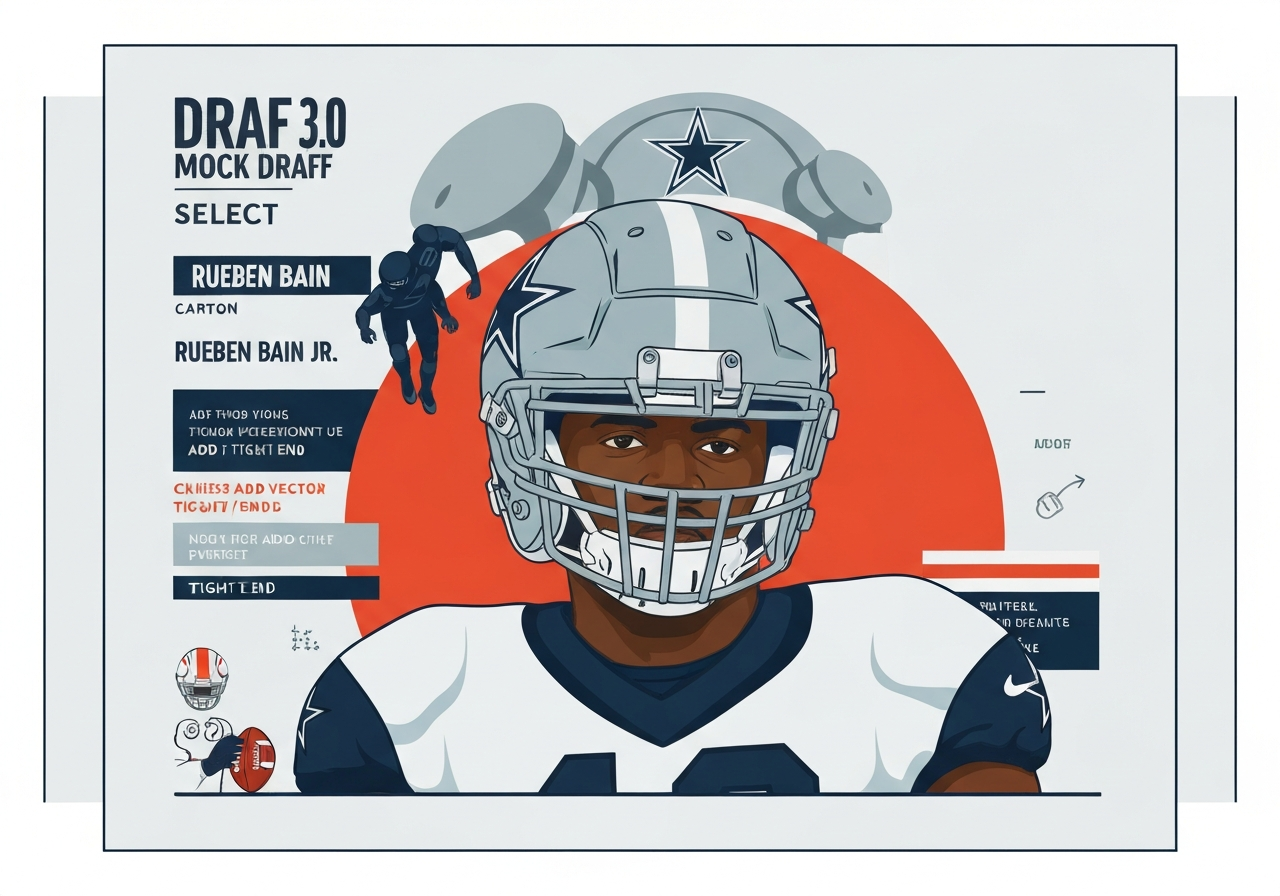
Lead: A month before the 2026 NFL Draft in Pittsburgh, Bucky Brooks releases his third full first-round projection after a frenetic free-agency period and a wave of trades reshaped team priorities. The updated mock shows the Dallas Cowboys selecting Rueben Bain Jr. in the first round and the Kansas City Chiefs adding a dynamic tight end late in Round 1. NFL Network and NFL+ will provide live draft coverage April 23–25, 2026 as teams finalize decisions and prospects prepare for draft week.
Key takeaways
- The mock revises first-round fits after major free-agent moves and trades; several teams targeted trench help and perimeter playmakers.
- Projected early rushers: a high-upside edge rusher is expected at No. 2 to boost pressure generation immediately.
- Dallas is forecast to add Rueben Bain Jr. in the mid-to-late first round to fortify the front seven and add a disruptive, veteran-style pass rusher.
- Kansas City is projected to take a pass-catching tight end at No. 29 to pair with Patrick Mahomes and extend the middle-field passing game despite Travis Kelce’s new three-year deal.
- Multiple teams pursue offensive-line reinforcements — several early picks favor tackles and interior blockers to protect young QBs.
- Medical histories and missed 2025 seasons (notably an ACL recovery) make a few top-10 gambles risk-reward decisions for contenders.
- Specialized prospects — slot receivers, center-field safeties and two-gapping defensive tackles — appear throughout the projected first round.
Background
The 2026 offseason was defined by two forces: a busy free-agent market that shuffled starting lineups and a set of trades that both answered and created roster needs. Teams that invested in veterans this spring are now balancing short-term contention with longer-term positional planning, leaving the draft as the primary mechanism to restock younger, controllable talent. Front offices are weighing immediate roster impact against developmental ceilings, particularly when deciding whether to draft day-one starters or scheme fits who need grooming.
Coaching philosophies and recent hires are shaping selections. Defensive-minded coordinators seeking more consistent pressure pushed some front offices to target explosive edge talent, while offensive staffs with young quarterbacks favored versatile playmakers who can expand route concepts. The draft class itself is deep at pass rusher and receiver, but contains several high-upside athletes with injury histories — creating strategic dilemmas for teams choosing inside the top 15 picks.
Main event
Brooks’ third mock projects a first round that blends immediate contributors and strategic gambles. Early selections lean toward defenders who can create turnovers and push the pocket; several teams that finished 2025 with weak pass-rush metrics are prioritized to add disruption. The mid-to-late first round fills out with offensive linemen, multi-purpose receivers and a handful of interior defensive players designed to complement established stars.
A headline swing in this projection is Dallas selecting Rueben Bain Jr., a rugged, high-effort edge who the mock pairs with the Cowboys’ defensive rebuild plans. Bain is presented as a disruptive player capable of playing with the physical nastiness that coaches value, and the pick signals Dallas’ intent to add more temperament and anchor play on early downs. Elsewhere, the Chiefs are forecast to use their late first-round choice on a tight end with length and explosive catching skills — an insurance-and-reload play that keeps Andy Reid’s offense flexible beyond Travis Kelce’s contract extension.
Other notable projections include a near-top selection of a dynamic pass rusher for the Jets, a potential running-back upgrade in Tennessee under Brian Daboll’s offense, and teams such as Cleveland and Miami prioritizing perimeter and line improvements after addressing holes during free agency. The mock emphasizes fit: several teams select players not strictly by board ranking but by how a prospect’s traits match coaching schemes and roster timelines.
Analysis & implications
Short-term, the picks that favor pass rushers aim to resolve pressure deficiencies that led to lost games in 2025. Adding a disruptive edge can change a defense’s pass-coverage approach, allowing second-level defenders to play more aggressively. For teams taking offensive linemen early, the priority is to protect quarterbacks entering critical contract-or-development years; investments in tackles and maulers reflect a broader league trend toward prioritizing offensive-line stability.
Mid- and long-term implications hinge on health and development. Selects who come with medical red flags represent high-variance decisions: if the player returns to pre-injury form, the reward is a franchise cornerstone; if not, the pick becomes a sunk cost that can cost playoff windows. Teams balancing veteran signings with rookie contracts may tilt towards immediate contributors, but several front offices remain willing to draft for upside at the expense of short-term output.
For the Chiefs, adding a receiving tight end at pick 29 preserves offensive schematic flexibility and prepares for succession planning at a premium position. For Dallas, the Bain Jr. selection (as projected) would accelerate a defensive identity shift toward a more physical, disruptive front. Across the board, the mock underscores how coaching preferences and contract timelines are the primary drivers behind several surprising fits.
| Pick | Player | Role (projection) |
|---|---|---|
| 2 | Bailey | Explosive pass rusher |
| 4 | Love | Offensive playmaker (running back) |
| 12 | Rueben Bain Jr. | Rugged edge disruptor |
| 20 | Hood | Perimeter playmaker / defender |
| 29 | Sadiq (TE) | Pass-catching tight end |
Context for the table: the listed roles are distilled from the mock’s descriptions and meant to show how teams are prioritizing traits (rush-up ability, receiving polish, blocking toughness) rather than presenting a definitive positional chart.
Reactions & quotes
“The board has moved significantly after free agency; several franchises now favor scheme fits and immediate impact players over pure best-player-available selections.”
Bucky Brooks / NFL.com (mock-draft analysis)
“Late-round additions of multi-use tight ends keep top passing concepts intact even as veteran pieces age — it’s succession planning in Reid’s offense.”
NFL draft analyst summary
“Teams that invested in veteran trenches this offseason still view the draft as essential to supplying younger, cost-controlled starters.”
Bucky Brooks / NFL.com
Unconfirmed
- Exact trade talks and draft-day swaps referenced in some league rumors remain unverified and could change draft-order outcomes.
- Several pre-draft medical updates are pending; the final health clearance for prospects with 2025 injuries has not been fully confirmed.
- Some team-internal preferences cited by anonymous sources have not been publicly confirmed by front office officials.
Bottom line
Brooks’ third mock draft reflects a league reshaped by an active free-agent period and targeted trades: teams are mixing immediate-help selections with strategic gambles. The projected Cowboys pick for Rueben Bain Jr. and the Chiefs’ decision to add a tight end late in Round 1 illustrate two common themes—succession planning for veteran-driven offenses and aggression in rebuilding defenses.
As draft weekend approaches April 23–25, 2026, teams will continue to refine boards based on pro day results, medical updates and final interviews. The mock offers a roadmap for potential outcomes and their roster implications, but draft-night trades and late medical reports could produce meaningful deviations from these projections.
Sources
- Bucky Brooks — NFL.com (media: mock-draft analysis)
- NFL Draft Coverage — NFL Network / NFL+ (official: draft coverage schedule)