
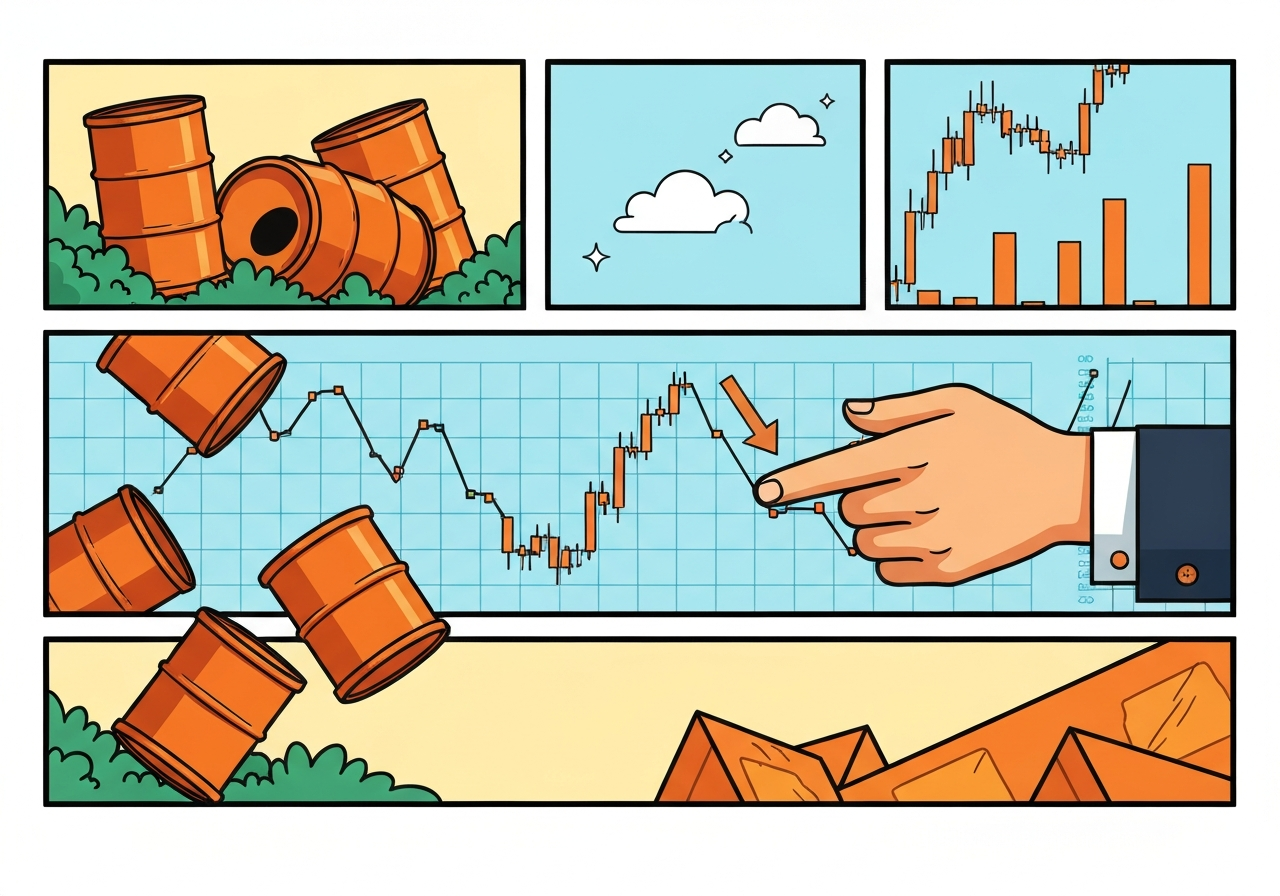
Lead: On March 24, 2026, global oil benchmarks fell and Asian stocks rallied after U.S. President Donald Trump signaled willingness to pursue talks with Iran and Washington circulated a 15‑point plan meant to end the Middle East war. That shift, along with an Iranian letter dated March 22 offering more permissive passage through the Strait of Hormuz for vessels not tied to the United States or Israel, helped ease some immediate market fears. The moves came amid a conflict that began on Feb. 28 and has heavily disrupted shipping and energy infrastructure, producing volatile trading across oil, equities and fuel markets.
Key Takeaways
- Brent crude traded near $97 per barrel on Wednesday, after settling at $104.49 on Tuesday (a roughly 4% rise on Tuesday before the reversal).
- West Texas Intermediate was about $90 per barrel on Wednesday, having closed at $92.35 on Tuesday (nearly 5% higher at Tuesday’s settlement).
- Shipping through the Strait of Hormuz—normally carrying up to one‑fifth of the world’s oil—has been effectively halted since the war began on Feb. 28.
- Asian equity moves: Japan’s Nikkei 225 jumped nearly 3%, South Korea’s Kospi rose 1.7%, and major Chinese indexes gained about 1% on Wednesday.
- S&P 500 futures were up roughly 0.6% as investors priced a softer geopolitical backdrop; the S&P 500 had fallen 0.3% on Tuesday after an earlier drop close to 1%.
- U.S. retail fuel costs climbed: national gasoline averaged $3.98 per gallon (up about 34% since Feb. 28) and diesel averaged $5.35 per gallon (up about 42% since the war began), according to AAA.
- Both Israel and Iran have carried out strikes on energy infrastructure, keeping risk of longer‑term supply damage on markets’ radar.
Background
The conflict that began on Feb. 28 disrupted Persian Gulf shipping and triggered a sharp repricing of energy risk. The Strait of Hormuz is a chokepoint linking the Persian Gulf to global markets; historically it transits roughly 20% of seaborne oil, making any disruption disproportionately important to global supply. Attacks attributed to both Iran and Israel have targeted pipelines, terminals and tanker traffic, amplifying concerns about persistent supply constraints and insurance costs for tanker operators.
For weeks, markets priced in a scenario of sustained higher crude and fuel prices, prompting consumers and businesses to brace for inflationary pressure. Policymakers, traders and shipping firms have monitored diplomatic channels closely because even tentative de‑escalation signals can reverse steep short‑term moves in commodity and equity markets. The U.S. administration’s reported 15‑point plan and subsequent comments from President Trump come against that backdrop of high sensitivity to any diplomatic developments.
Main Event
On March 24, investors reacted to two linked developments: public comments by President Trump suggesting that negotiations were underway, and an Iranian communication to the United Nations’ shipping agency dated March 22 offering to allow passage for ships not associated with the United States or Israel through the Strait of Hormuz. Market participants interpreted those signals as reducing the immediate risk of prolonged full closure of the strait.
Prices that had climbed earlier in the week reversed course as oil traders balanced the reduced odds of a total export shutdown against lingering physical damage to infrastructure. Brent fell toward $97 per barrel on Wednesday after Tuesday’s settlement at $104.49. WTI eased to about $90 after closing at $92.35 on Tuesday. Traders cited both the diplomatic messages and intraday position flattening by speculators.
Equities in Asia moved higher the same day: the Nikkei 225 rose nearly 3%, the Kospi increased 1.7%, and major Chinese stocks were up about 1%. S&P 500 futures rose roughly 0.6%, reflecting U.S. investors’ response to a perceived dampening of global geopolitical risk. Still, cash markets and logistics remained fragile because physical shipping volumes have not yet normalized and insurance premiums for Gulf transits remain elevated.
Analysis & Implications
Short term, markets are treating the diplomatic gestures as de‑risking events that can trigger rapid reversals in direction. Oil is particularly sensitive to shifts in perceived access to the Strait of Hormuz: even if Iran’s letter permits some vessels, insurers, shipowners and charterers will take time to rebuild confidence. That lag means volatility is likely to persist even if further diplomatic progress follows.
Medium‑term energy fundamentals depend on the extent of physical damage to pipelines, terminals and offshore facilities. Attacks by both Iran and Israel have raised the possibility of prolonged reduction in effective capacity; repairing or replacing damaged assets will take time and capital, which can keep upward pressure on prices intermittently. Refining and distribution bottlenecks could sustain higher gasoline and diesel prices even if crude softens.
For global financial markets, a lower immediate tail‑risk from a full Hormuz closure reduces a major geopolitical premium. That tends to boost risk assets—equities, EM credits and currencies tied to trade—while weighing on traditional safe havens. However, intermittent attacks and asymmetric retaliation cycles mean investors must balance short windows of calm against recurring flare‑ups, keeping volatility and hedging demand structurally higher than pre‑conflict norms.
Comparison & Data
| Metric | Pre‑war (late Feb) | Tuesday close (Mar 24) | Wednesday level (Mar 25) |
|---|---|---|---|
| Brent crude ($/b) | ~$78 | $104.49 | ~$97 |
| WTI crude ($/b) | ~$70 | $92.35 | ~$90 |
| U.S. gas (national avg) | ~$2.97/gal | $3.98/gal | $3.98/gal |
| Diesel (U.S. avg) | ~$3.77/gal | $5.35/gal | $5.35/gal |
The table contrasts approximate pre‑war levels with the Tuesday settlement and the softer prices seen the following day. Pre‑war benchmark values are rounded estimates; the key takeaway is the size of the move—Brent rose more than 30% and WTI roughly 30% from late February to the March 24 peak, while gasoline and diesel posted larger percentage gains at the pump due to refining and distribution stress.
Reactions & Quotes
“Negotiations to end the war are taking place,”
President Donald Trump (public comments)
President Trump’s remark was widely reported and interpreted by traders as a sign that Washington is pursuing a diplomatic route to reduce hostilities; the White House also circulated a 15‑point plan, according to reporting.
“Willing to let ships not tied to the United States or Israel pass,”
Iran (letter to IMO, dated March 22)
The Iran letter to the U.N. maritime agency was circulated on March 22; markets treated the language as a partial opening, though it excludes vessels associated with the two main antagonists, leaving practical barriers to full normalization.
“Insurers and shipowners will not instantly reverse higher premiums; operational risk remains,”
Maritime risk analyst (industry comment)
Industry sources emphasized that insurance and commercial caution are likely to keep shipping costs elevated until maritime operators see consistent safe transits over weeks.
Unconfirmed
- Whether Iran’s offer in the March 22 letter reflects a durable change in operational practice rather than a temporary or conditional concession remains unclear.
- The full contents and fate of the U.S. 15‑point plan circulated by Washington have not been made public and its acceptance by Tehran is not confirmed.
- Reports of immediate reopening of commercial traffic through the Strait of Hormuz have not been corroborated by independent shipping‑traffic data as of the March 25 update.
Bottom Line
Markets responded to diplomatic signals on March 24–25, 2026, with crude and equities moving in directions consistent with reduced near‑term tail risk. However, structural vulnerabilities created by attacks on energy infrastructure and high insurance costs mean volatility is unlikely to disappear quickly. Traders should expect price whipsaws tied to episodic escalation or progress in diplomacy.
For policymakers and businesses, the episode underscores the value of parallel efforts: diplomatic channels to reduce active hostilities and contingency planning in supply chains and fuel logistics to manage lingering physical and commercial disruptions. Monitoring verified shipping data, insurance filings and official statements will be essential to distinguish transient dips from durable risk reductions.
Sources
- The New York Times (news report summarizing U.S. statements and Iranian letter)
- AAA — Gas Prices (industry/consumer data on national gasoline and diesel averages)
- International Maritime Organization (IMO) (U.N. agency for maritime safety and the recipient of Iran’s March 22 letter)