
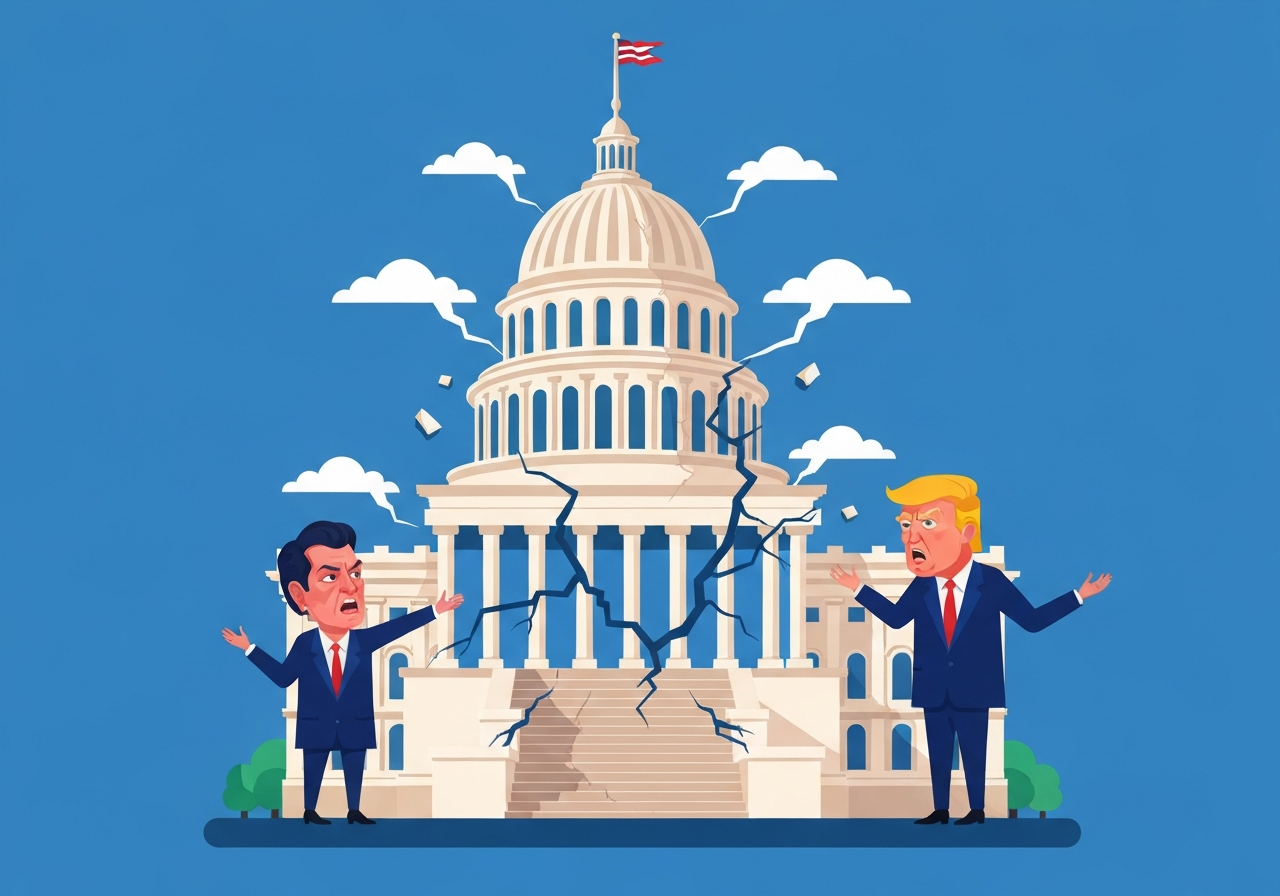
Lead: Lawmakers in Washington unveiled a tentative plan this week intended to fund large portions of the Department of Homeland Security after funding lapsed in mid-February, as travelers face long lines at airports and federal workers remain unpaid. Senate Republicans say the proposal would finance most DHS operations while excluding ICE’s enforcement and removal operations; President Trump and Senate Democrats have not endorsed the framework. The shutdown has entered its 40th day, and agency leaders warn of rising operational gaps and staff losses. Negotiations continue amid demands for reforms, spending rules and an unrelated elections overhaul.
Key takeaways
- The DHS funding lapse began in mid-February and the partial-funding plan emerged after weeks of stalled talks.
- The shutdown has lasted 40 days, leaving TSA, disaster response and cybersecurity personnel working without pay.
- TSA absences exceed 40% at some airports, and more than 480 officers have resigned during the shutdown, according to agency testimony.
- Senate Republicans propose excluding ICE enforcement and removal operations from the package but including measures like officer-worn body cameras and reduced detention-bed capacity.
- Most Senate Democrats refuse to fund ICE enforcement without broader reforms, including warrants for certain entries and limits on face coverings for agents.
- President Trump is withholding support for any deal that does not include provisions from the SAVE America Act, an elections overhaul he favors.
- Republicans are exploring a second reconciliation vehicle to fund ICE separately and advance parts of the elections bill without Democratic votes, but procedural and parliamentary hurdles remain.
Background
Funding for the Department of Homeland Security expired in mid-February amid Republican frustration with the agency’s immigration enforcement and Democrats’ insistence on policy changes. DHS oversees border security, immigration enforcement, aviation security, disaster response and cybersecurity—functions that lawmakers say are now strained. The partisan impasse intensified after two fatal shootings in Minneapolis earlier this year, which sharpened Democratic demands for restrictions on ICE tactics and oversight.
Republicans initially insisted on a single package to fund the entire department; more recently GOP leaders proposed a split approach that would fund most DHS operations while funding ICE enforcement separately. That pivot reflects pressure from some conservatives who want additional priorities, including an elections bill championed by President Trump. Democrats argue piecemeal funding without major ICE reforms would reward practices they see as harmful and inadequate to protect civil liberties.
Main event
On Tuesday Senate Republican leadership previewed a plan to finance the bulk of DHS activity while excluding Immigration and Customs Enforcement’s enforcement and removal operations. GOP senators say the package would incorporate reforms Democrats previously negotiated, such as body-worn cameras for officers and limits on detention-center bed capacity—elements that were in a House-passed bill that stalled in the Senate.
Senate Minority Leader Chuck Schumer and other top Democrats said the Republicans’ latest offer omitted several previously discussed protections, including requirements for judicial warrants for certain home and business entries by immigration agents and a prohibition on face coverings for officers. Democrats sent a counteroffer to the White House after describing the GOP offer as lacking key commitments.
President Trump declined to publicly back the framework, saying this week he was not satisfied with the deals being sketched. Trump continues to press for enactment of the SAVE America Act, a wide-ranging elections bill that would impose voter ID and proof-of-citizenship requirements—measures Democrats say would disenfranchise many eligible voters.
Some Republicans propose using a second budget reconciliation measure to advance ICE funding and parts of the elections bill without Democratic support. That strategy requires a clear budgetary effect for each provision and would be subject to rulings by the Senate parliamentarian. Several GOP senators, including skeptics of reconciliation for the elections bill, signaled procedural doubts even as others moved forward.
Analysis & implications
The partial-funding approach aims to limit harm to critical DHS functions—airport security, disaster response and cybersecurity—while postponing the most politically divisive ICE elements. If enacted, funding most DHS operations could ease immediate operational strain and reduce long passenger waits at airports; however, it would leave unresolved the contentious questions surrounding immigration enforcement practices and oversight.
Politically, the split package reflects competing pressures inside the Republican coalition: some members want to satisfy Trump’s priorities, while others seek to avert the political cost of extended airport disruptions and unpaid federal workers. For Democrats, refusing to fund ICE enforcement without sweeping reforms plays to their base on civil-rights and immigration-control issues but risks being perceived as obstructing relief for TSA and other frontline employees.
Using reconciliation to combine ICE funding with elements of the SAVE America Act would be unprecedented and legally delicate. The parliamentarian typically enforces strict rules about whether provisions have sufficient budgetary effect; many elements of an elections bill are policy changes with limited direct budgetary impact, making them vulnerable to being ruled out of order.
On the ground, continued absence of a deal could deepen operational risks: longer TSA lines, greater staff turnover, and strain on disaster and cybersecurity capacities. That practical pressure may shorten political timelines if voters and local officials press senators to resolve the stalemate quickly.
Comparison & data
| Metric | Current shutdown | Recent record |
|---|---|---|
| Length (days) | 40 | Previous longest shutdown: 35 (example) |
| TSA reported absences | Over 40% at some airports | Typical pre-shutdown: single-digit percentage |
| Officers resigned during shutdown | More than 480 | Normal monthly resignations: lower |
The table places the current operational indicators in context: a 40-day funding lapse coincides with atypically high TSA absences and elevated resignations. Comparing these figures to baseline months underscores the operational severity. Data reported at a congressional hearing point to immediate risks for airport throughput and homeland operations if funding remains unresolved.
Reactions & quotes
Agency leaders and lawmakers voiced urgency during congressional hearings and on the Senate floor.
“We are really concerned about our security posture and what the long term impacts of this shutdown is going to have on the workforce and our ability to carry out this mission.”
Ha Nguyen McNeil, Acting TSA Administrator
McNeil testified to lawmakers that airports are experiencing the “highest wait times in history” and that absences top 40% at some locations, stressing the operational consequences of the funding lapse.
“I think any deal they make, I’m pretty much not happy with it.”
President Donald J. Trump
The president signaled skepticism of the emerging compromise, reiterating his demand that legislation include components of the SAVE America Act—complicating prospects for bipartisan agreement.
“We thought there had been some progress, but then Republicans sent us their offer yesterday, and it contained nothing that had been talked about.”
Senate Minority Leader Chuck Schumer
Schumer said Democrats have returned a counteroffer to the White House and emphasized that many Democratic demands remain unmet in the GOP proposal.
Unconfirmed
- Whether the Senate parliamentarian will approve specific SAVE Act provisions for inclusion in a reconciliation package remains unconfirmed and will depend on technical budgetary rulings.
- Whether a second reconciliation bill can be completed and enacted on the timeline some GOP senators have proposed is uncertain and would hinge on internal GOP unity and procedural rulings.
Bottom line
The emerging GOP plan to fund most of DHS while carving out ICE enforcement aims to balance operational urgency against political fissures over immigration policy. It could restore pay and reduce disruptions for many DHS functions but leaves the most contentious enforcement questions unresolved, keeping the broader dispute alive.
Two decisive constraints will shape the outcome: Democratic insistence on substantive ICE reforms and President Trump’s insistence on incorporating his preferred elections bill. If neither side yields, operational strains at airports and other DHS missions are likely to continue, increasing pressure for a stopgap or negotiated solution in the coming days.
Sources
- NPR — (news report)
- Department of Homeland Security — (official agency site; hearing testimony and statements)
- United States Senate — (official statements and press releases)