
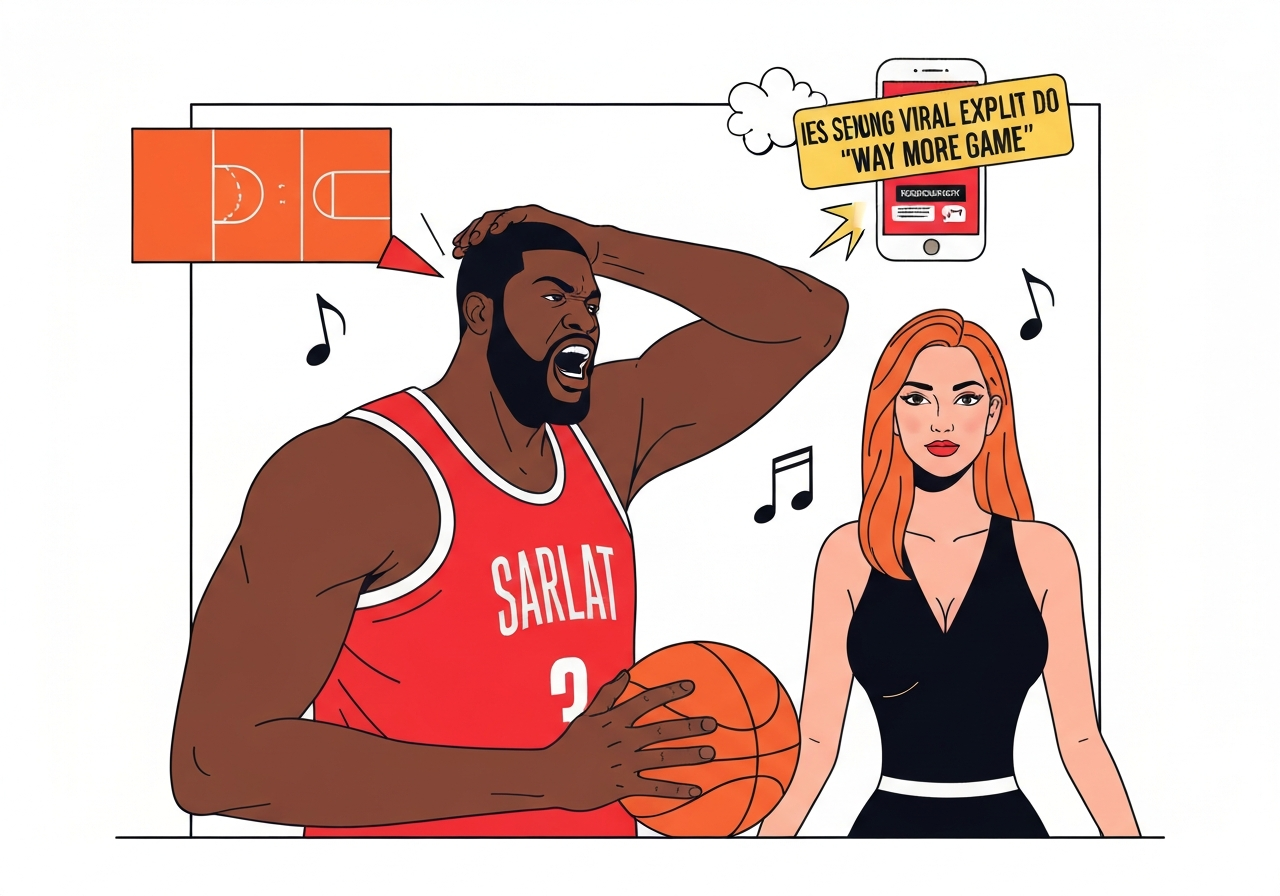
Lead: Shaquille O’Neal has publicly denied responsibility for a set of sexually explicit direct messages that circulated online and were linked to singer Sabrina Carpenter. On The Big Podcast with Shaq, O’Neal disputed the authenticity of the messages, read them aloud and used humor to insist they were not his, saying he has “way more game” than the texts suggested. Co-hosts and O’Neal proposed the messages could be AI-generated or sent from an impersonator account. The exchange underscored wider concerns about online impersonation and how quickly content can spread.
Key Takeaways
- Shaquille O’Neal denied sending the explicit DMs attributed to him during an appearance on The Big Podcast with Shaq on the episode that followed the viral posts.
- O’Neal read the messages on-air and responded with the remark, “The Diesel got way more game than that,” to emphasize his rejection of the texts’ authorship.
- Podcast co-hosts suggested the messages may have been generated by AI or posted from a fake account using O’Neal’s profile image, but no technical attribution has been confirmed.
- The alleged messages targeted pop singer Sabrina Carpenter and circulated widely across social platforms, prompting public attention and debate.
- O’Neal and his team have not provided forensic proof linking the messages to a specific device or account owner as of the podcast conversation.
- The incident highlights how accessible generative tools and impersonation tactics have become, raising risks for high-profile figures and the people mentioned in viral content.
Background
Shaquille O’Neal is a retired NBA superstar turned media personality with a long history of public attention around his private life, including past high-profile relationships and admissions of infidelity during his playing career. Sabrina Carpenter is an internationally known singer and actress with a large, engaged fanbase; any association between a celebrity of O’Neal’s stature and a young pop star draws immediate scrutiny. Social platforms have increasingly become vectors for both genuine exchanges and fabricated content, including deepfakes and AI-generated text, complicating simple judgments about authenticity.
In recent years, several public figures have seen fabricated messages and likenesses attributed to them, prompting platforms and security researchers to develop new detection tools while legal and reputational responses lag behind. For prominent personalities, an unverified viral post can trigger immediate backlash, media cycles and calls for investigations even before provenance is established. That context shaped reactions when explicit DMs linked to O’Neal surfaced and spread across social feeds.
Main Event
The controversy began when a set of sexually explicit direct messages purportedly from O’Neal to Sabrina Carpenter were shared online and gained traction. The messages were described as lewd in tone and were circulating on multiple social platforms. Rather than issue a brief denial, O’Neal addressed the matter at length on his own show, choosing to read the texts aloud and invite commentary from his co-hosts. His public handling turned the spotlight onto authenticity rather than simply the content.
On the podcast, O’Neal delivered a lighthearted rebuttal while making a clear denial. He said the messages did not reflect how he would write or speak, adding that the persona in the texts did not match him. Co-hosts examined stylistic elements and the context in which the posts appeared, noting discrepancies that led them to suspect forgery. They also pointed to the possibility of a fake social account using O’Neal’s existing profile image, though that observation alone does not establish who posted the messages.
The hosts floated the theory that artificial intelligence tools could have produced the messages, a scenario that would allow bad actors to fabricate intimate-sounding exchanges quickly. Listeners and social-media users responded with a mix of disbelief, support for O’Neal’s denial, and concern for the broader implications of AI-enabled impersonation. No forensic report confirming the origin of the messages was made public during or immediately after the podcast segment.
Analysis & Implications
The episode illustrates three intersecting trends: celebrity vulnerability to online impersonation, the speed at which unverified claims circulate, and the increasing sophistication of generative technologies. For public figures, even a brief association with sensational content can produce reputational harms; timely denials can blunt immediate fallout, but they rarely remove the content from the public record. O’Neal’s decision to address the matter publicly and with humor was a reputation-management choice that sought to reframe the narrative quickly.
From a platform and policy perspective, the incident reinforces the challenge of attribution. Determining whether content is authentic, the product of an impersonator, or AI-generated typically requires access to metadata, platform records and, in some cases, cooperation from service providers. Without that technical evidence, public debate is often shaped more by tone and social signals than by conclusive proof. That uncertainty can leave targets of fabrications in a defensive posture, even when denials are loud and credible.
There are also legal and commercial implications. If a message is proven to be fabricated by a third party, affected individuals may pursue takedowns, civil claims or criminal referrals depending on jurisdiction and the facts. Meanwhile, media literacy among audiences becomes a mitigation factor: when consumers demand verification and platforms enforce clearer provenance standards, incentives for casual impersonation decline. For now, however, rapid content spread and accessible generative tools mean such incidents will likely continue.
Comparison & Data
| Feature | Reported Item | Verified Evidence |
|---|---|---|
| Message content | Sexually explicit texts shared online | Publicly visible posts; authorship unverified |
| Account appearance | Profile image matched O’Neal’s public X photo | Visual match noted; does not prove ownership |
| Attribution theory | AI generation or fake account posited | No forensic confirmation released |
The table summarizes public-facing signals versus what has been technically established. Visual similarity of an account image and the presence of provocative text are observable facts; however, they are not substitutes for metadata, platform logs or forensic analysis that would confirm who authored or posted the messages.
Reactions & Quotes
O’Neal framed his denial with humor while making a firm rejection of authorship. He said on the podcast that the messages did not represent him and quipped about his alleged style.
“First of all, ladies, the Diesel got way more game than that. I’m just saying.”
Shaquille O’Neal, on The Big Podcast with Shaq
Co-host responses focused on plausibility and the mechanics of online forgery rather than endorsing the messages as authentic.
Co-hosts suggested the tone and format didn’t match O’Neal and raised the possibility of AI generation or an impersonator using his image.
Podcast co-hosts, The Big Podcast with Shaq (paraphrased)
Public reaction ranged from supportive to skeptical, with many commentators using the episode to highlight risks of believing viral content without verification.
Unconfirmed
- No public forensic evidence has been released proving the messages were created by AI or by a particular impersonator account.
- There is no verified chain-of-custody showing the messages originated from a device or account controlled by a named individual.
- Reports that the account used O’Neal’s exact X profile photo do not, by themselves, establish who operated the account.
Bottom Line
This episode reflects how public figures can rapidly become entangled in online controversies driven by unverified content. Shaquille O’Neal denied sending the explicit DMs and used his platform to contest both the messages and their tone, while co-hosts and observers proposed AI or impersonation as plausible explanations without presenting forensic proof. The swift spread of the posts and the absence of technical attribution leave the matter unresolved in the public record.
For readers, the event is a reminder to treat viral claims with skepticism and to await verification from platforms or technical investigators. For public figures and platforms, it underscores an urgent need for clearer provenance tools, faster investigative cooperation and better public literacy about how digital forgeries are made and circulated.
Sources
- Yahoo Entertainment (media report summarizing the podcast and reactions)
- Shaquille O’Neal’s official X account (official social account used for public presence)