
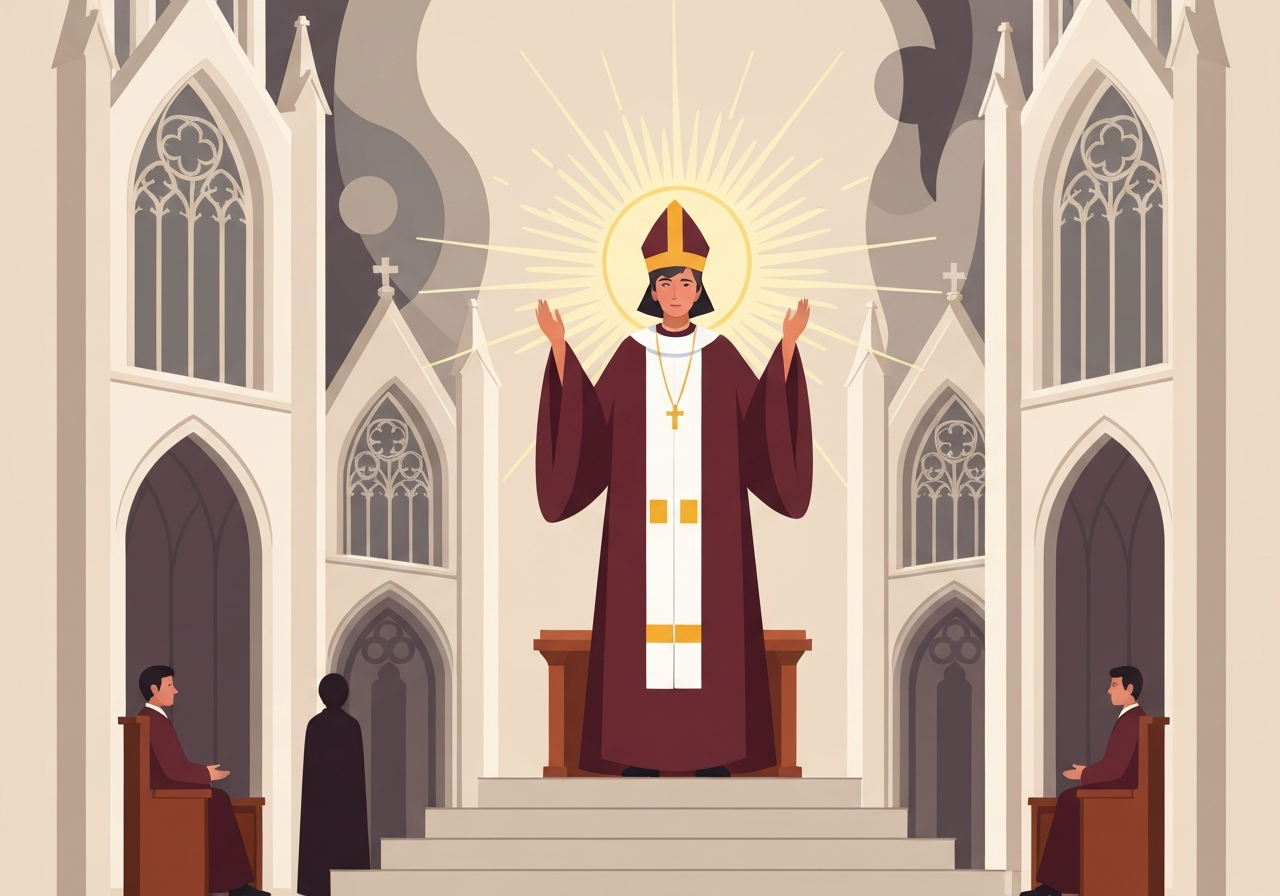
On 25 March 2026, Sarah Mullally was formally installed as the archbishop of Canterbury at Canterbury Cathedral, marking the ceremonial start of her public ministry as the first woman to lead the Church of England. The 63-year-old, a former National Health Service nurse, took the 13th-century Chair of St Augustine before about 2,000 invited guests, including the Prince and Princess of Wales and Prime Minister Keir Starmer. Although she assumed the office legally in January 2026, the enthronement service on the Feast of the Annunciation signalled the symbolic beginning of her role as spiritual head of the global Anglican Communion. The event combined historic ritual with gestures aimed at reconciliation, while underscoring division within the worldwide Anglican family.
Key Takeaways
- Mullally was enthroned on 25 March 2026 at Canterbury Cathedral in a ceremony attended by roughly 2,000 guests, including Prince William and Catherine, Princess of Wales, and Prime Minister Keir Starmer.
- She will serve as symbolic spiritual head of the Anglican Communion, a global body with about 85 million members across multiple provinces.
- The Church of England ordained its first female priests in 1994 and consecrated its first female bishop in 2015; Mullally is the first woman to hold Canterbury’s archbishopric in 2026.
- She legally became archbishop in January 2026; the enthronement is the liturgical inauguration of her public ministry.
- Mullally referenced the church’s recent safeguarding failures—one of which led to Justin Welby’s resignation in 2024—and pledged commitment to truth, justice and action.
- Conservative provinces that oppose women’s leadership and same-sex blessings, notably represented by GAFCON, criticised her appointment but opted this month to create a new council rather than install a rival archbishop.
- Symbolic gestures at the service included a cope clasp modelled on an NHS belt and a ring once given to Michael Ramsey by Pope Paul VI in 1966, signalling ecumenical rapprochement.
Background
The archbishop of Canterbury is traditionally the symbolic head of the Anglican Communion, a role that evolved after the Church of England’s break with Rome in the 16th century. Over the past three decades the church has progressively opened ordained ministry to women: female priests were ordained beginning in 1994 and the first female bishop was consecrated in 2015. Those milestones set the stage for a longer debate about leadership and identity across Anglican provinces, many of which developed independently during and after the British Empire’s missionary era.
At the same time, the Communion has been strained by disagreements over human sexuality and ecclesial authority. A conservative grouping, the Global Anglican Future Conference (GAFCON), and several provinces in Africa and Asia oppose moves toward same-sex blessings and women’s leadership. Recent governance discussions—such as proposals at the Anglican Consultative Council—have sought to balance representation without creating a permanent rival centre of power to Canterbury. Safeguarding failures within the Church of England, culminating in the resignation of Justin Welby in 2024, have also focused attention on institutional reform and accountability.
Main Event
The enthronement took place on the Feast of the Annunciation, a liturgical moment chosen for its themes of calling and obedience. Mullally processed to the 13th-century Chair of St Augustine, the symbolic seat used by archbishops, and knocked on the cathedral’s west door as part of a solemn entrance rite. The service included readings and prayers in several languages, including Urdu, and congregation members from different church traditions were present, reflecting the Communion’s global reach.
Dressed in a golden mitre and wearing a cope clasp inspired by the NHS belt she wore in her nursing career, Mullally made several notable gestures. She accepted a ring once presented to former archbishop Michael Ramsey by Pope Paul VI in 1966—a sign of warming Anglican–Catholic relations—and prayed for peace in theatres of war cited during the service, including parts of the Middle East, Ukraine, Sudan and Myanmar. In her inaugural remarks she offered a concise commitment to ministry, using the classic biblical language of availability to the vocation.
The ceremony was attended by senior political and royal figures as well as religious leaders from a range of Anglican provinces. Bishop Philip Mounstephen officiated at the diocesan enthronement within the service, and multiple church leaders framed the moment as both historic and pastoral. At the same time, organisers and commentators acknowledged the ongoing fractures within the Communion, a reality reflected by some provinces’ separate governance plans announced this month.
Analysis & Implications
Mullally’s installation is primarily ceremonial in terms of formal power: the archbishop of Canterbury exercises moral authority and convening influence rather than hierarchical control, unlike the papacy. That symbolic authority still matters, however, because it shapes global Anglican conversation and diplomatic relationships among provinces. Her background in nursing and long service within the Church of England may help foreground pastoral care and safeguarding reforms at a time when institutional trust has been tested.
The immediate institutional challenge is managing relationships with provinces that remain opposed to women’s leadership and same-sex blessings. This month’s move by parts of the conservative bloc to establish a new council instead of appointing a rival archbishop reduces the risk of a formal schism, but it institutionalises distance and creates a parallel forum for decision-making. Canterbury’s capacity to convene and persuade will be tested as provinces weigh whether to engage with the archbishop’s initiatives or pursue alternative structures.
Internationally, Mullally’s enthronement may alter ecumenical dynamics. The use of Michael Ramsey’s ring given by Pope Paul VI is a deliberate symbol of rapprochement with the Roman Catholic Church and signals continuity in ecumenical outreach. Yet any progress will be incremental: differences over authority, liturgy and doctrine remain substantial, and diplomatic gestures at enthronement services do not immediately resolve theological tensions.
Comparison & Data
| Milestone | Year / Number |
|---|---|
| First women ordained as priests in Church of England | 1994 |
| First female bishop in Church of England | 2015 |
| Sarah Mullally enthroned as archbishop of Canterbury | 25 March 2026 |
| Estimated Anglican Communion membership | ~85 million |
The table highlights the pace of change within the Church of England: three decades from the first female priests to the first female archbishop. The Communion’s membership of around 85 million spans provinces with very different theological positions and social contexts, which helps explain why a single symbolic leader has limited coercive power but substantial influence over conversation and norms.
Reactions & Quotes
Church leaders and commentators offered a mix of welcome and caution. Bishop Philip Mounstephen described the occasion as historically significant while noting the pastoral work ahead to hold the Communion together. That response captured both the ceremonial importance and the practical challenges Mullally inherits.
“It does signal a huge change that has taken place in the life of the Church,”
Bishop Philip Mounstephen (quoted to Reuters)
Mullally’s own inaugural remarks framed her ministry in pastoral and spiritual terms, acknowledging past failures and the need for truth and justice. Her words aimed to reassure congregations and victims of abuse alike that reform and compassion would be priorities.
“Here I am,”
Sarah Mullally (inaugural sermon)
Commentators from conservative provinces reiterated long-standing theological objections, while some observers pointed to the new council formation as a structural attempt to formalise differences without immediate rupture. Royal and political attendance underlined the event’s national significance within Britain’s public life.
Unconfirmed
- Long-term effects of the new conservative council remain uncertain: it is unclear whether it will evolve into a permanent parallel authority or remain a consultative body.
- There is no definitive evidence yet that Mullally’s enthronement will change voting stances or doctrinal positions in conservative provinces; such shifts, if they occur, would take years.
- Predictions that the ring from 1966 will materially alter Anglican–Catholic relations are speculative; ecumenical progress will depend on sustained dialogue beyond symbolic gestures.
Bottom Line
Sarah Mullally’s enthronement on 25 March 2026 represents a historic milestone for the Church of England and a symbolic moment for the wider Anglican Communion. The ceremony combined personal symbolism—linking her nursing past and ecumenical tokens—with a clear attempt to address institutional failures and to call for pastoral renewal.
Yet the event also foregrounds enduring tensions: theological disputes and governance disagreements will test Canterbury’s persuasive capacity in the months and years ahead. Mullally inherits a role with deep ceremonial weight but limited structural authority; her effectiveness will hinge on coalition-building, the pace of safeguarding reforms and the willingness of provinces to engage with shared frameworks for mission and oversight.