
Lead
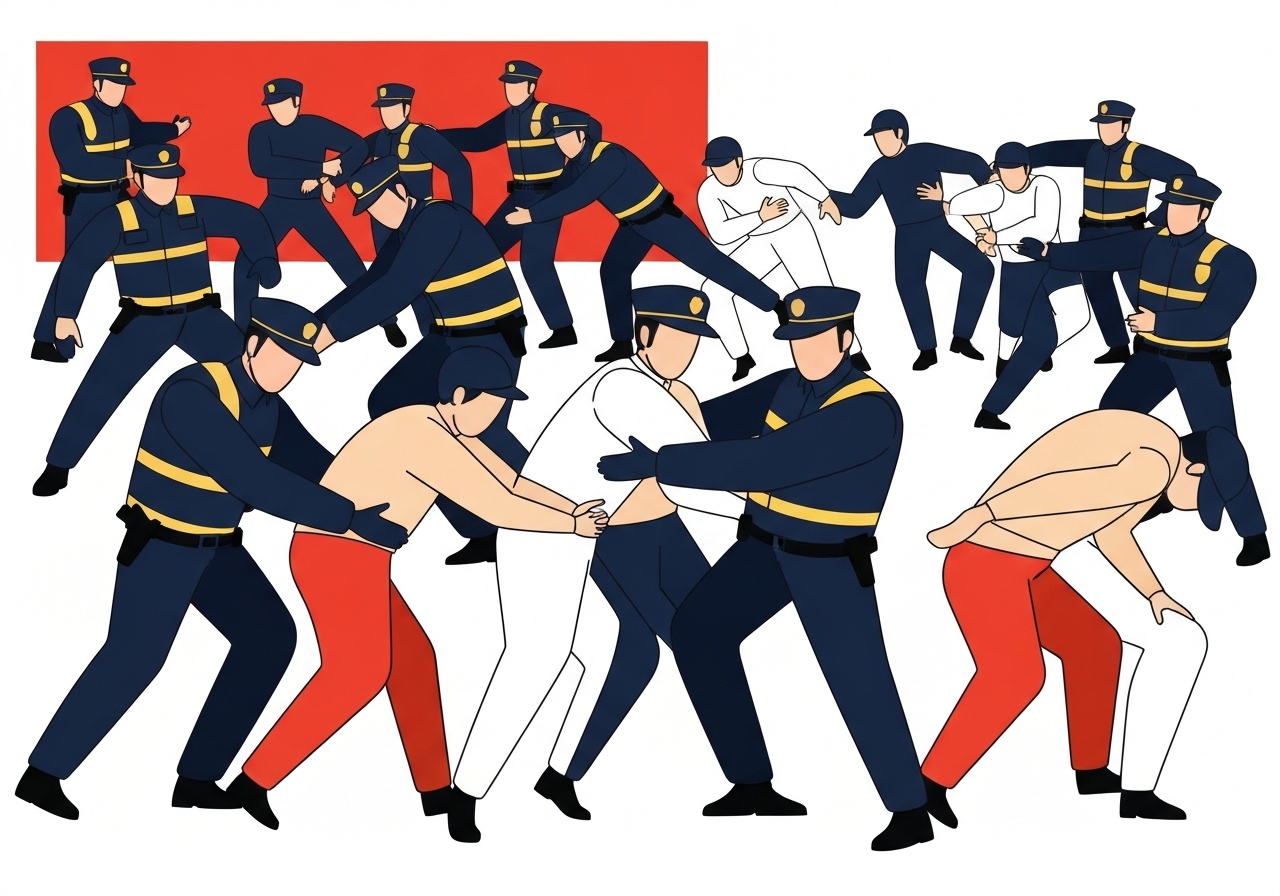
On Wednesday, more than 200 people were arrested across France as a leaderless “Block Everything” protest movement tried to paralyse transport and daily life, two days after Prime Minister François Bayrou’s government collapsed. Authorities deployed roughly 80,000 police officers and gendarmes to respond to fires, barricades and attempts to block Paris’ ring road and major transport hubs. The prefecture reported 95 arrests in the Paris area and eight outside the capital by mid-morning, while police used teargas in spots including Gare du Nord. The demonstrations followed a rapid cabinet change and widespread anger over planned austerity measures, including cuts that protesters say will hit culture and health services.
Key Takeaways
- More than 200 people were arrested nationwide on Wednesday amid coordinated disruption attempts, with 95 arrests recorded in the Paris area and eight outside Paris by mid-morning.
- Authorities mobilised about 80,000 police officers and gendarmes to secure roads, stations and public spaces, an unusually large deployment for domestic unrest.
- Protesters targeted the Paris ring road (Europe’s busiest urban motorway), Gare du Nord and tram lines, lighting fires and erecting barricades that briefly impeded traffic and travellers.
- The movement intensified two days after Prime Minister François Bayrou’s government collapsed; President Emmanuel Macron appointed Sébastien Lecornu as the new prime minister.
- Two major unions, CGT and SUD, endorsed Wednesday’s actions and broader strike plans are set for 18 September.
- An Ipsos poll cited by authorities showed 46% public support for the movement, including backing from voters across the political spectrum.
- Healthcare unions warn that cuts to medical reimbursements could force as many as 6,000 of France’s 20,000 pharmacies to close.
- Outgoing Interior Minister Bruno Retailleau warned that authorities would not tolerate road blockades as an interministerial crisis unit convened.
Background
The protests stem from deepening public frustration over inflation, austerity proposals and perceived detachment of political elites. Bayrou’s government fell after proposing contested measures — including removing two bank holidays — intended to reduce the public deficit; those elements sparked broad popular anger. The policy debate has come to a head amid wider concerns about the cost of living, cuts to cultural funding and planned reductions in medical reimbursements that unions say threaten local services.
“Block Everything” is a loosely organised, leaderless movement that gained visibility this summer, partly through social media and Telegram channels rather than traditional union structures. Its tactics echo previous mass actions in France, such as the 2018 Yellow Vests, but organisers say they deliberately avoid centralised leadership to frustrate straightforward negotiation or pre-emptive policing. Two major unions — CGT and SUD — later signalled support for Wednesday’s actions and helped channel wider labour discontent into planned national strike dates.
Main Event
Demonstrators arrived at multiple hotspots across the country early Wednesday, erecting barricades from rubbish bins and cycling lanes and lighting fires at key choke points. In eastern Paris at Porte de Montreuil, protestors set bins alight and attempted to block tram tracks before police dismantled the obstructions. At several points groups briefly attempted to surge onto the Paris ring road; law enforcement intercepted those movements to keep motorway traffic flowing.
At Gare du Nord, a few hundred people assembled by mid-morning, chanting slogans calling for President Macron to step down. Police closed station access and used teargas to repel attempts to force entry, while travellers reported confusion and delays as services were disrupted. Authorities said some bystanders and passengers were caught up in the scenes but did not provide immediate aggregate casualty figures.
Across other cities, protesters used social channels to coordinate temporary blockages of logistics routes and local municipal offices. Several local business owners and residents expressed sympathy for the protesters’ grievances but criticised tactics that damaged property or disrupted essential services. Authorities emphasised a dual approach of targeted arrests for those creating violent obstruction and broader efforts to maintain passage on major national transport arteries.
Analysis & Implications
The size of the police deployment — about 80,000 officers — reflects French authorities’ assessment of a high risk that disruptive tactics could spread and cause sustained paralysis in key urban areas. That heavy presence may deter prolonged blockades but also risks amplifying tensions if perceived as an overreaction, a dilemma French administrations have faced in prior mass mobilisations. The government’s capacity to balance public order with the right to protest will shape immediate political fallout.
Politically, the protests expose vulnerabilities for President Macron’s administration following François Bayrou’s government collapse. The appointment of Sébastien Lecornu as prime minister seeks rapid stabilisation, but market and public confidence depends on whether the new cabinet can devise measures that curb the deficit without triggering further street opposition. The movement’s cross-ideological support, signalled by the Ipsos 46% backing figure, complicates simple electoral calculations and suggests the unrest could persist beyond single protest days.
Economically, targeted disruptions to transport and retail, if sustained, could increase short-term costs for logistics and tourism, and intensify investor concern about policy uncertainty. The warning from healthcare unions that up to 6,000 pharmacies may close if reimbursement cuts proceed would have measurable implications for local care access, particularly in rural and underserved urban districts. Policymakers face trade-offs between fiscal consolidation and safeguarding essential public services that underpin daily life.
Comparison & Data
| Metric | Wednesday | Context |
|---|---|---|
| Arrests (national) | More than 200 | 95 in Paris area; 8 outside Paris by mid-morning |
| Police deployed | Approx. 80,000 | National mobilisation of police and gendarmes |
| Pharmacies at risk | 6,000 of 20,000 | Unions warn closures if reimbursement cuts proceed |
| Public support (Ipsos) | 46% | Mixed across left and far-right voters |
The table summarises the most-cited numbers from official statements, unions and polling. Arrest totals are provisional and expected to be updated as prefectures consolidate reports. The difference between large police numbers and relatively lower arrest counts indicates many security operations were preventative or focused on dispersal rather than mass detention.
Reactions & Quotes
Officials framed the demonstrations as a test of order while many participants framed actions as a last resort after perceived political inattention.
“No blockade will be tolerated.”
Bruno Retailleau, outgoing Interior Minister (official warning)
Retailleau’s statement accompanied the convening of an interministerial crisis unit at 9 am, signalling a coordinated government response to prevent prolonged transport paralysis.
“I am protesting today because we are sick of it all.”
Marie, student and protester (personal testimony)
Marie, who described herself as a student and actress, said she joined to oppose cuts affecting culture and to press Macron for change, encapsulating cultural-sector anxieties voiced during the day.
“I agree we should have the right to protest, but I don’t think we should vandalise or break stuff.”
Nesrine, Montreuil resident (bystander)
Local residents expressed mixed feelings: broad sympathy for grievances but disapproval of tactics that damage public property and disrupt daily life.
Unconfirmed
- Reports of serious casualties at multiple sites were not confirmed by prefectural medical services at the time of reporting.
- Attribution of specific violent incidents to named extremist groups remains unverified and lacks credible evidence.
- Exact national arrest totals may change as local prefectures submit full afternoon and evening tallies.
Bottom Line
Wednesday’s events illustrate how a leaderless movement, amplified online and catalysed by a rapid political rupture, can produce significant short-term disruption even without central coordination. The deployment of 80,000 officers and the arrests suggest authorities prioritised preventing long-term paralysis of transport and services, but the heavier policing response risks deepening grievances if government policy choices do not address core concerns.
For policymakers the immediate task is to stabilise essential services and reassure citizens while engaging with legitimate demands on cost-of-living and public-service cuts. The planned national strike on 18 September and ongoing union involvement mean the protests are unlikely to be a one-day phenomenon; political leaders will face repeated pressure to propose alternatives to the austerity measures that sparked the unrest.
Sources
- Euronews (media report)
- Ministry of the Interior (official statements)
- Ipsos (polling institute)
- CGT (trade union)