
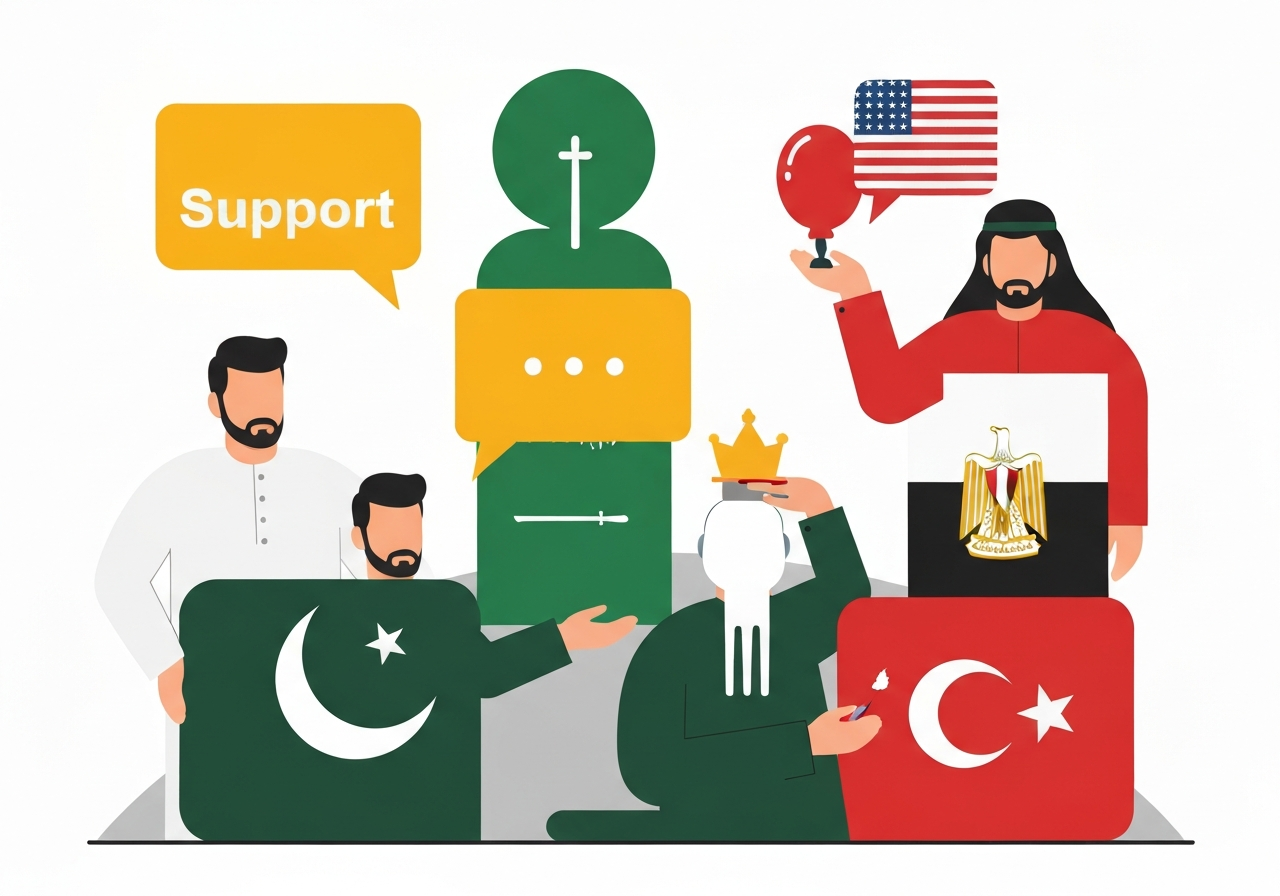
Pakistan’s foreign minister, Ishaq Dar, said on March 29, 2026 that Islamabad is prepared to host and facilitate talks between the United States and Iran as the Middle East war entered its fifth week. Speaking in a televised briefing, Dar — who also serves as deputy prime minister — said both Washington and Tehran had expressed confidence in Pakistan to help arrange discussions in the coming days. He added that Pakistan would be “honored” to host meaningful negotiations aimed at a comprehensive settlement. The comments were first reported on March 29, 2026 at 5:13 PM UTC and updated March 30, 2026 at 3:30 AM UTC.
Key Takeaways
- Pakistan announced readiness to facilitate US–Iran talks; the statement came on March 29, 2026 and was updated March 30, 2026.
- Foreign Minister and Deputy Prime Minister Ishaq Dar said both the US and Iran expressed confidence in Pakistan to help arrange the meetings.
- Pakistan stated that Saudi Arabia, Egypt and Turkey support its role as a facilitator, according to Islamabad.
- The announcement occurs as the conflict in the Middle East intensifies into its fifth week, raising urgency for diplomatic avenues.
- Islamabad framed the initiative as a bid for a “comprehensive settlement,” signaling a focus beyond a narrow ceasefire.
- Official confirmations from Washington and Tehran on venue, timing or participation remained limited at the time of the statement.
Background
Diplomatic mediation has long been a feature of crises in the Middle East, with regional and extra-regional actors periodically offering to host or broker talks. Pakistan, geographically and politically close to both Gulf states and Iran, has at times played a backchannel or hosting role in past regional disputes. The current conflict, now entering its fifth week, has seen intense combat and international concern about escalation and civilian harm.
Islamabad’s outreach sits amid competing mediation bids and international efforts to de-escalate the situation. Saudi Arabia, Egypt and Turkey have each signaled varying degrees of engagement in recent weeks on related diplomatic tracks; Pakistan’s statement frames those capitals as supportive of Islamabad taking a facilitation role. The balance of influence among Gulf states, Ankara, and Islamabad will shape any venue choice and the map of participants invited to talks.
Main Event
In a televised briefing on March 29, 2026, Ishaq Dar said Pakistan had received expressions of confidence from both Washington and Tehran about its ability to help facilitate talks. He described Pakistan’s offer as an opportunity to host “meaningful talks in coming days” aimed at resolving the conflict comprehensively rather than only negotiating a temporary halt to fighting. Dar’s remarks positioned Pakistan as an accessible neutral venue given its diplomatic contacts with multiple regional capitals.
According to Islamabad’s account, Saudi Arabia, Egypt and Turkey have backed Pakistan’s initiative, providing additional regional legitimacy to the proposal. Pakistan did not disclose precise logistics, dates, or the full list of prospective participants during the briefing. Officials emphasized that timing would depend on confirmation from the principal parties — the United States and Iran — and on security and protocol arrangements.
News organizations first carried Islamabad’s statement on March 29, 2026 at 5:13 PM UTC; an update arrived on March 30, 2026 at 3:30 AM UTC clarifying aspects of the remarks. At the time of the briefing, neither the U.S. State Department nor Iran’s foreign ministry had issued full, detailed endorsements of venue or schedule, leaving several practical questions unresolved.
Analysis & Implications
Pakistan’s offer to facilitate talks carries diplomatic advantages and constraints. Its historical ties with Iran and close relations with many Gulf states give Islamabad a plausible claim to impartiality for some participants; that could lower barriers to initial contact between the United States and Iran. If Saudi Arabia, Egypt and Turkey publicly support Pakistan’s role, their backing could broaden acceptability among Sunni Arab states and reduce regional objections.
At the same time, Pakistan faces logistical and political hurdles. Hosting high-stakes negotiations requires secure, neutral venues, detailed protocol, and rapid coordination with the parties’ security and intelligence teams. Domestic political currents in Pakistan, and its own strategic calculations with the U.S., Iran and Gulf partners, will shape what Islamabad can credibly offer without appearing to favor one side.
For Washington and Tehran, agreeing to talks facilitated by Pakistan would entail calculated risks and benefits. For the U.S., a Pakistan-hosted format might enable discreet, structured dialogue without ceding ground to rival mediators. For Iran, meeting in a Muslim-majority country with existing ties to Tehran could reduce domestic political backlash while offering leverage on agenda-setting. Conversely, either side could delay or decline if they judge preconditions — such as sequencing of military steps or third-party assurances — unmet.
Comparison & Data
| Role | Stated Position (per Islamabad) |
|---|---|
| Pakistan | Ready to host and facilitate US–Iran talks |
| Saudi Arabia | Reported support for Pakistan’s facilitation |
| Egypt | Reported support for Pakistan’s facilitation |
| Turkey | Reported support for Pakistan’s facilitation |
The table summarizes Islamabad’s account of regional backing. While Pakistan reports support from Saudi Arabia, Egypt and Turkey, the detail and formal nature of that support (public statements, private assurances, or diplomatic notes) were not specified in Pakistan’s briefing. The data point that the conflict has entered its fifth week frames the urgency for diplomatic channels: protracted hostilities historically increase pressure on parties to explore mediated options.
Reactions & Quotes
Immediately following Islamabad’s announcement, analysts and officials reacted cautiously, noting the difference between a facilitation offer and confirmed negotiations. Two types of responses emerged: expressions of cautious welcome from parties favoring diplomacy, and calls for concrete steps to verify commitments from the principal belligerents.
“Pakistan has longstanding contacts across the region and could provide a useful platform if all parties agree on terms and security arrangements.”
Independent diplomatic analyst (comment)
“We remain in touch with partners and will assess any credible proposal that moves toward de-escalation and civilian protection.”
U.S. official (briefed, comment)
“Any mediation must ensure the core concerns of the principal parties are addressed, not merely produce a short-lived pause.”
Regional policy expert (comment)
Unconfirmed
- Precise dates, venue, and participant list for any US–Iran meetings were not confirmed by either Washington or Tehran at the time of Pakistan’s statement.
- The formal nature of Saudi, Egyptian and Turkish backing (public endorsement versus private support) was not specified in Islamabad’s briefing.
- There was no immediate, detailed confirmation from the U.S. State Department or Iran’s foreign ministry that would lock in logistics or agenda points.
Bottom Line
Pakistan’s offer to facilitate talks between the United States and Iran — backed, Islamabad says, by Saudi Arabia, Egypt and Turkey — introduces another diplomatic channel at a moment of escalating conflict in its fifth week. The proposal could open a pragmatic route for direct engagement if both principal parties accept Pakistani facilitation and if regional supporters translate verbal backing into concrete coordination.
However, an offer to host is only a first step. For meaningful negotiations to proceed, parties must agree on security, agenda, and sequencing, and provide transparent confirmations. Observers should watch for formal acknowledgments from Washington and Tehran, any preparatory technical meetings, and whether regional backers move from supportive statements to operational assistance.
Sources
- Bloomberg (news media) — initial reporting and timestamps for Islamabad’s statement.
- Ministry of Foreign Affairs, Pakistan (official) — Pakistan government source and context for foreign policy positions.